24 Hours in Ethiopia: A Layover Love Story
The Arrival: Setting Intentions, Not Just Itineraries
There is a particular kind of traveler who lands in a new city and simply moves through it — checking boxes, snapping photos, remaining wholly untouched. I refuse to be her.
If you've followed my journey, you know I recently returned to Ethiopia. Not for weeks. Not for months. For twenty-four hours — a layover, technically. But I have long since decided that time is too sovereign, too irretrievable, to squander on the superficial. So I arrived with intention.
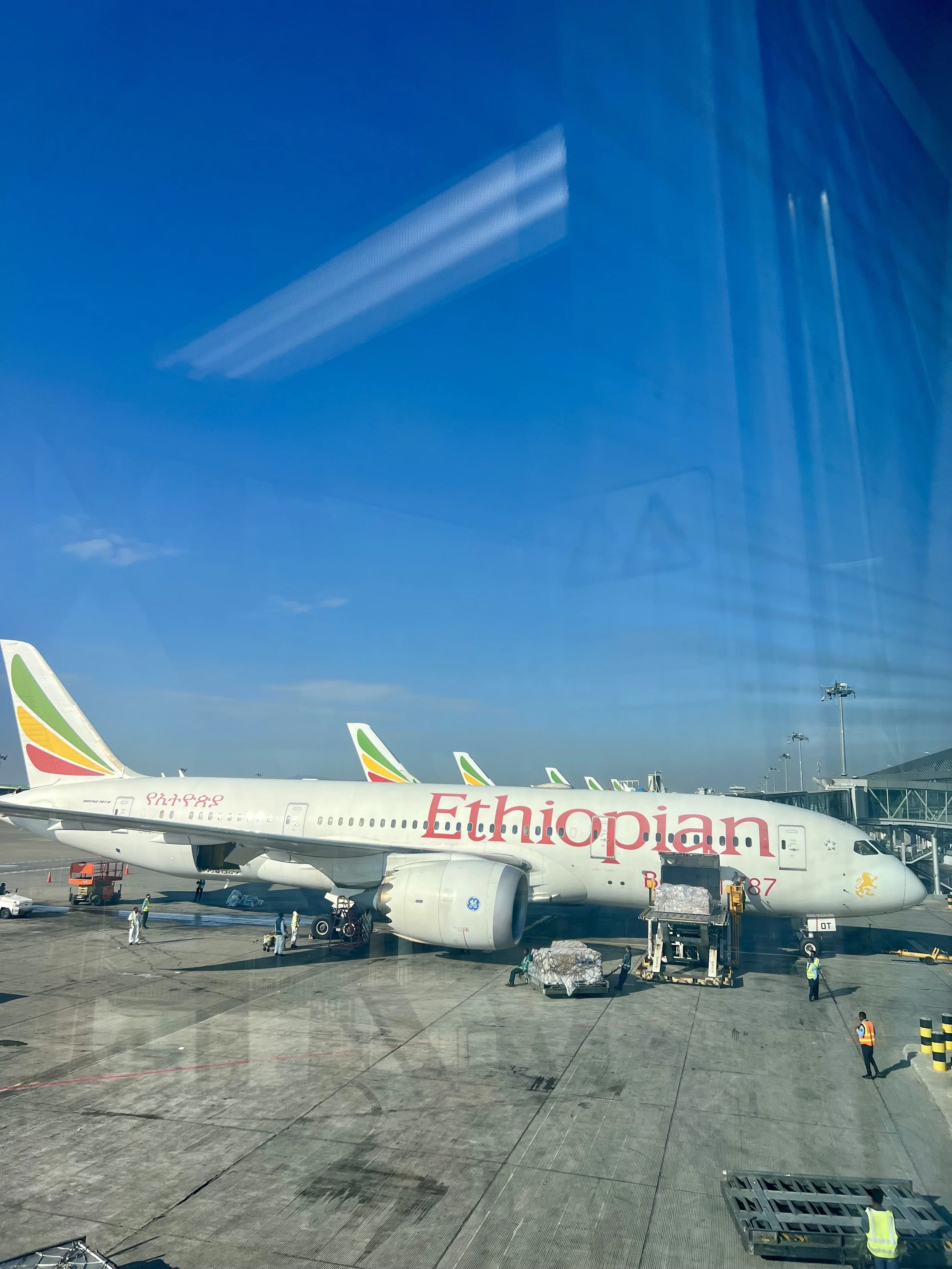
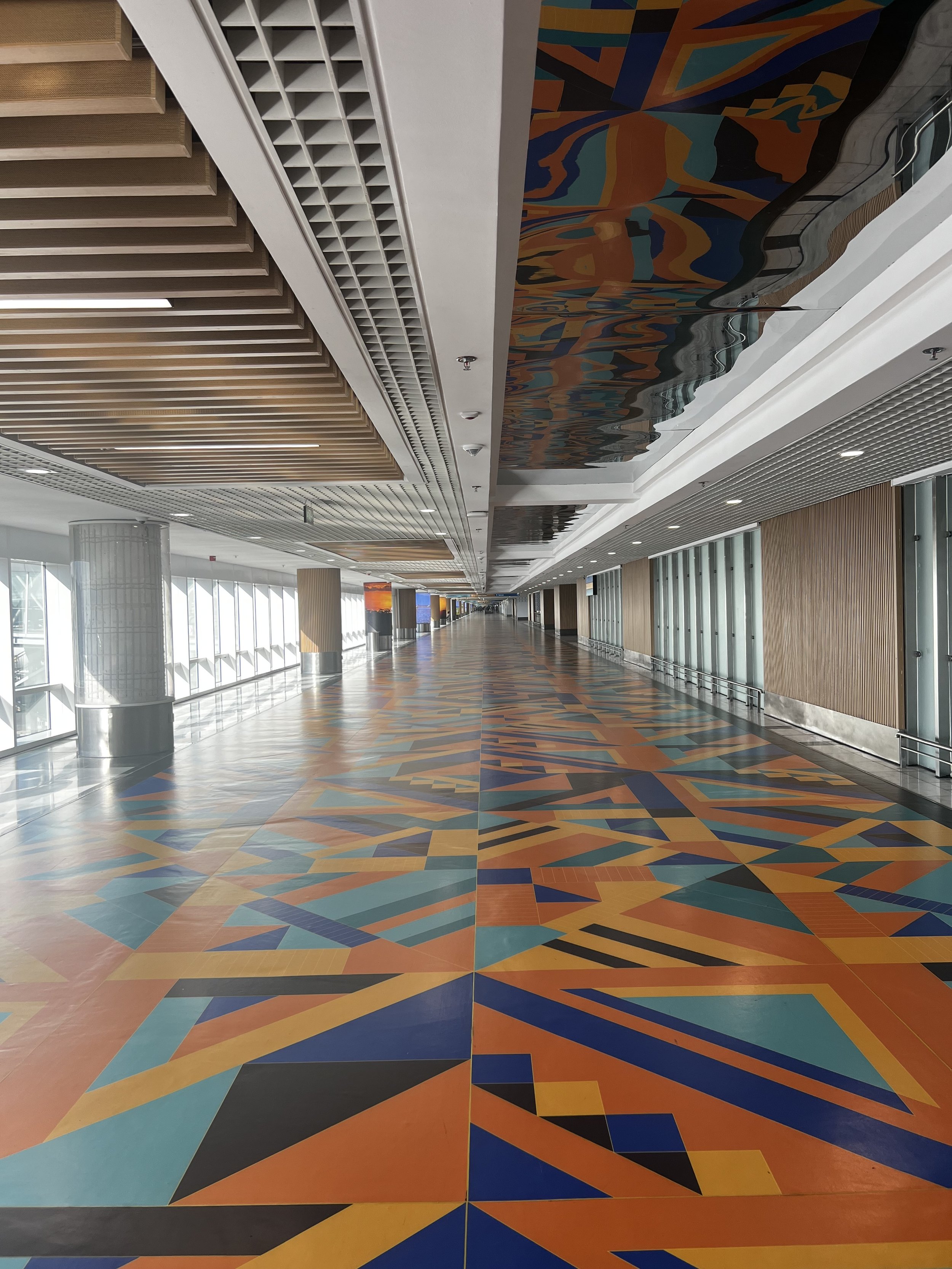
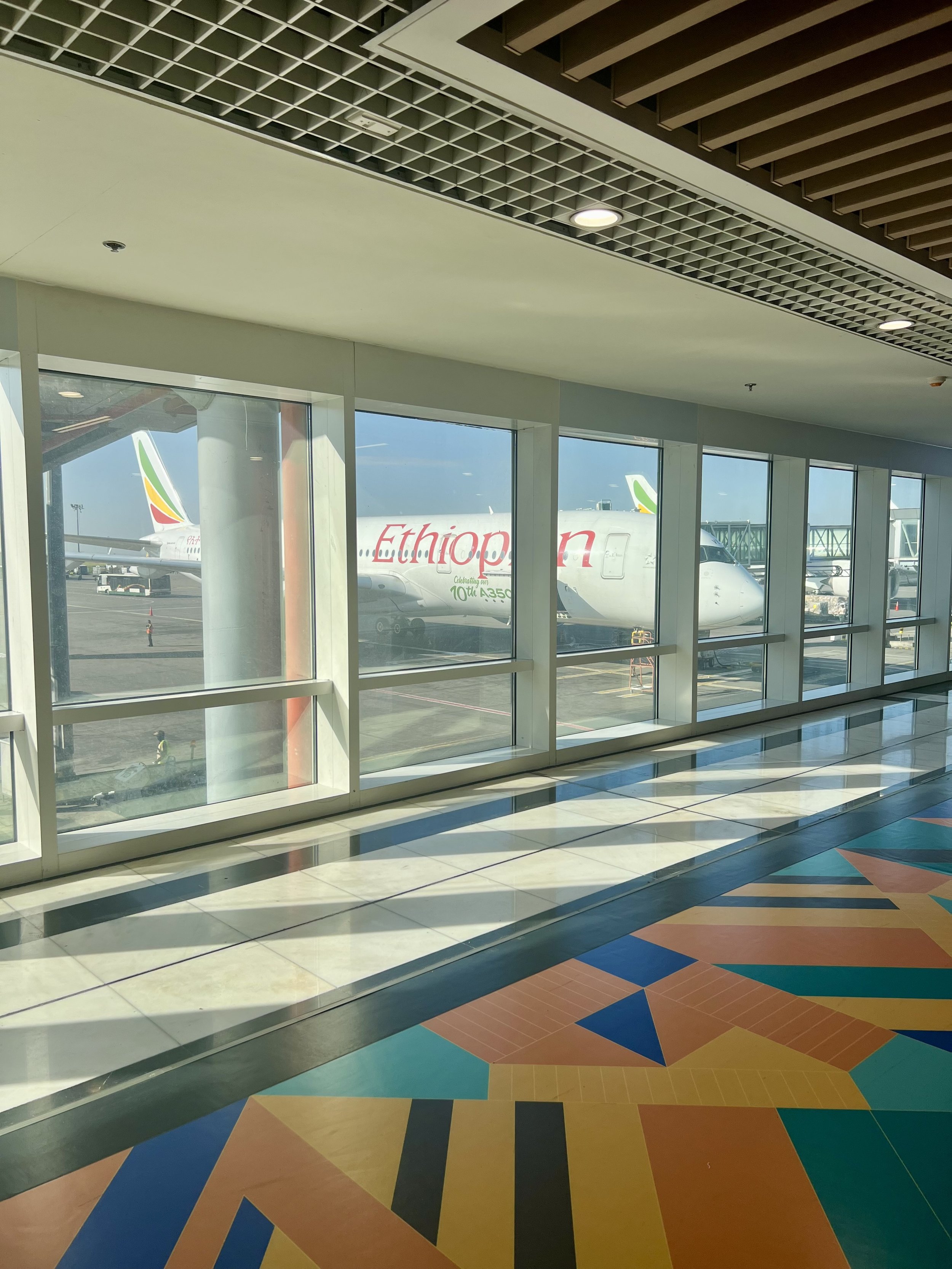
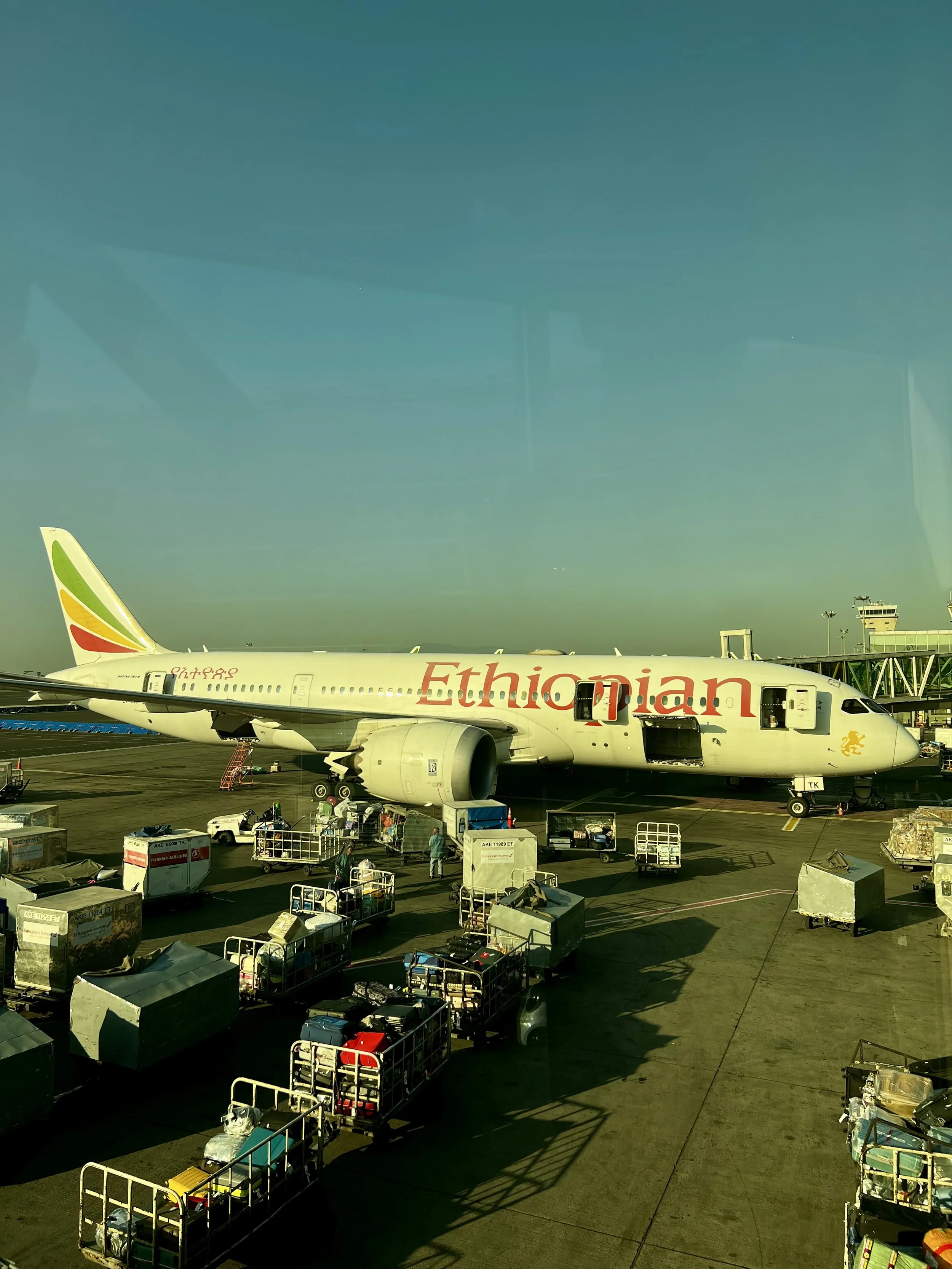
Touching down at Addis Ababa Bole International Airport just after sunrise, I pulled up options on my phone before my feet fully hit the terminal floor. On my first visit back in 2017, I had accepted the complimentary hotel, meals, and transit visa that Ethiopian Airlines extends so graciously to long layover passengers. (A remarkable offering, and one worth knowing about.) But this time, I wanted discernment over convenience. I wanted to choose.

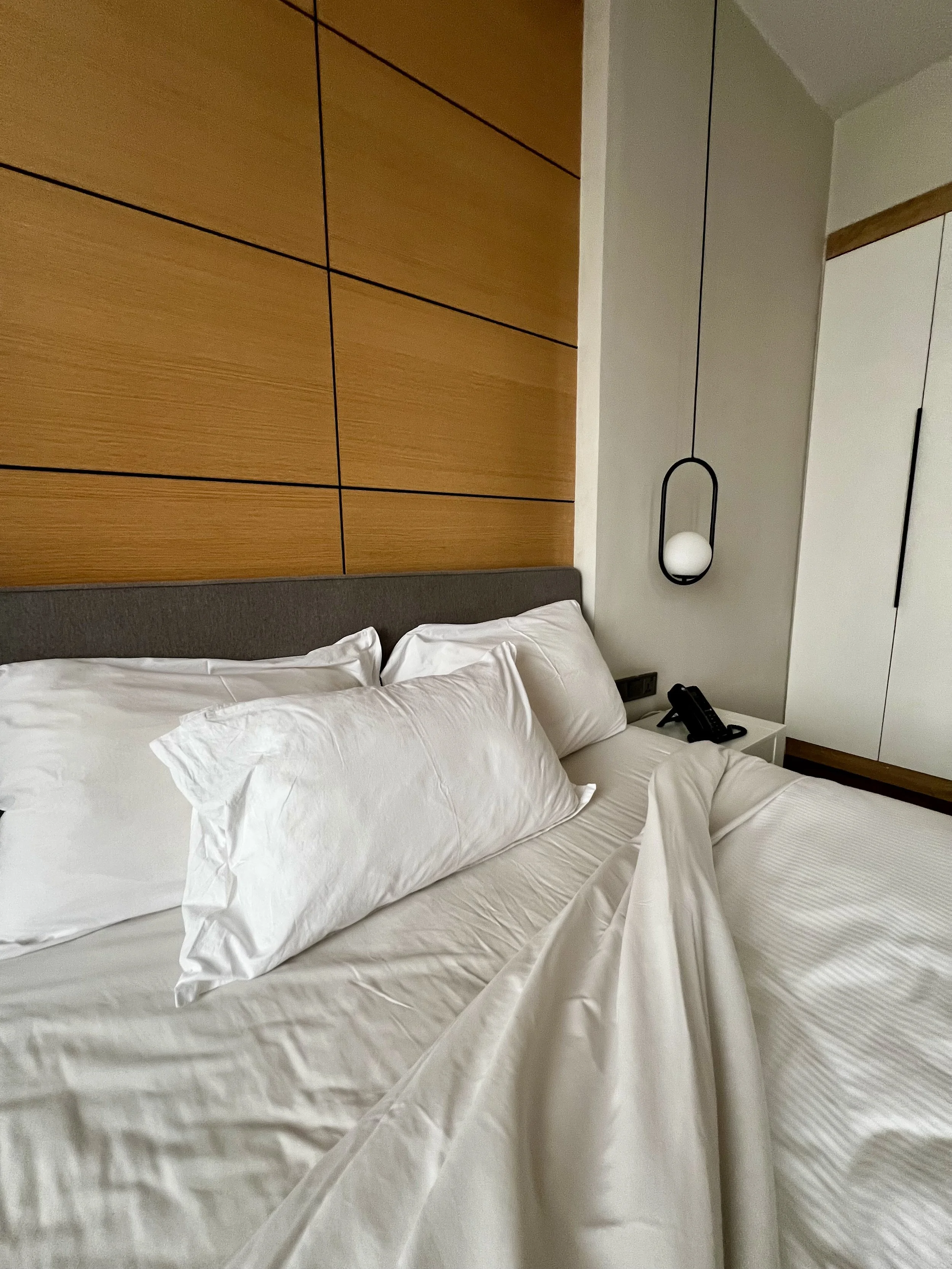
I found Loft Hotel Apartment in Bole - a boutique property, fairly new, quietly compelling. Seventy-six dollars a night. Four stars. A restaurant, a spa, a fitness center, an airport shuttle, and mountain views folded right into the window frame. I didn't book online. Instead, I fetched a cab and walked in to book directly at the front desk. Cut out the middleman. Pour the money straight into the property. That is the kind of traveler I am cultivating myself to be, intentional down to the transaction.
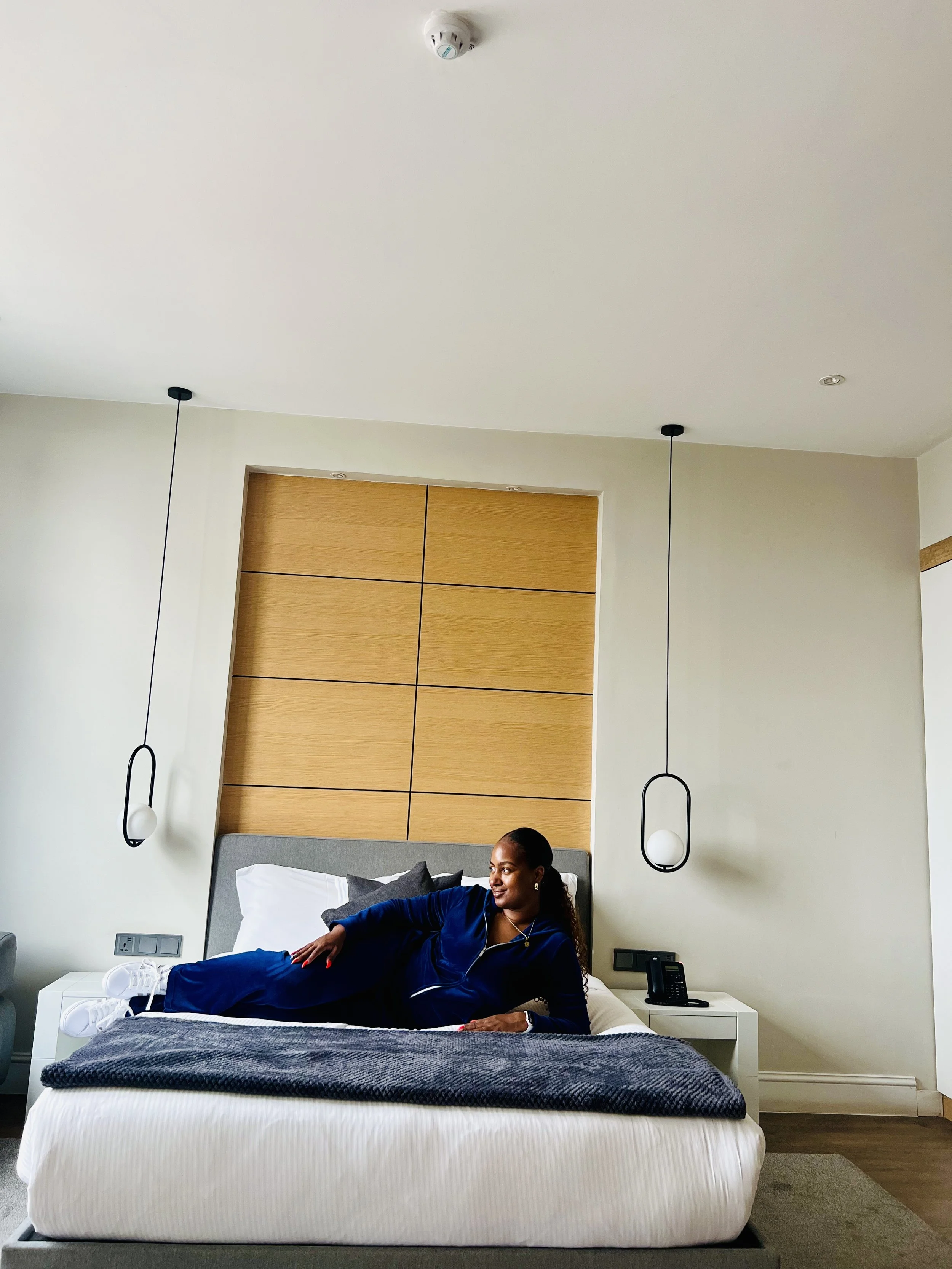

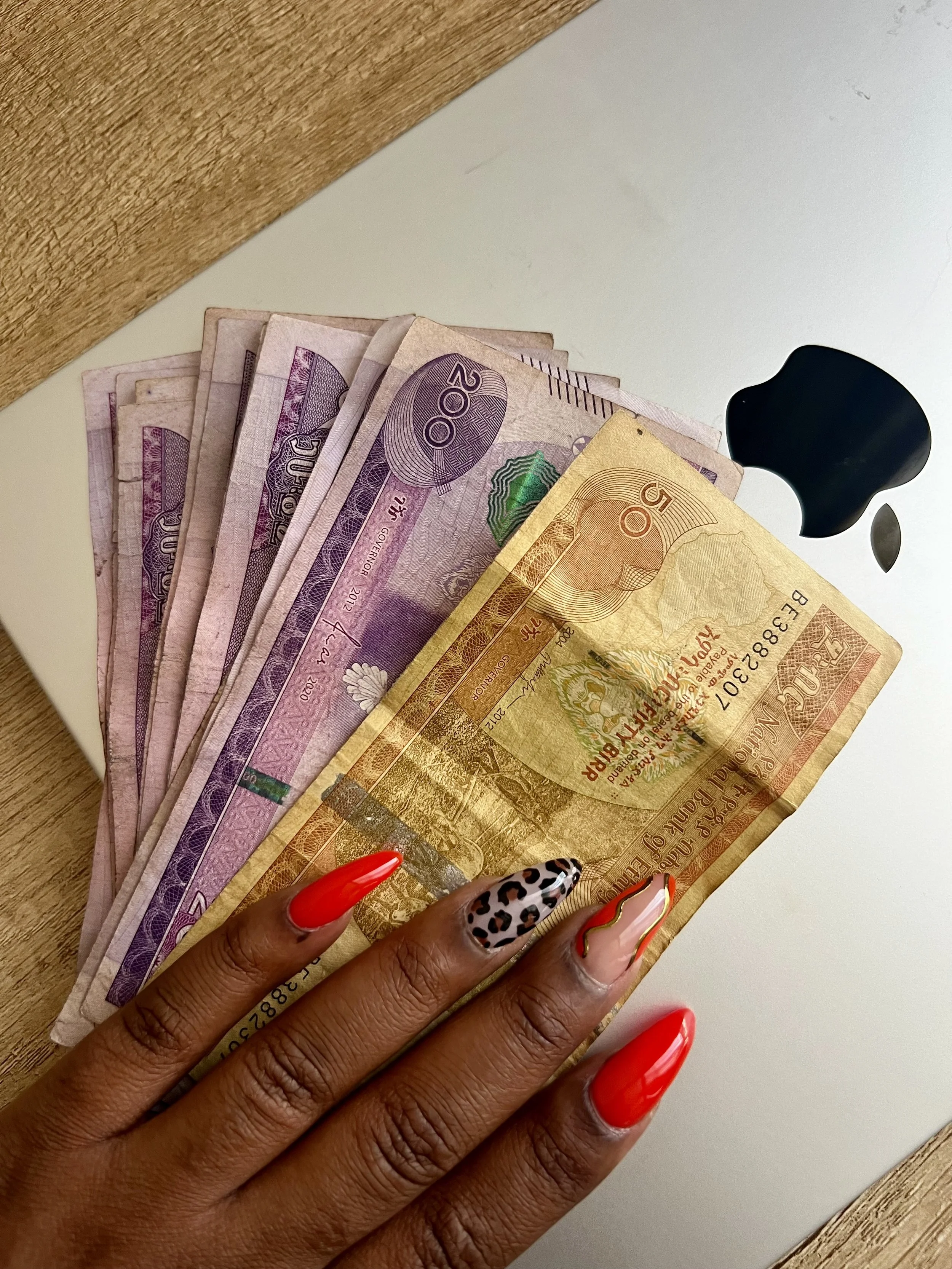
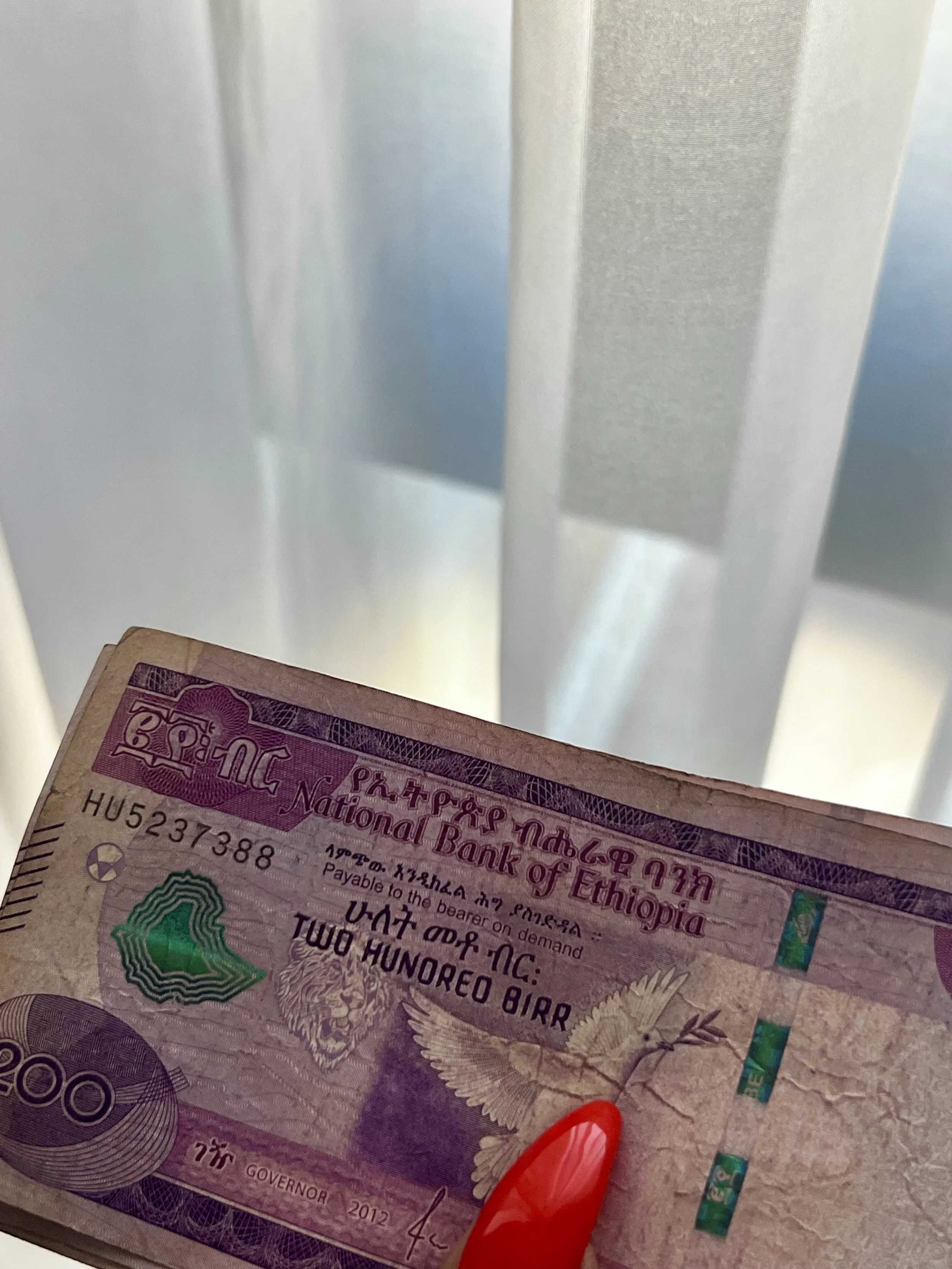
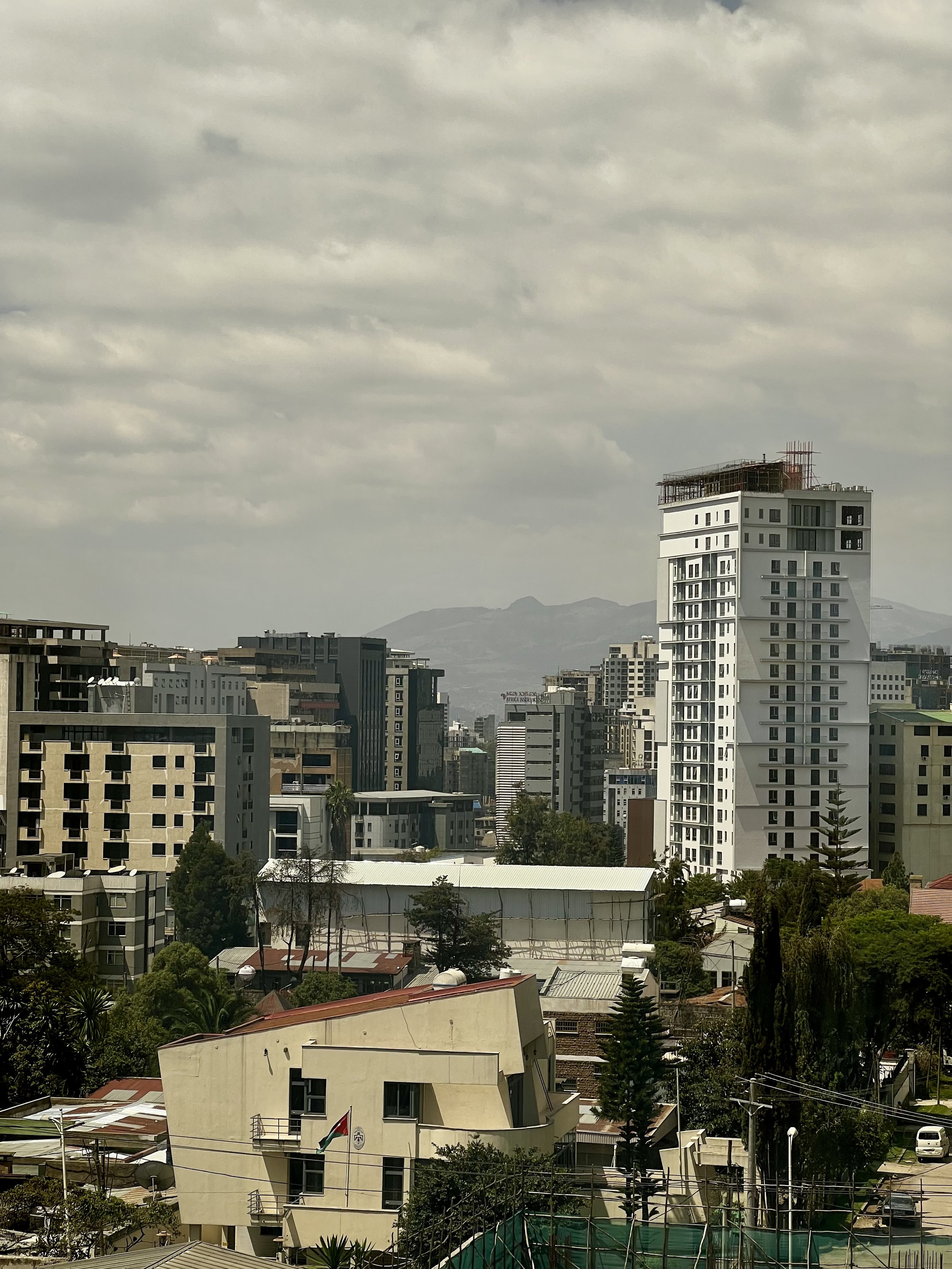
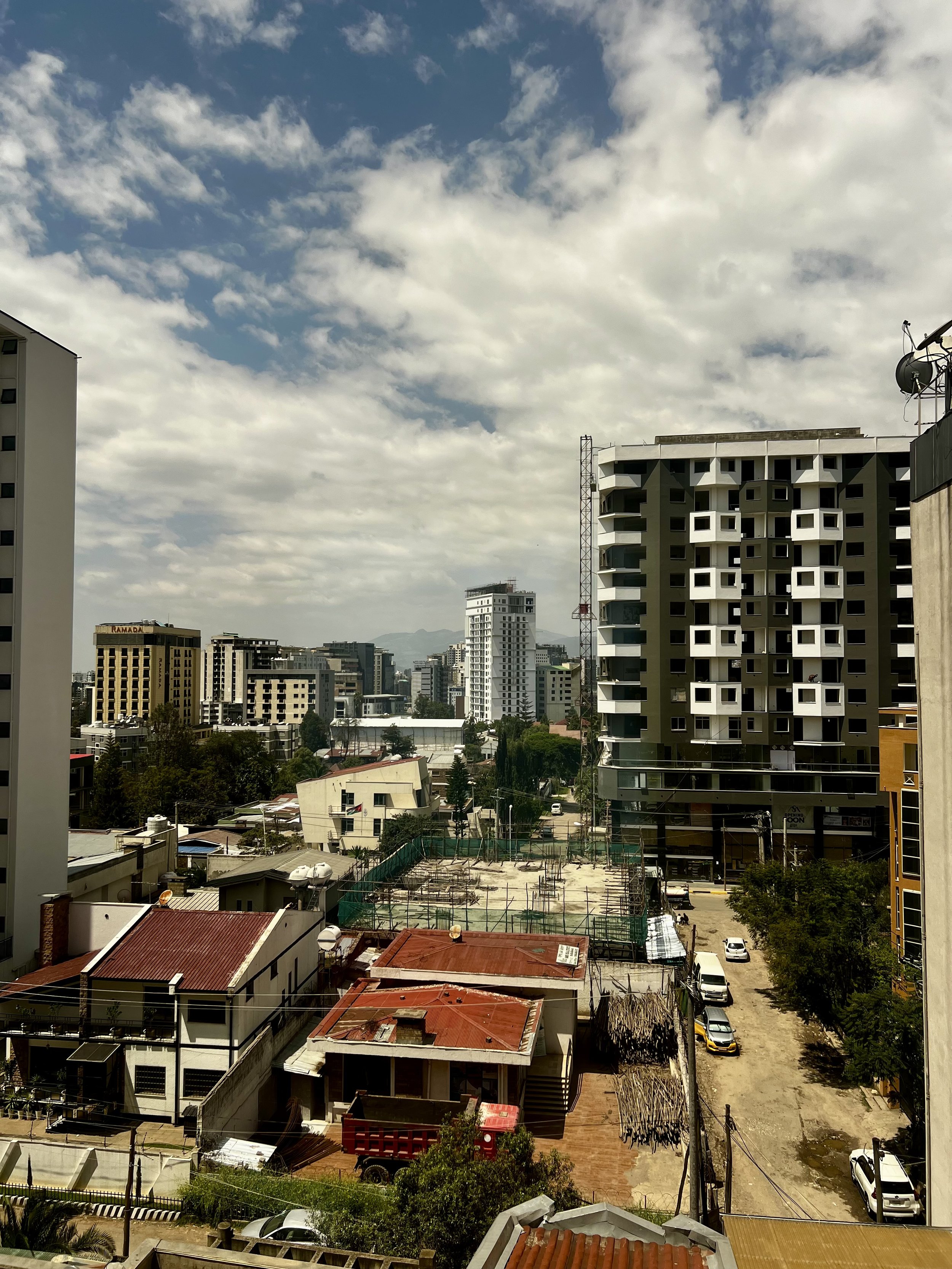
Check-in was at 2 p.m. I requested 10 a.m. and they delivered. From my room, I absorbed the neighborhood — construction booming, mountains pressing into the skyline, residential streets weaving between modern hotels. It felt luminous. It felt alive.
Then I googled layover tours in Addis Ababa, because of course I did.
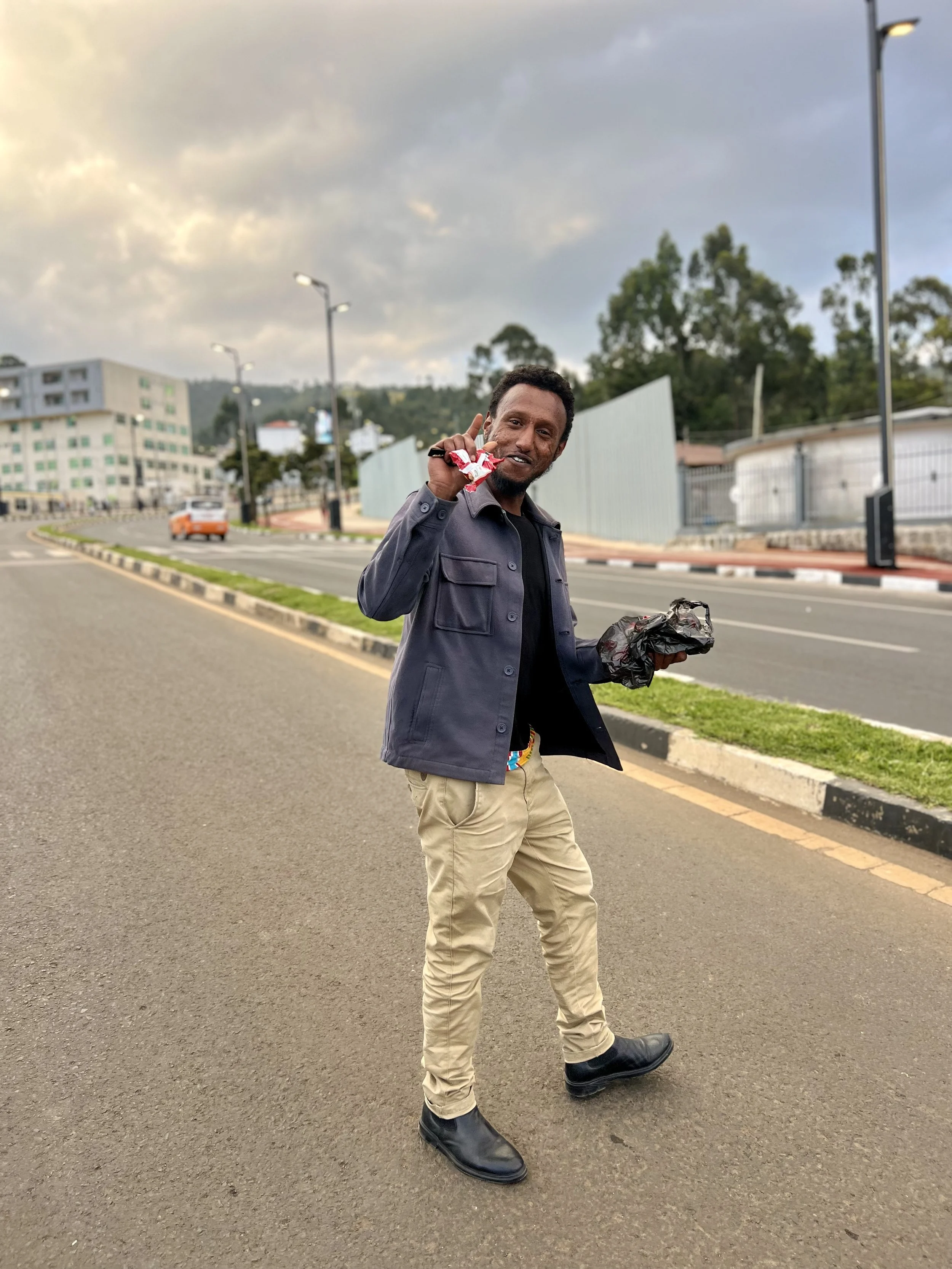
Viator surfaced a wave of options, but I exercised discernment. Too short and you're skimming. Too long and you're exhausted before dinner. I settled on a five-hour tour through Habesha Wonder Tours — eighty dollars, 2 p.m. start — just enough breathing room for a nap after fourteen hours in the air. At exactly 2 p.m., my guide Joe was downstairs, waiting. Not a minute late. This is where the story truly begins.
Coffee, Culture, and the Art of Showing Up Present
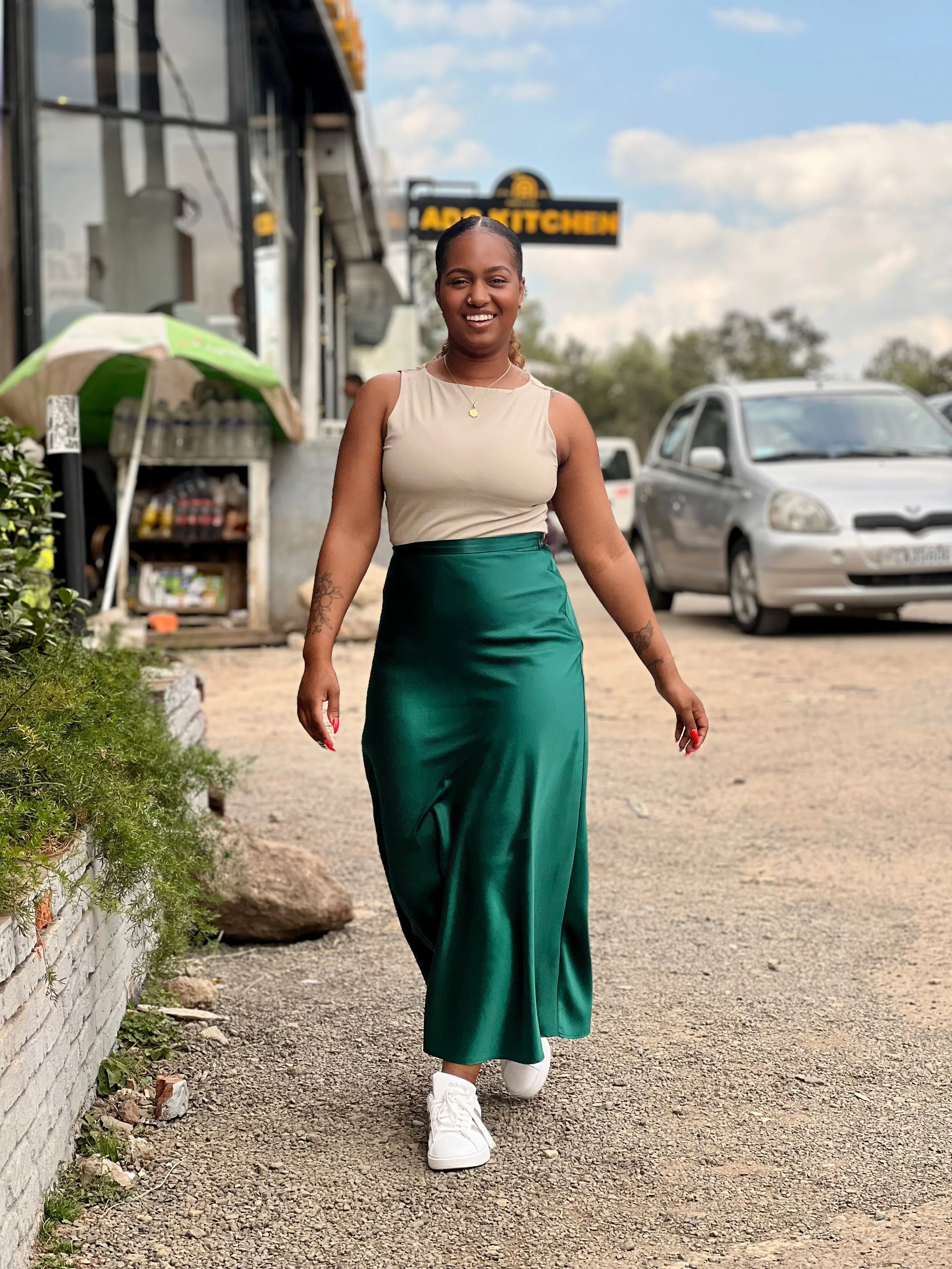
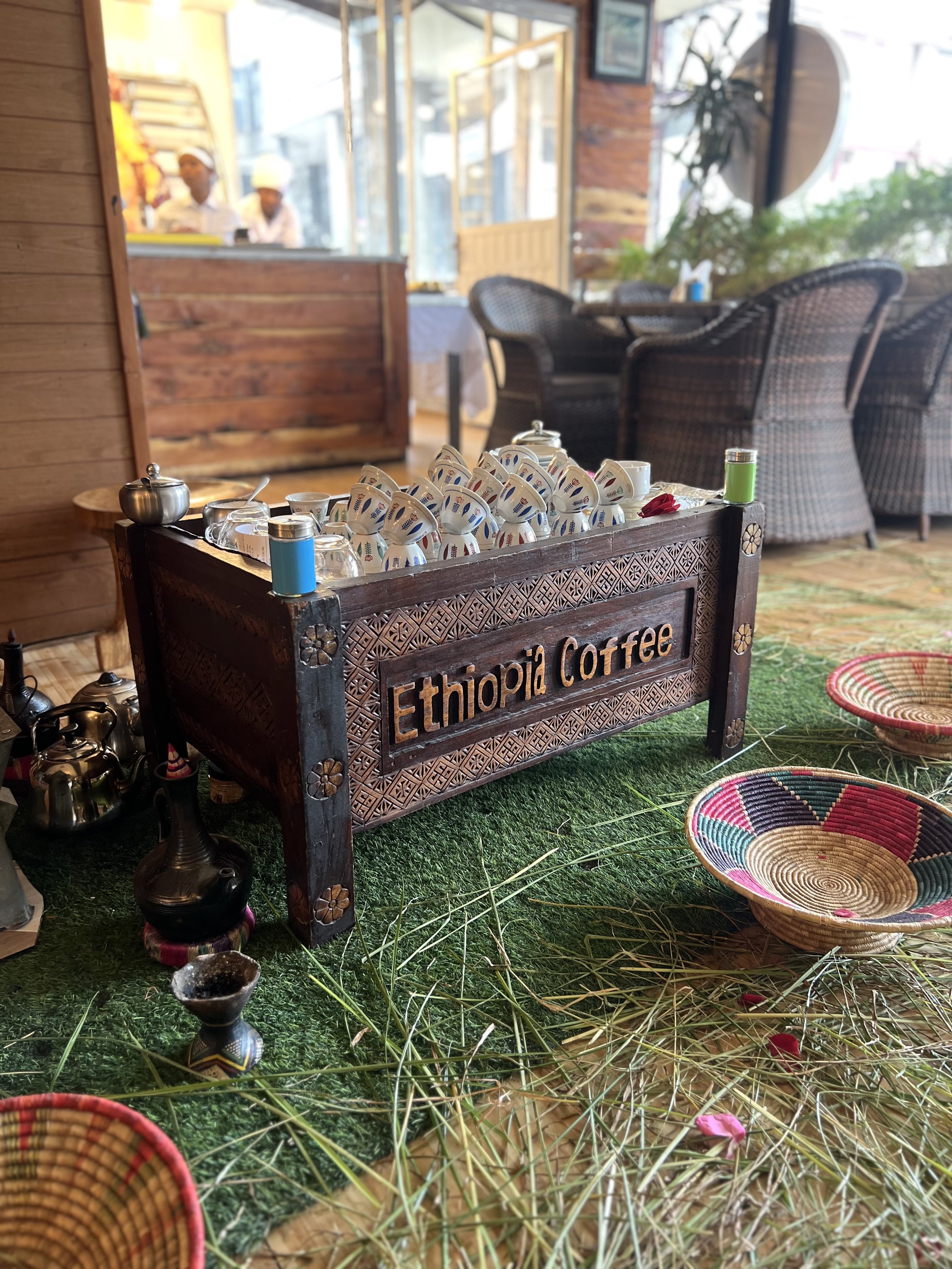
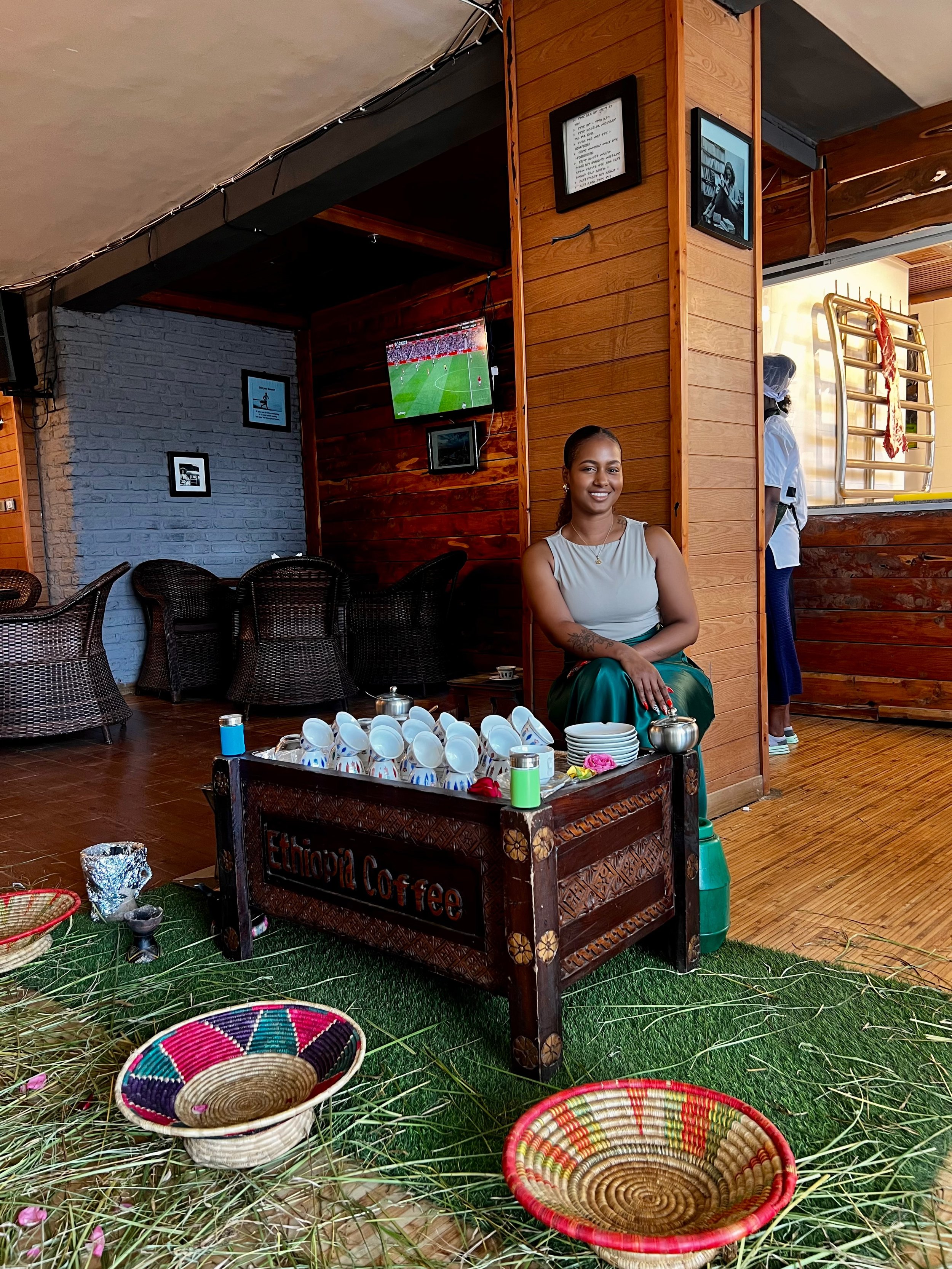
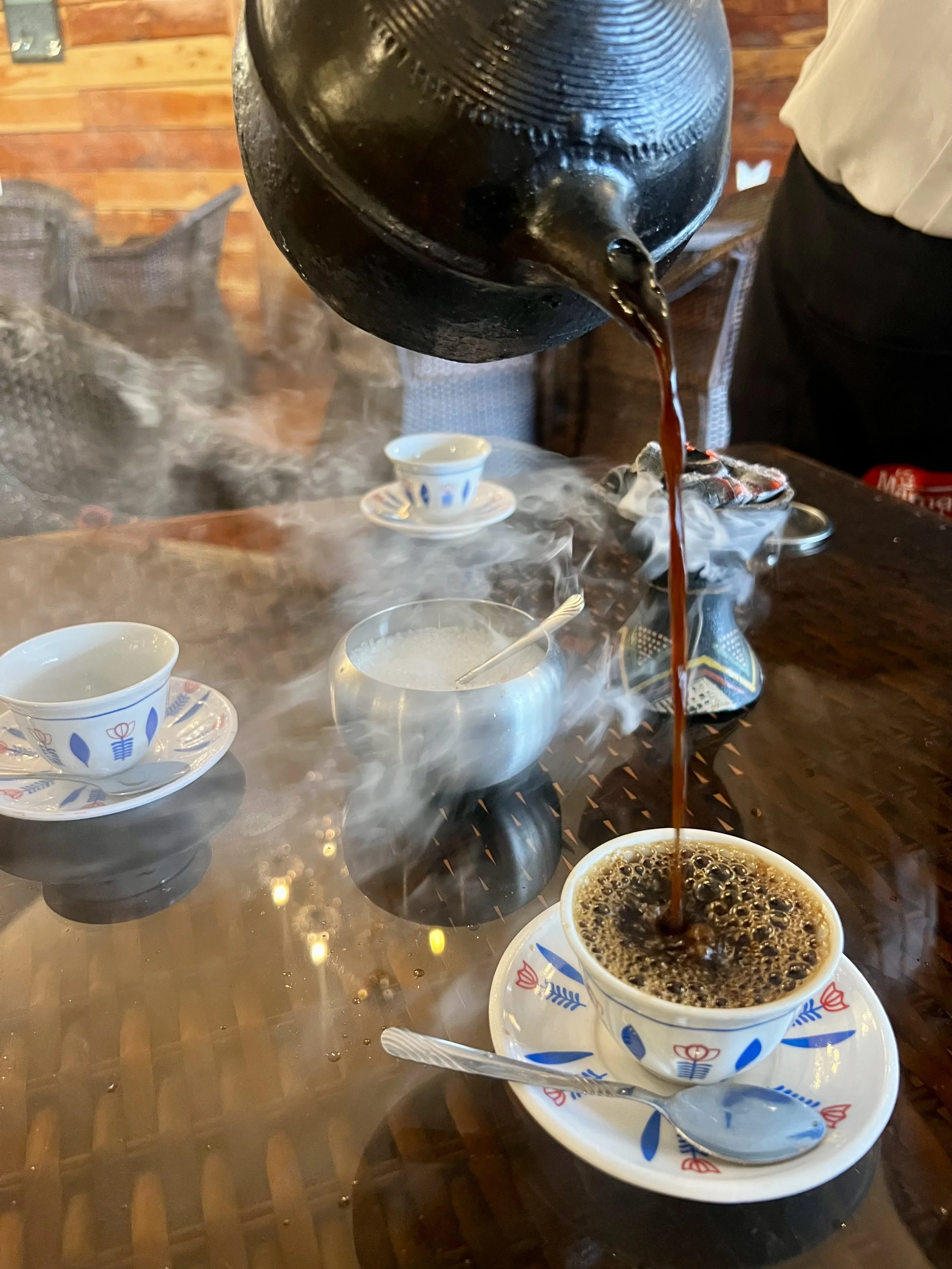
Joe drove us straight to Mama's Kitchen in Bole Medhanialem, where our tour began the only way it rightfully could — with an Ethiopian coffee ceremony.
Before the first cup was poured, Joe sat us down and educated us. And I do not use that word lightly. There is a difference between information and edification — between someone reciting facts and someone genuinely transferring reverence. Joe gave us the latter.
Ethiopia is the birthplace of Arabica coffee — not a fun fact, but a point of sovereign pride. The ceremony is not decorative. It is a hours-long ritual, performed up to three times daily, rooted in hospitality, community, and deep respect for elders. Fresh beans are roasted by hand. Ground by hand. Brewed in a traditional clay jebena pot. It is, wholly and without pretense, a spiritual act — a time set apart to honor life's blessings and the people you share them with.
The coffee was extraordinary. The kick was welcome. I was still jet-lagged from the flight, but after that cup — after that ceremony — I was ready.
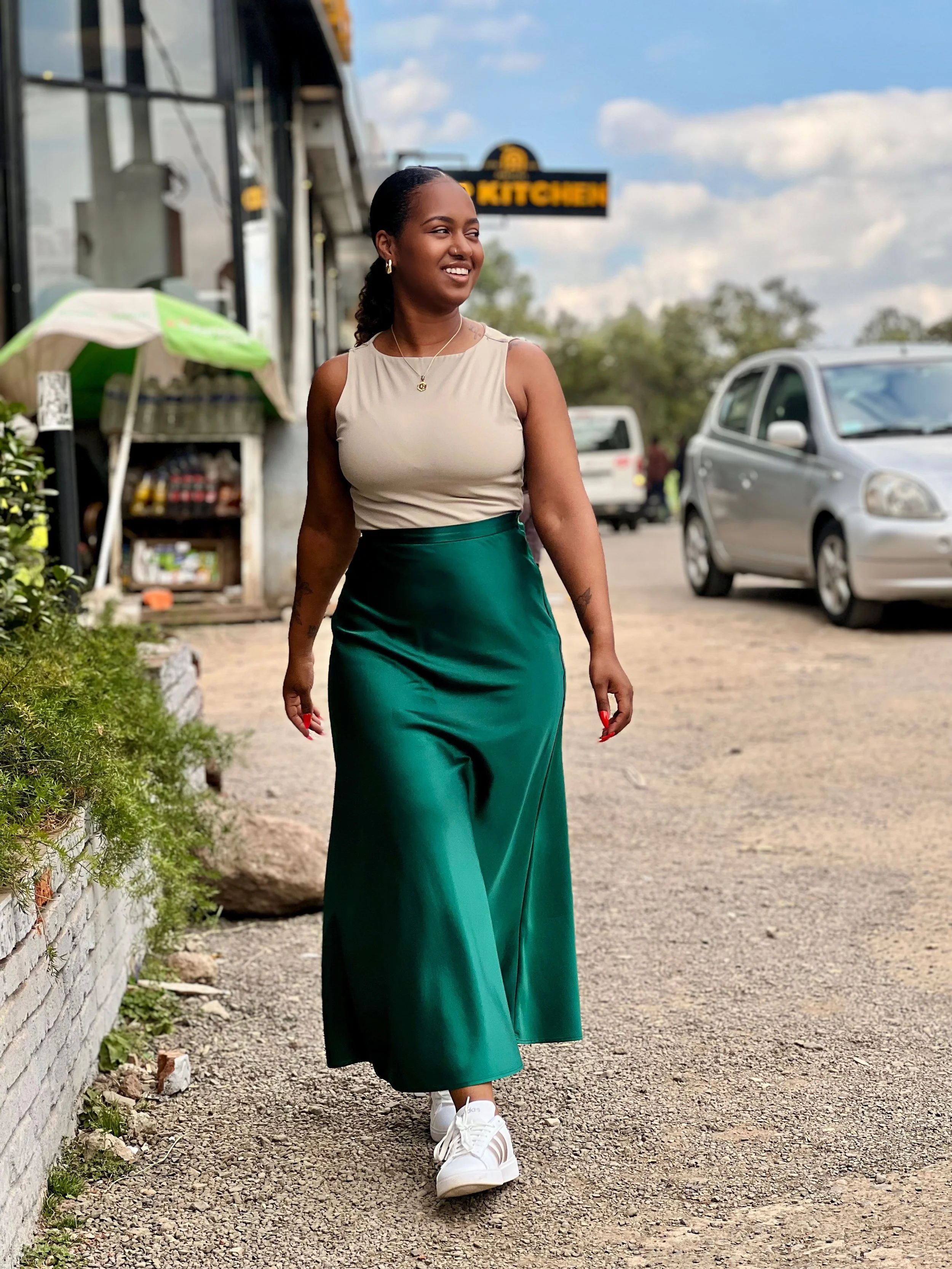
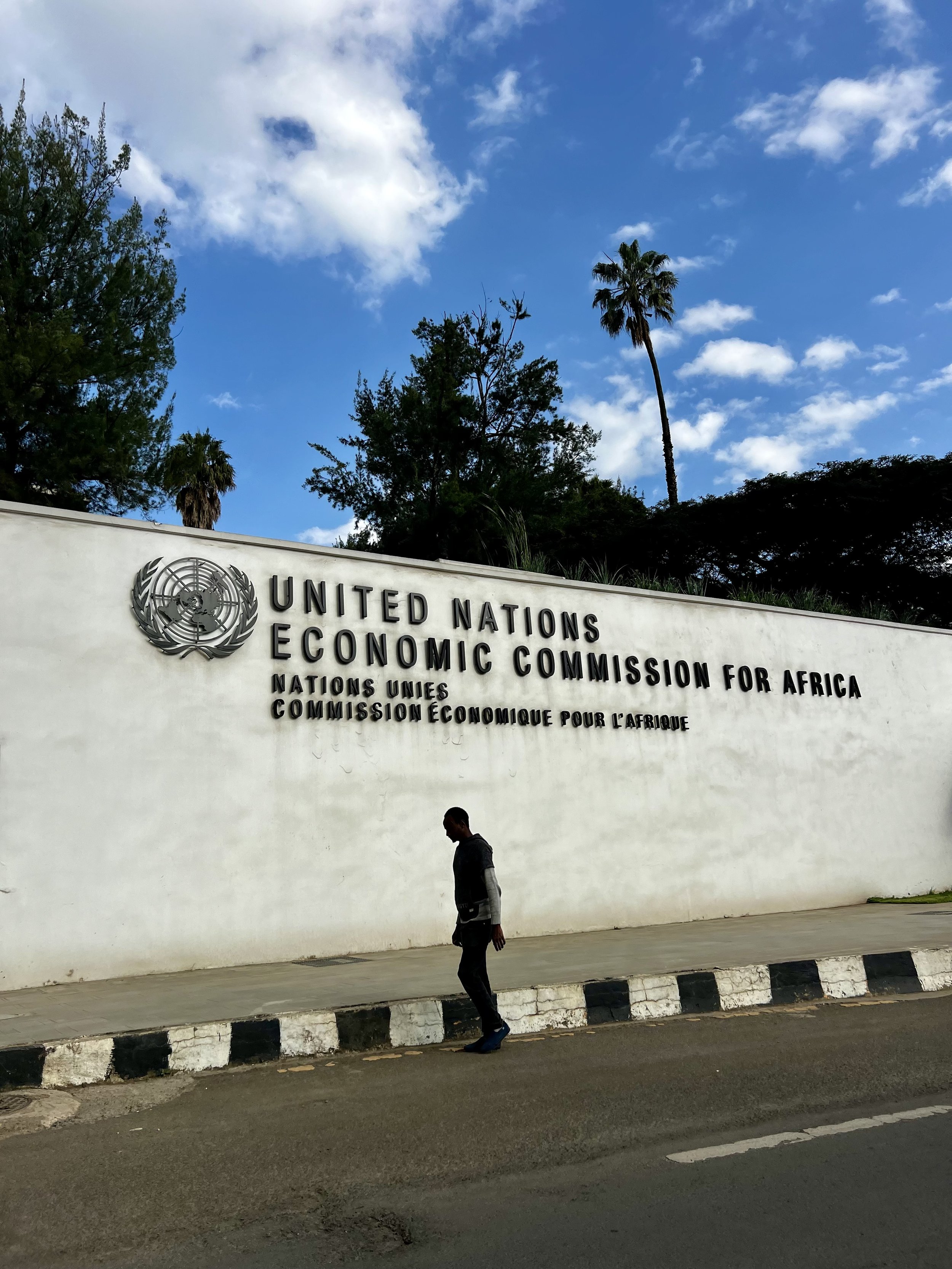
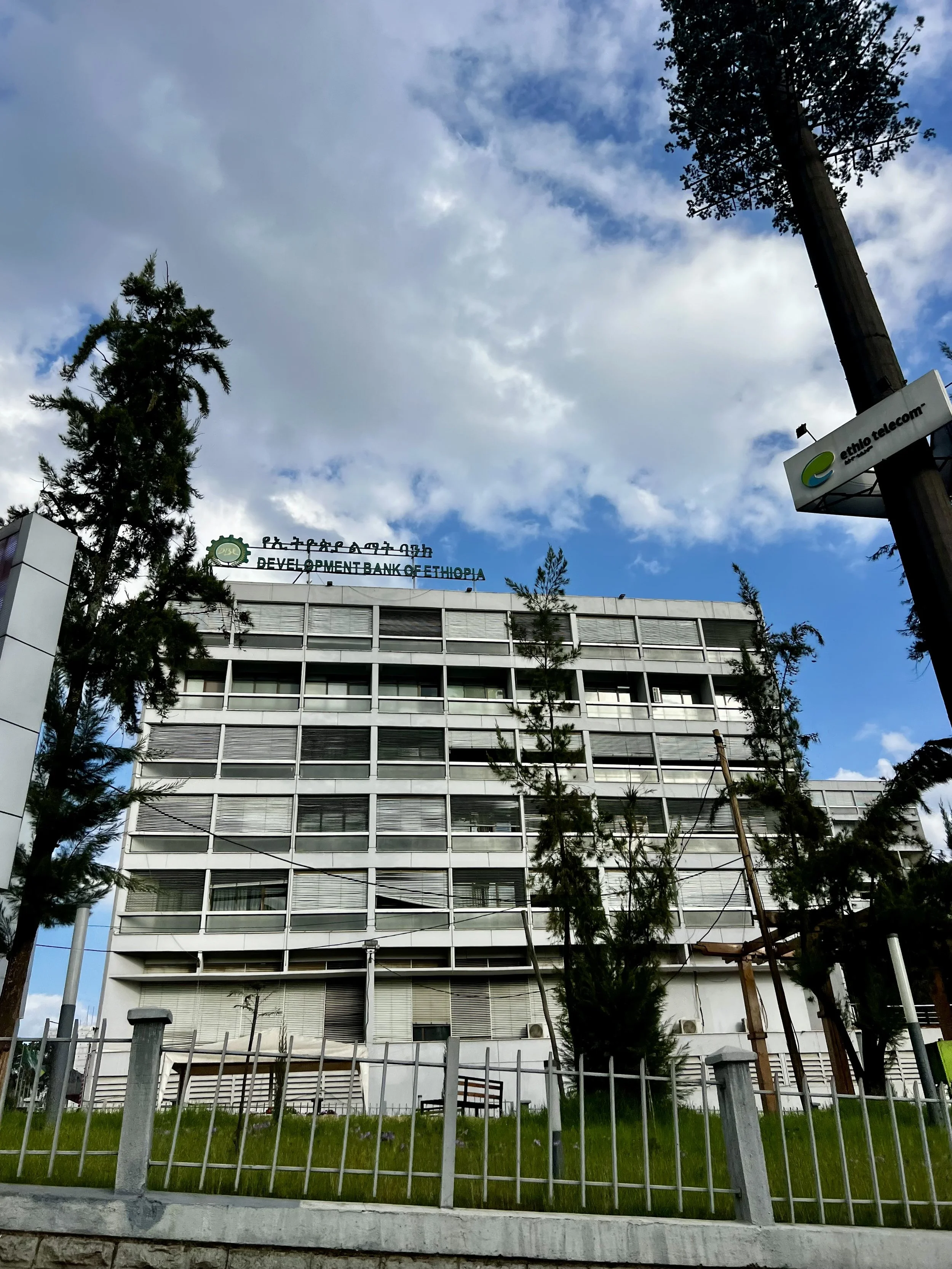
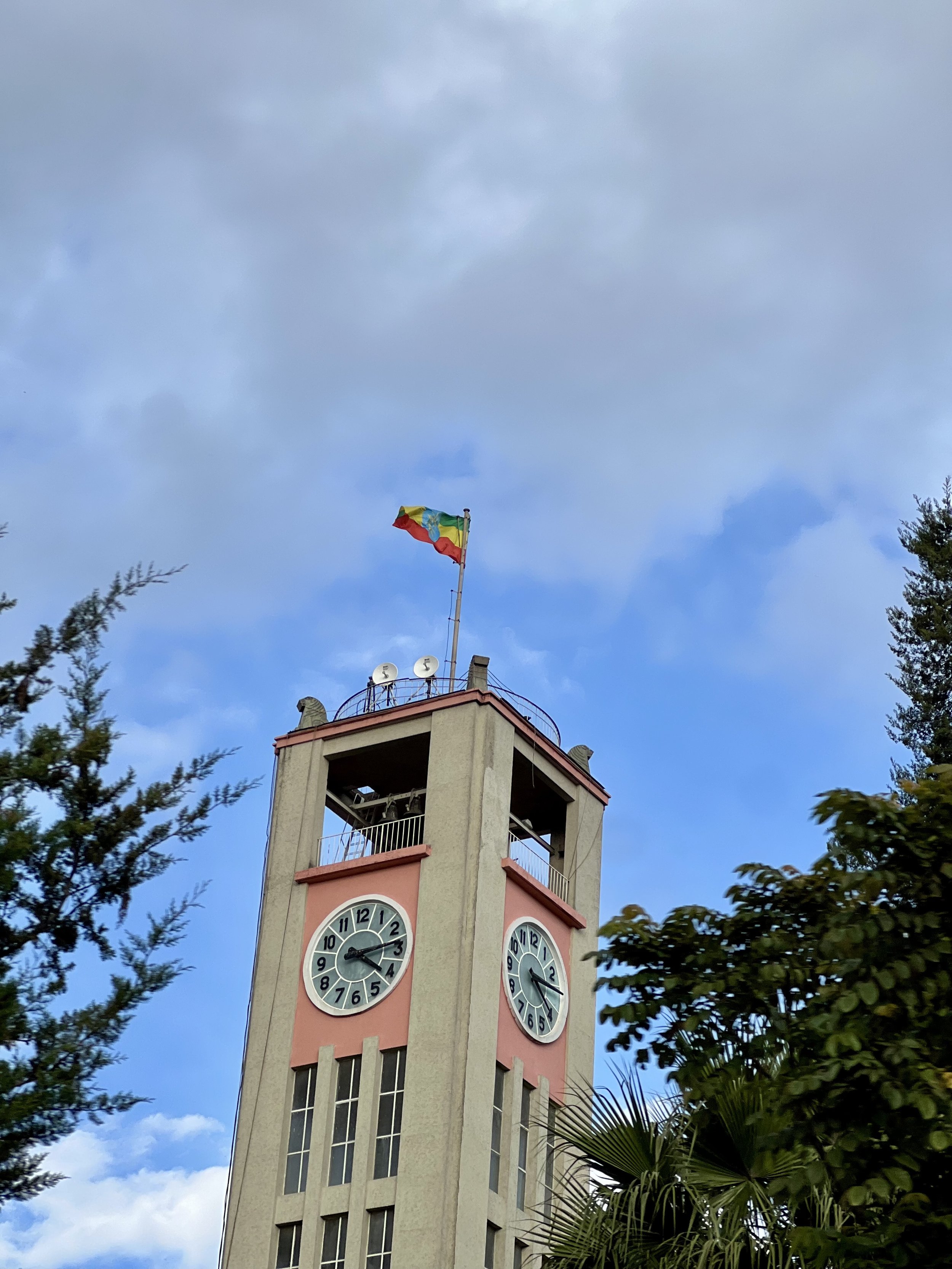
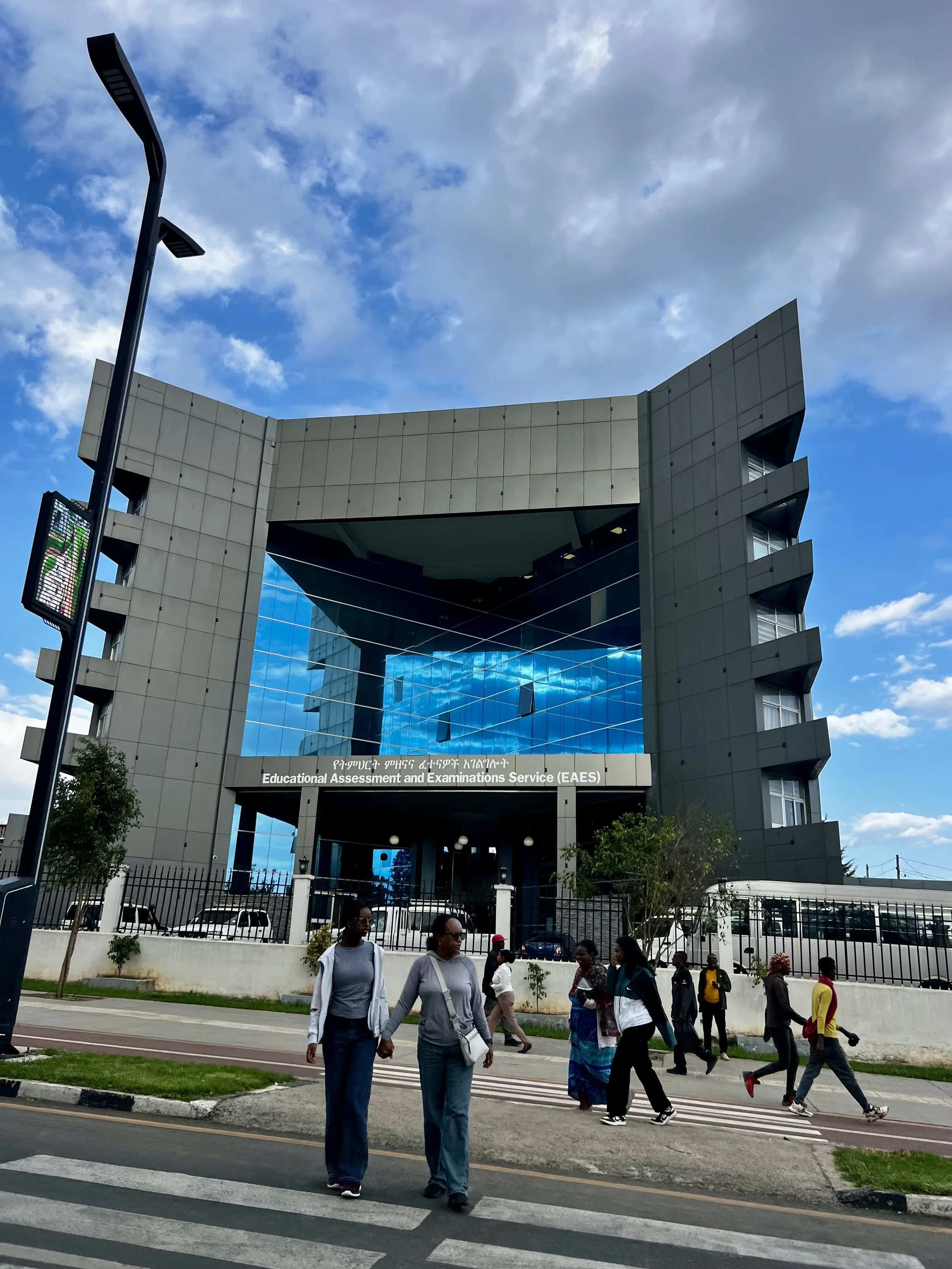
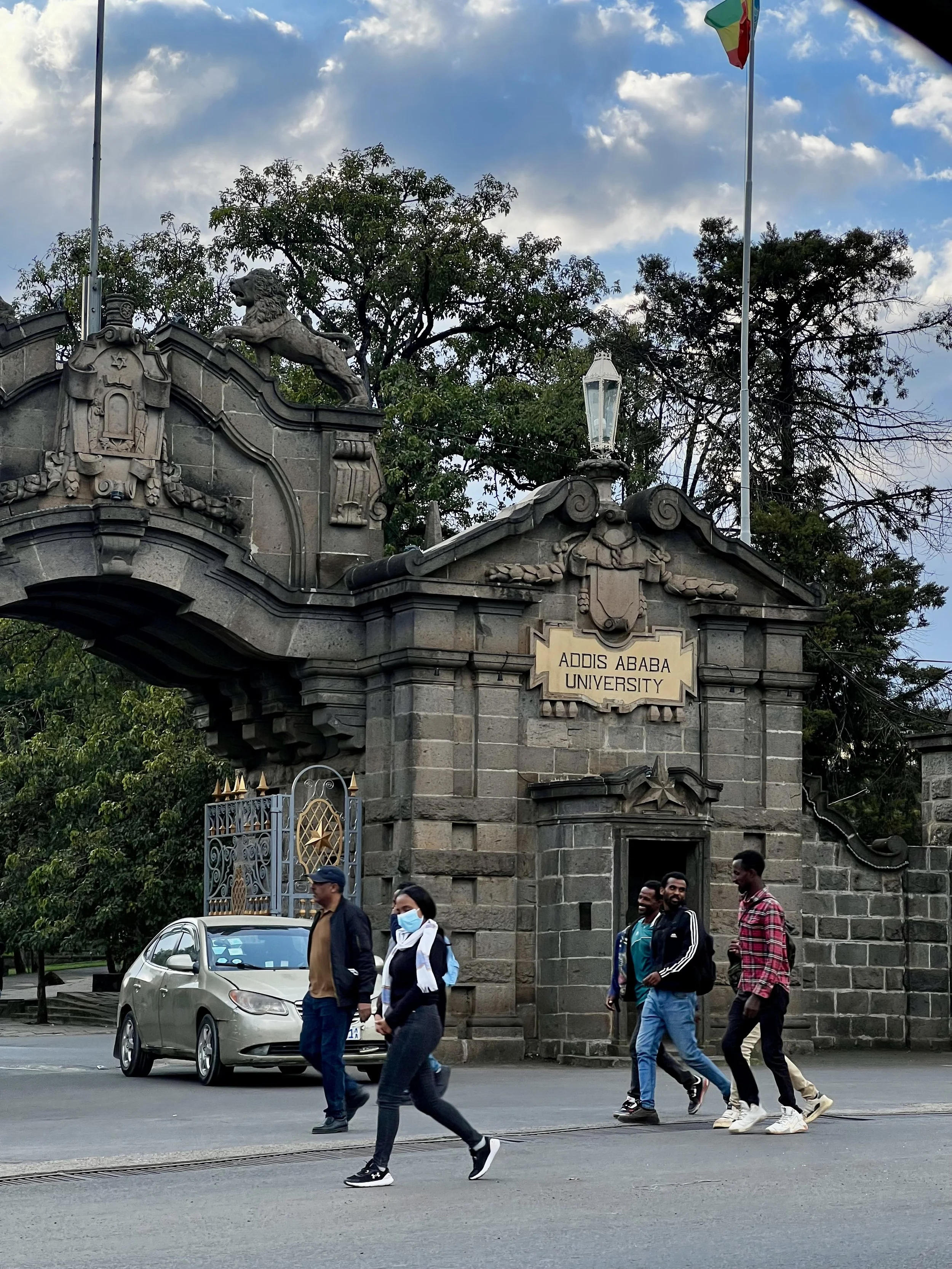
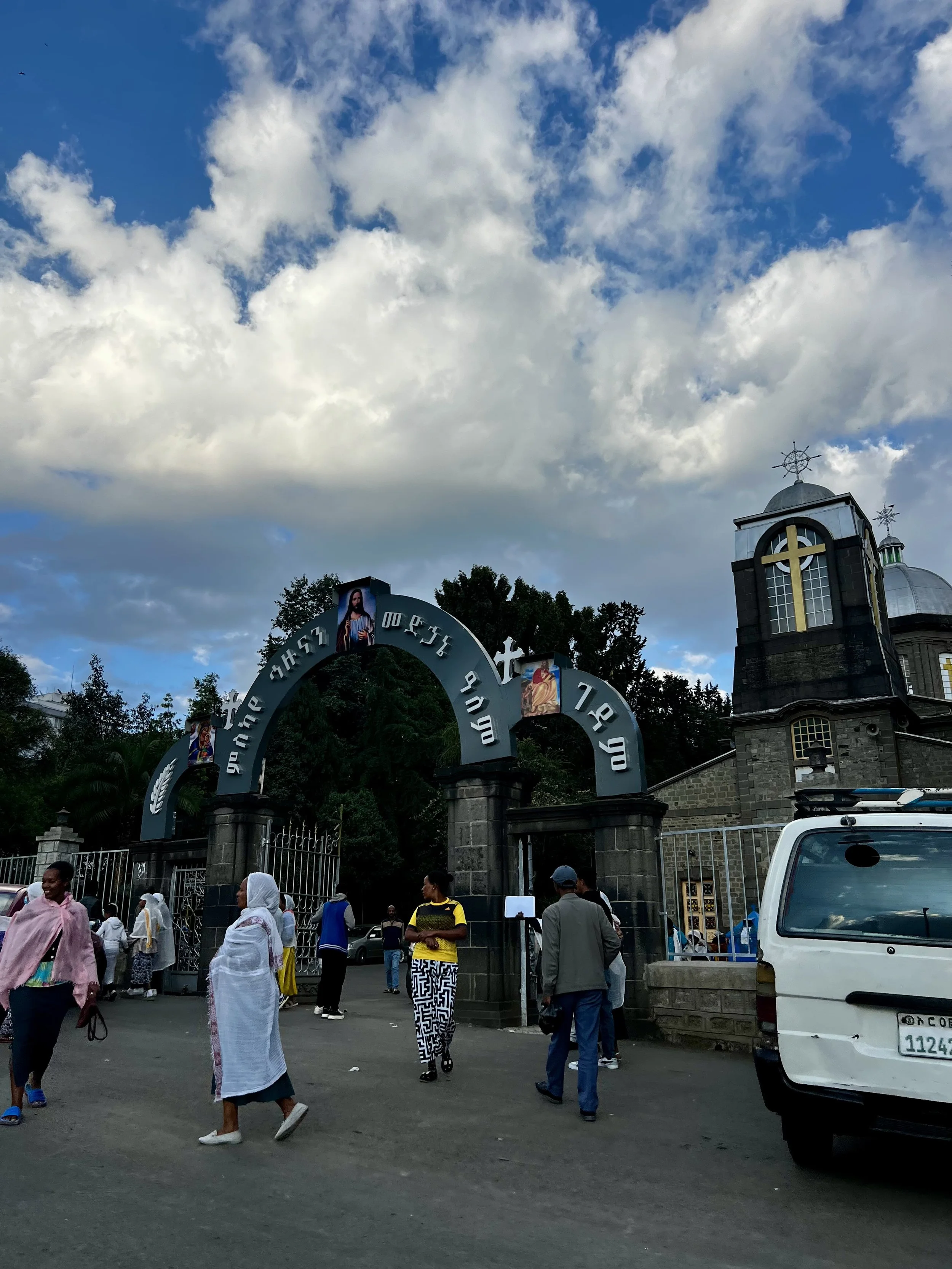
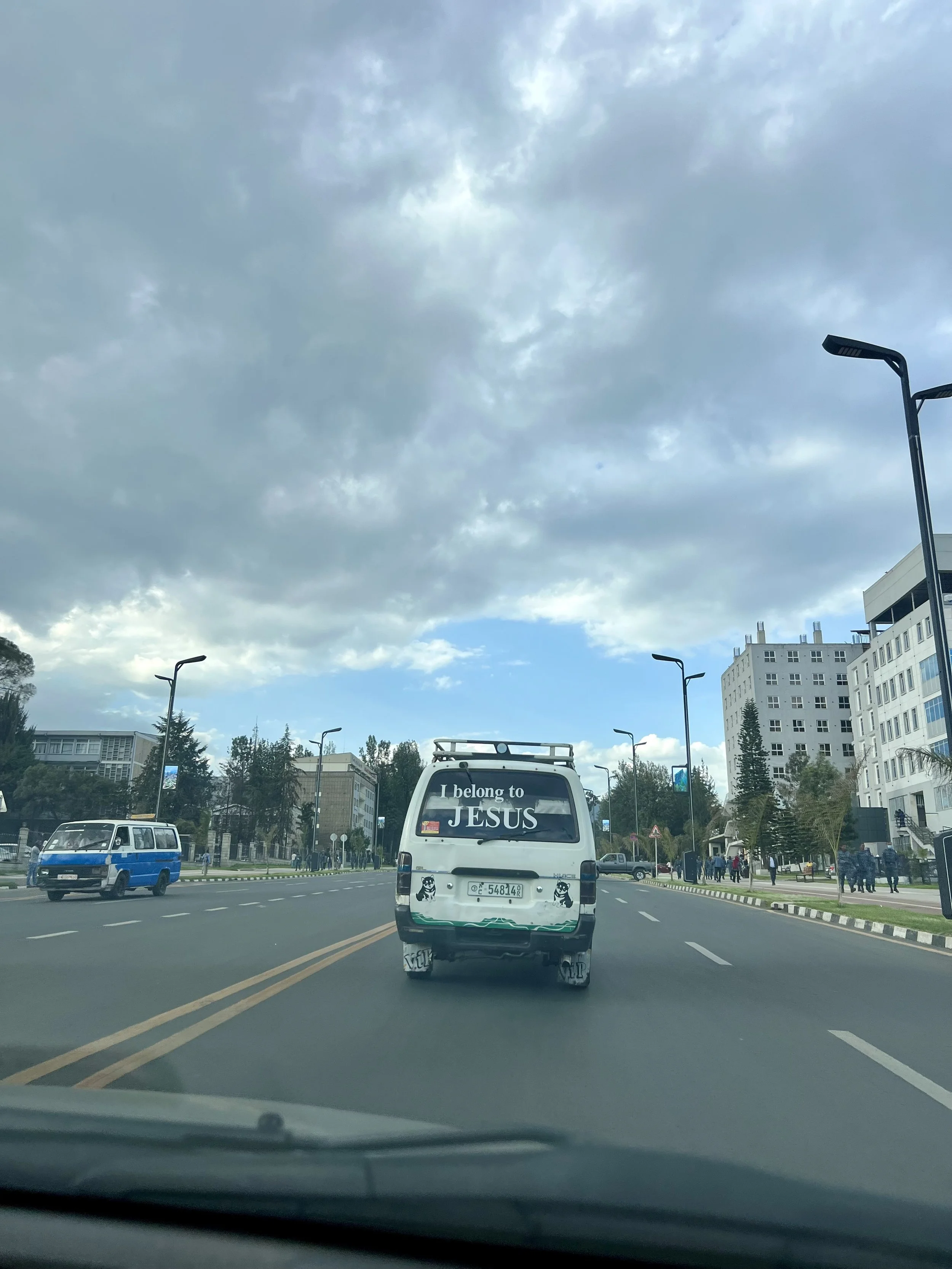
Street Views of Addis Ababa
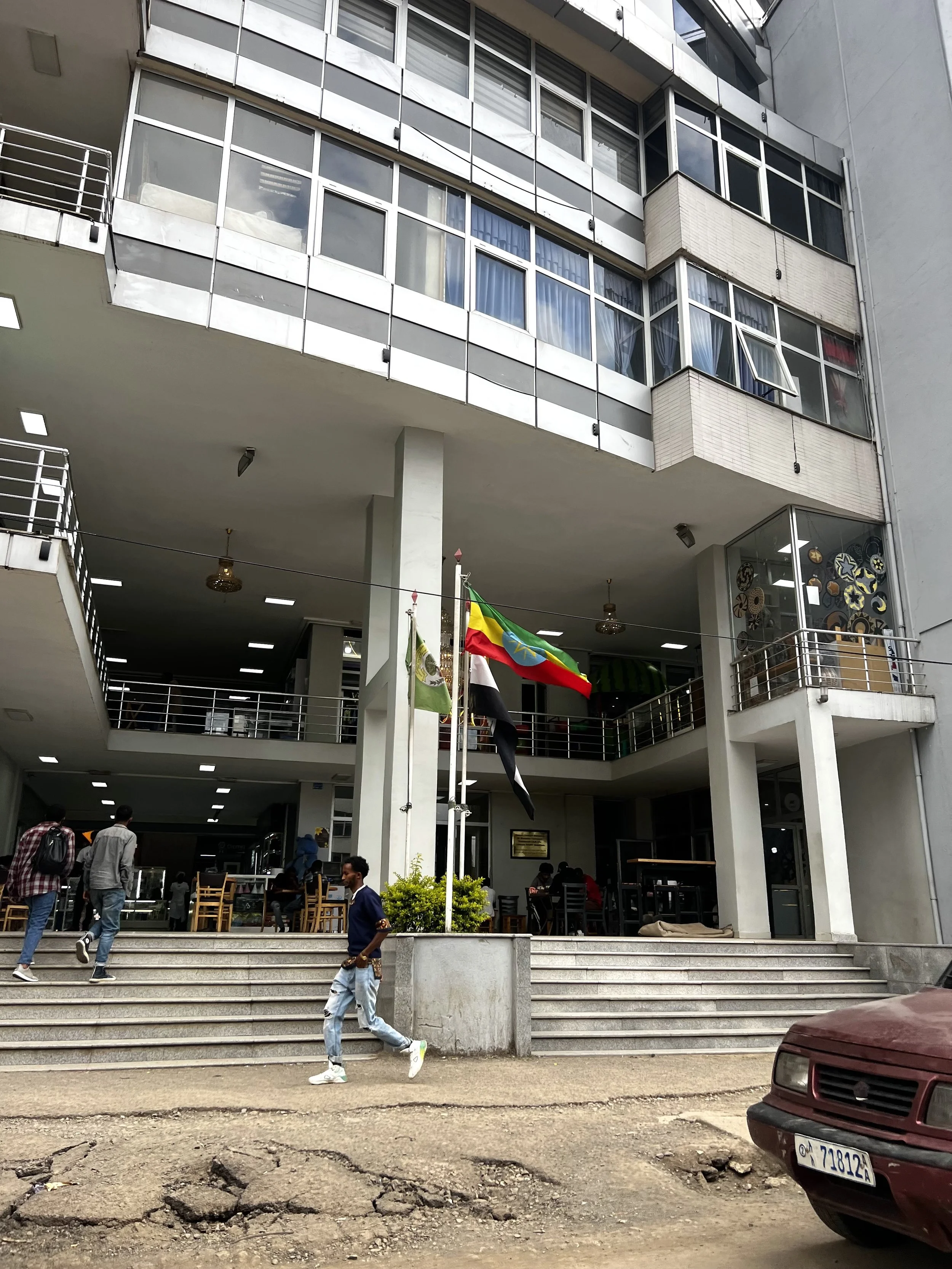
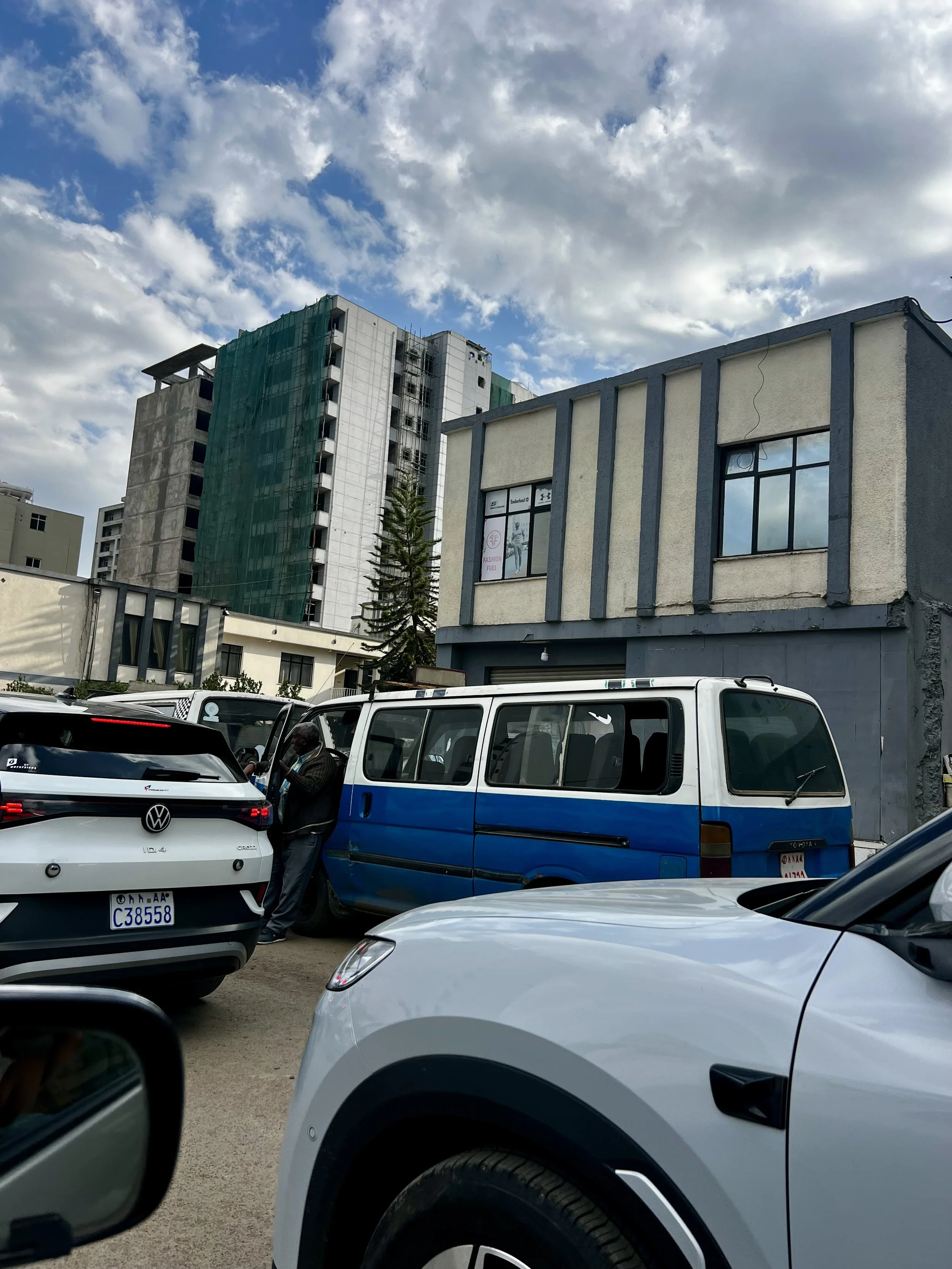

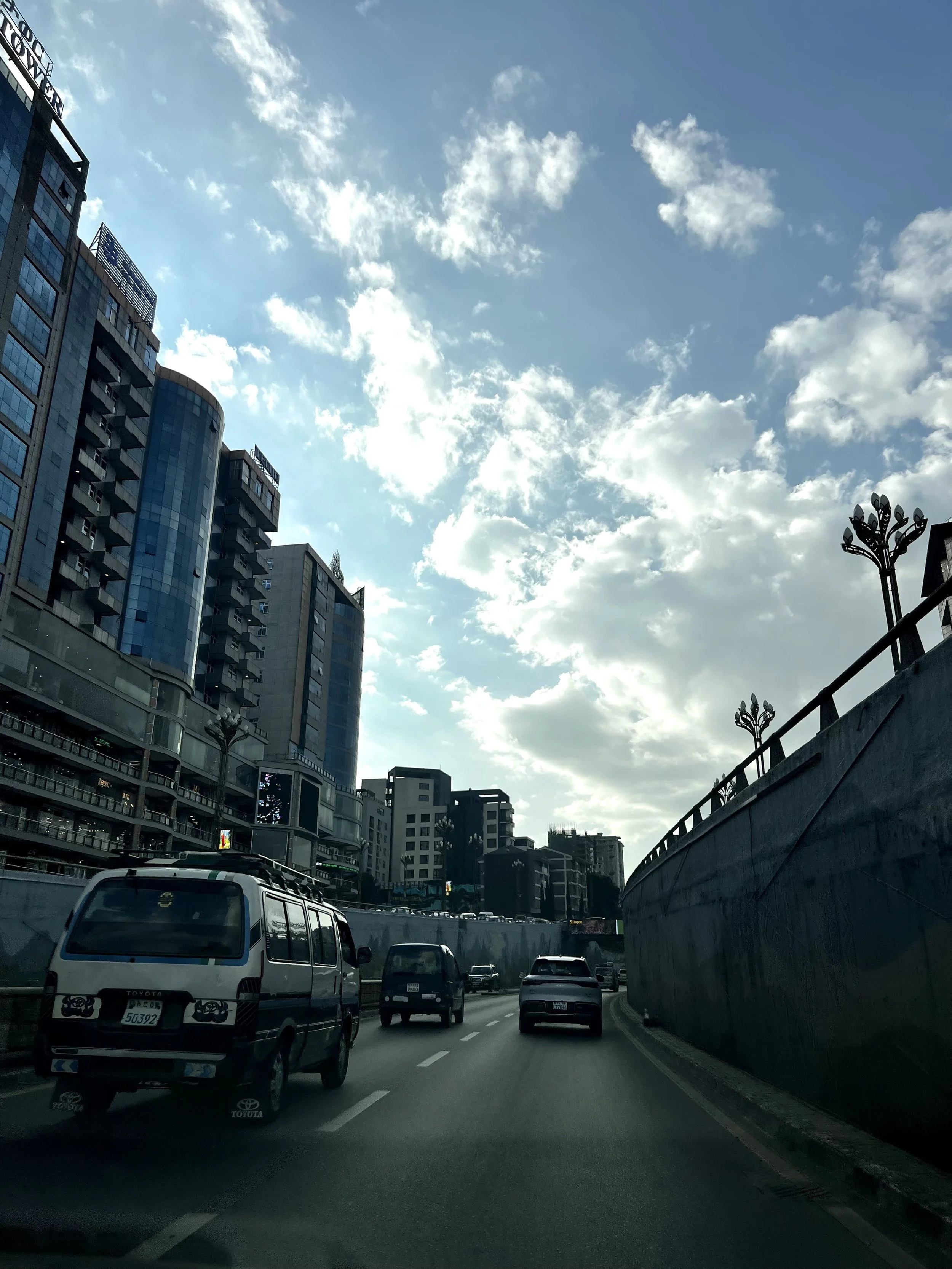
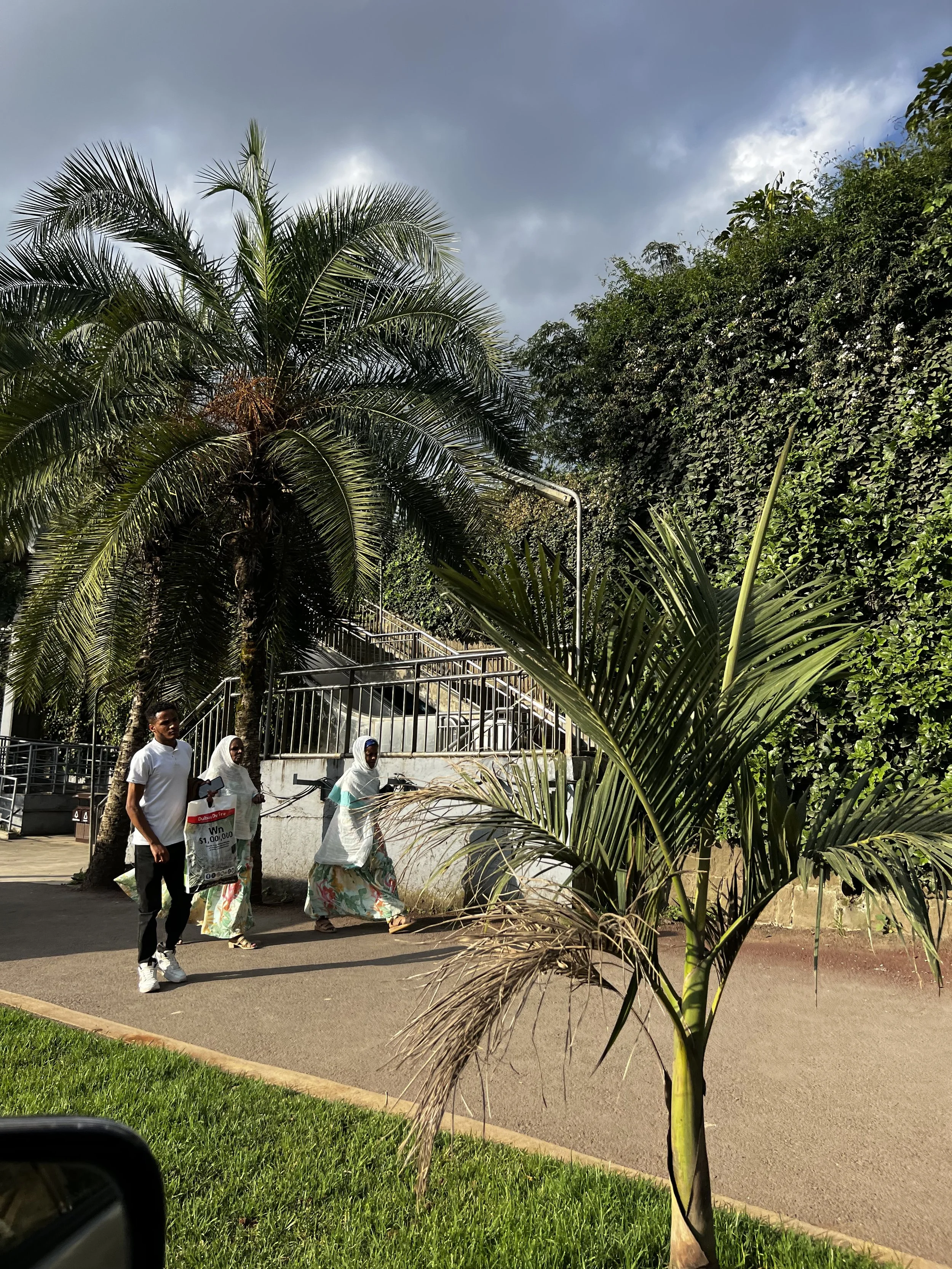
Lucy, and the Weight of Three Million Years
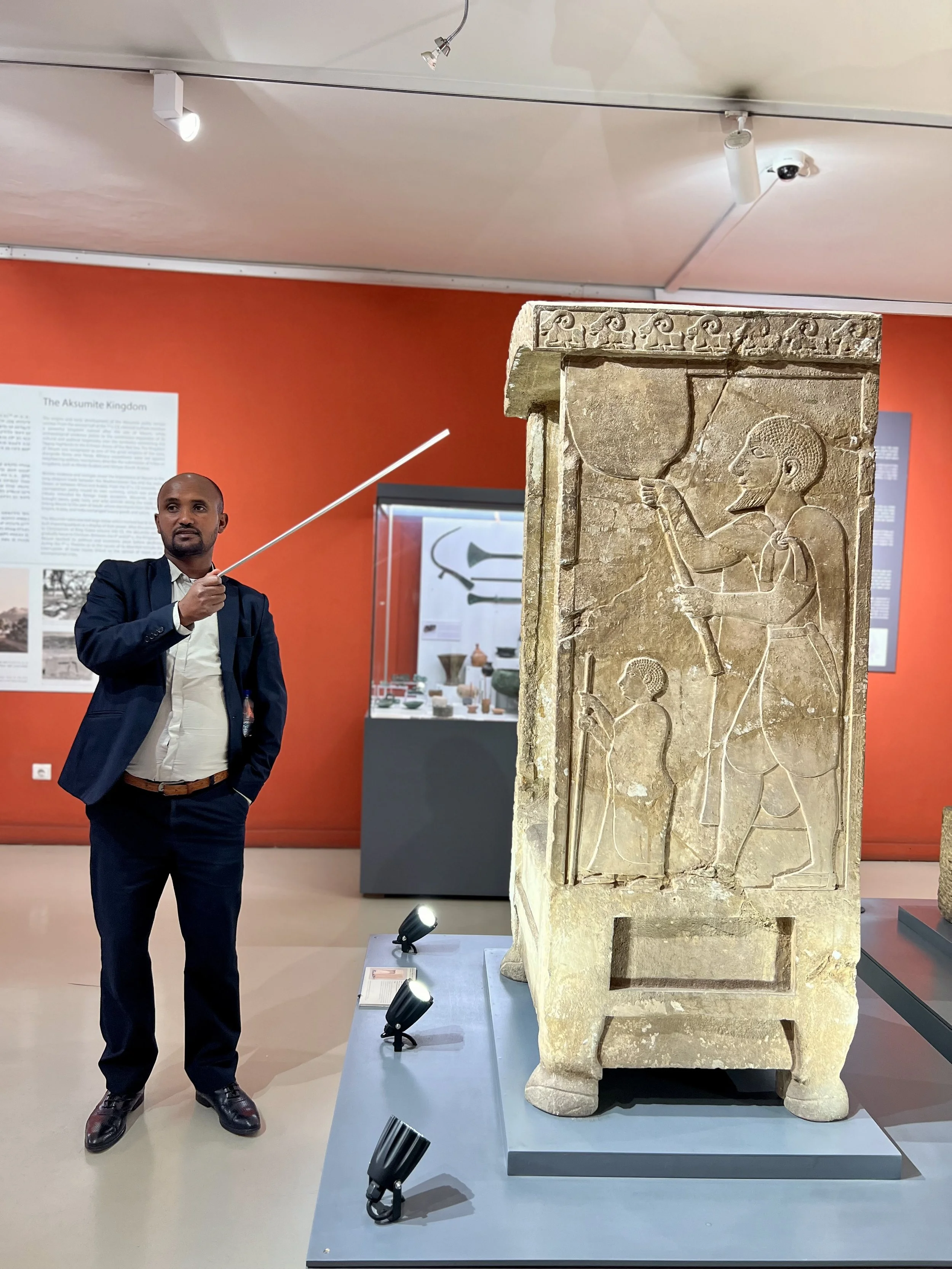
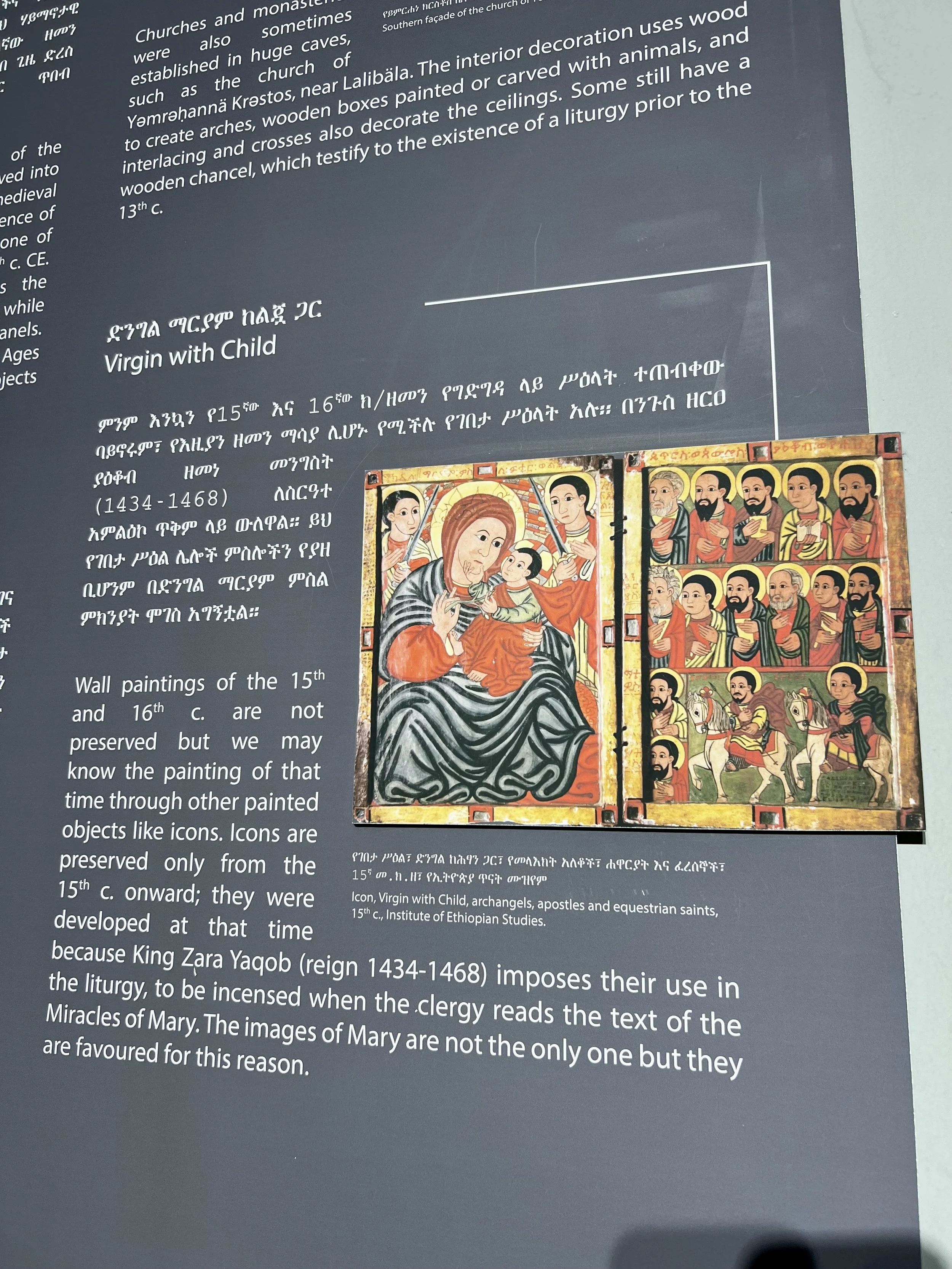
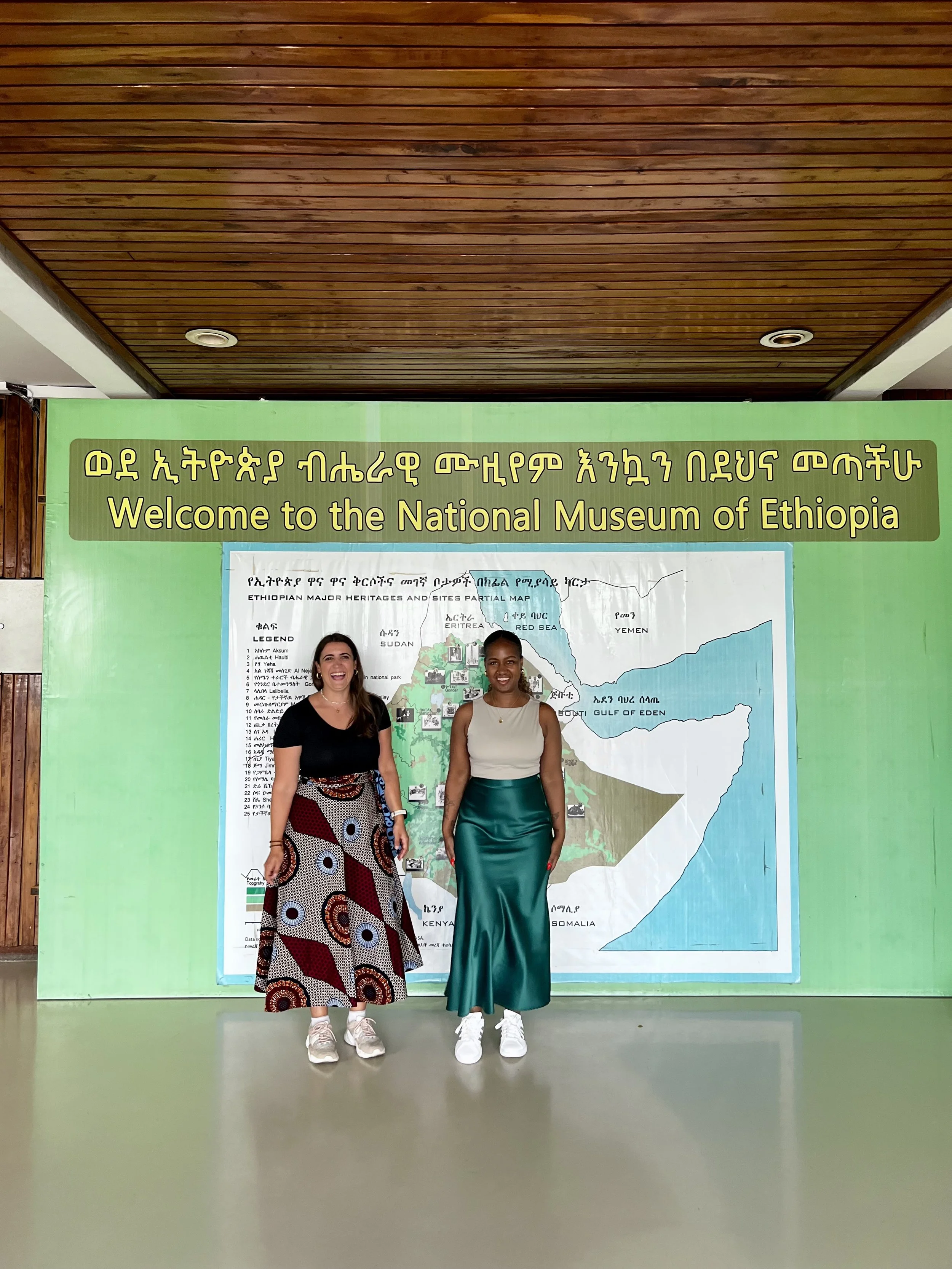
I love museums. Unashamedly, unreservedly, without apology. I am the woman proposing the museum as a date — over dinner, over the club, over most things. So when we arrived at the National Museum of Ethiopia, I felt something in me settle.

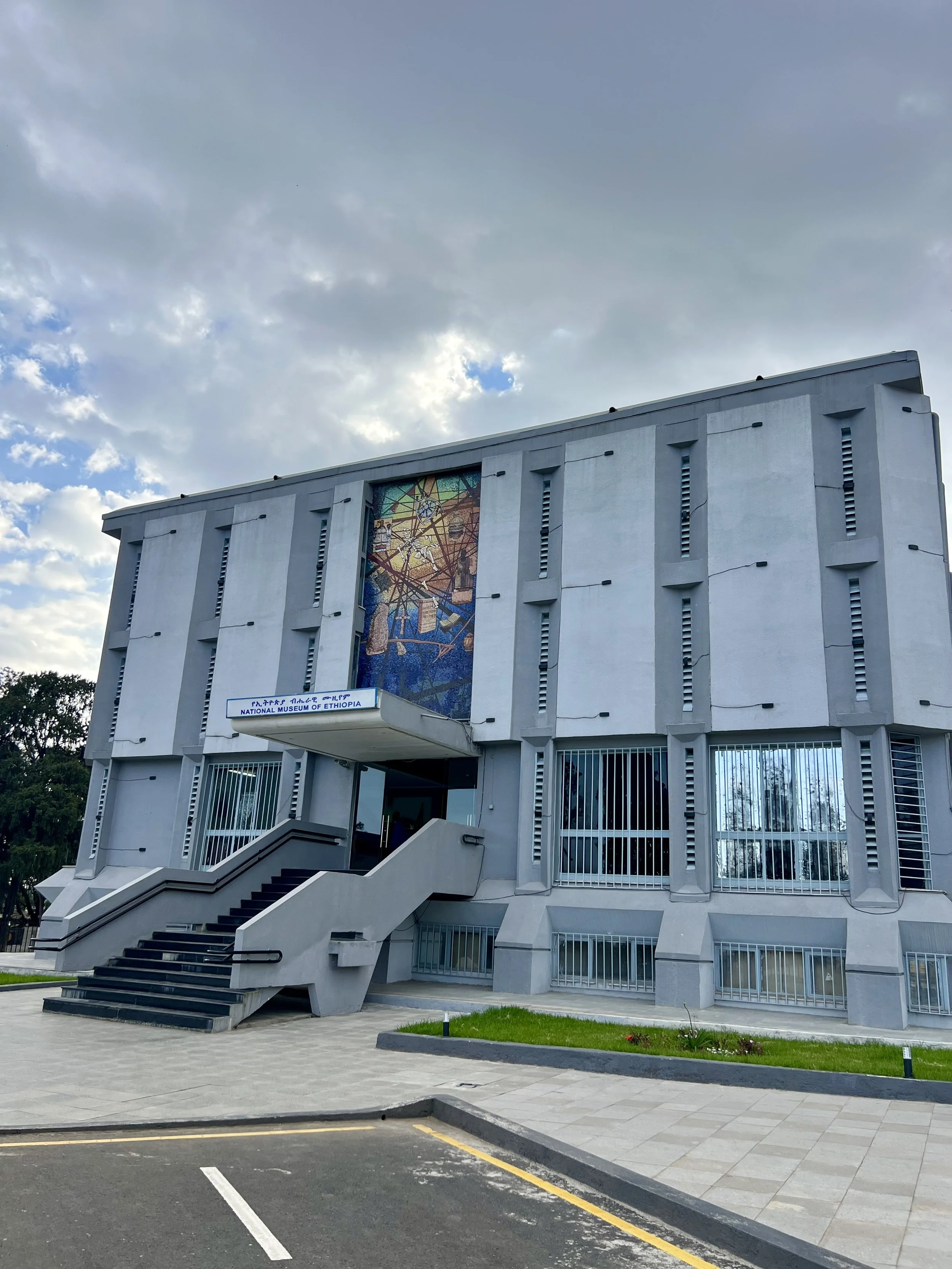
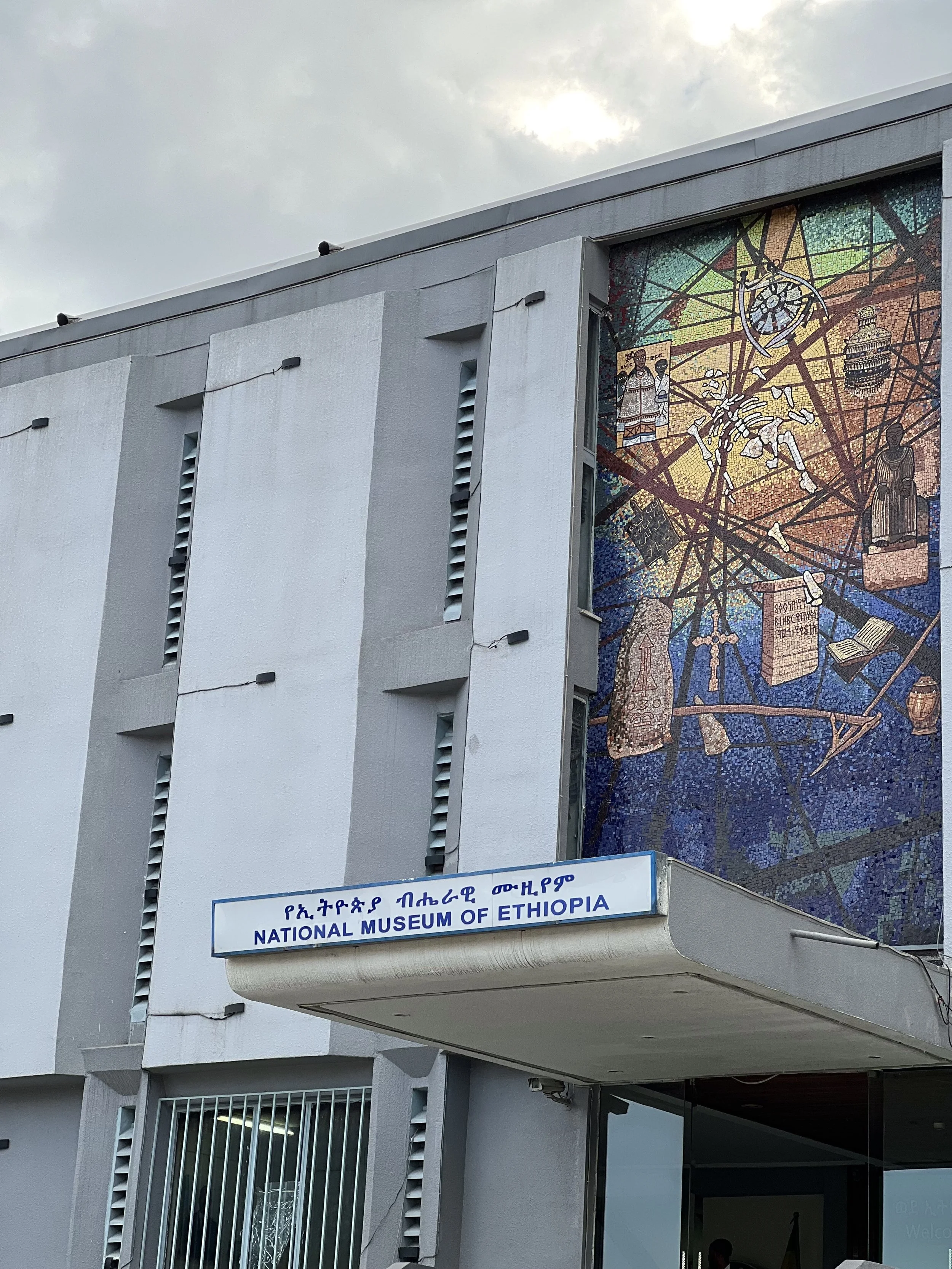
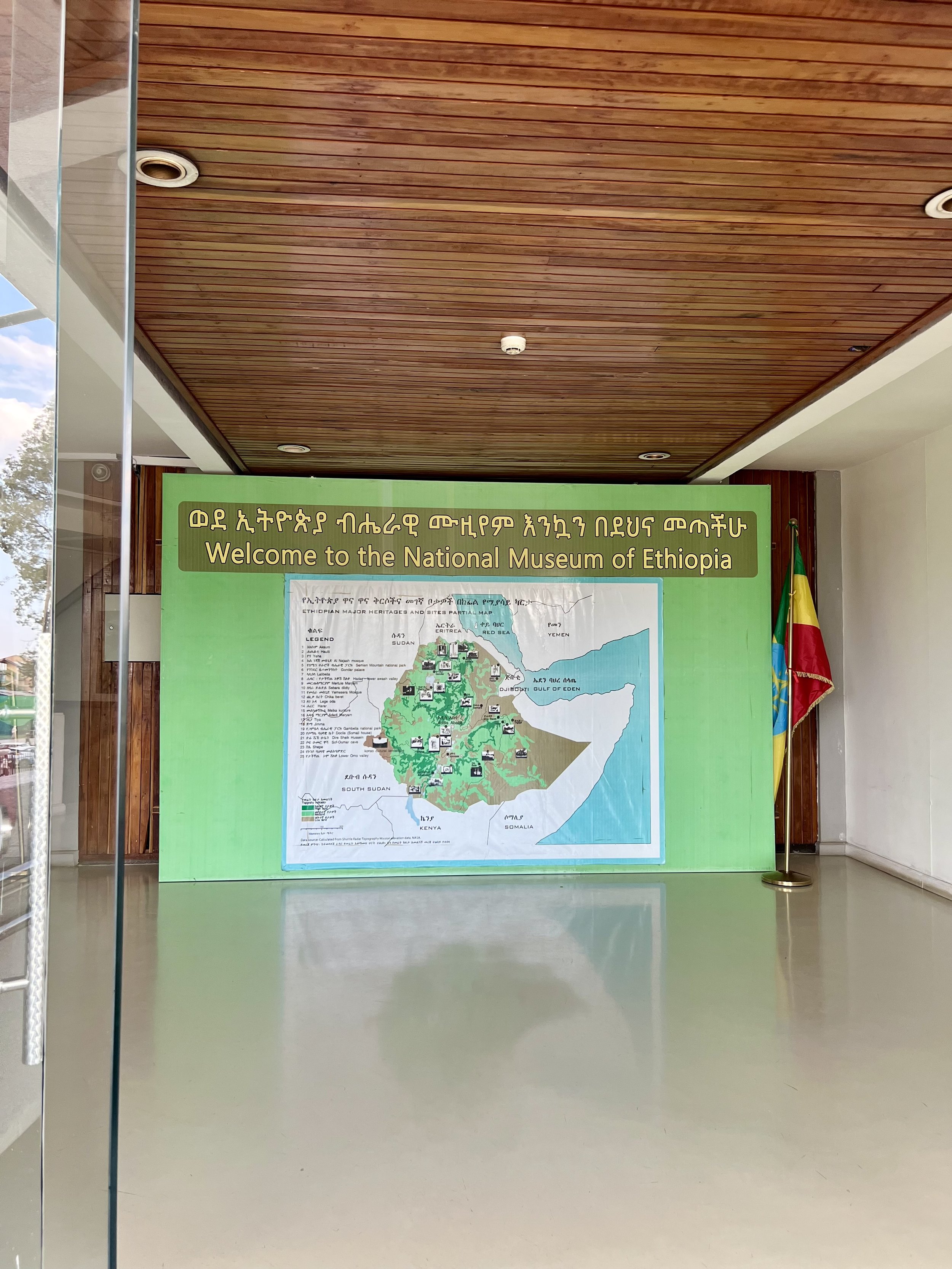
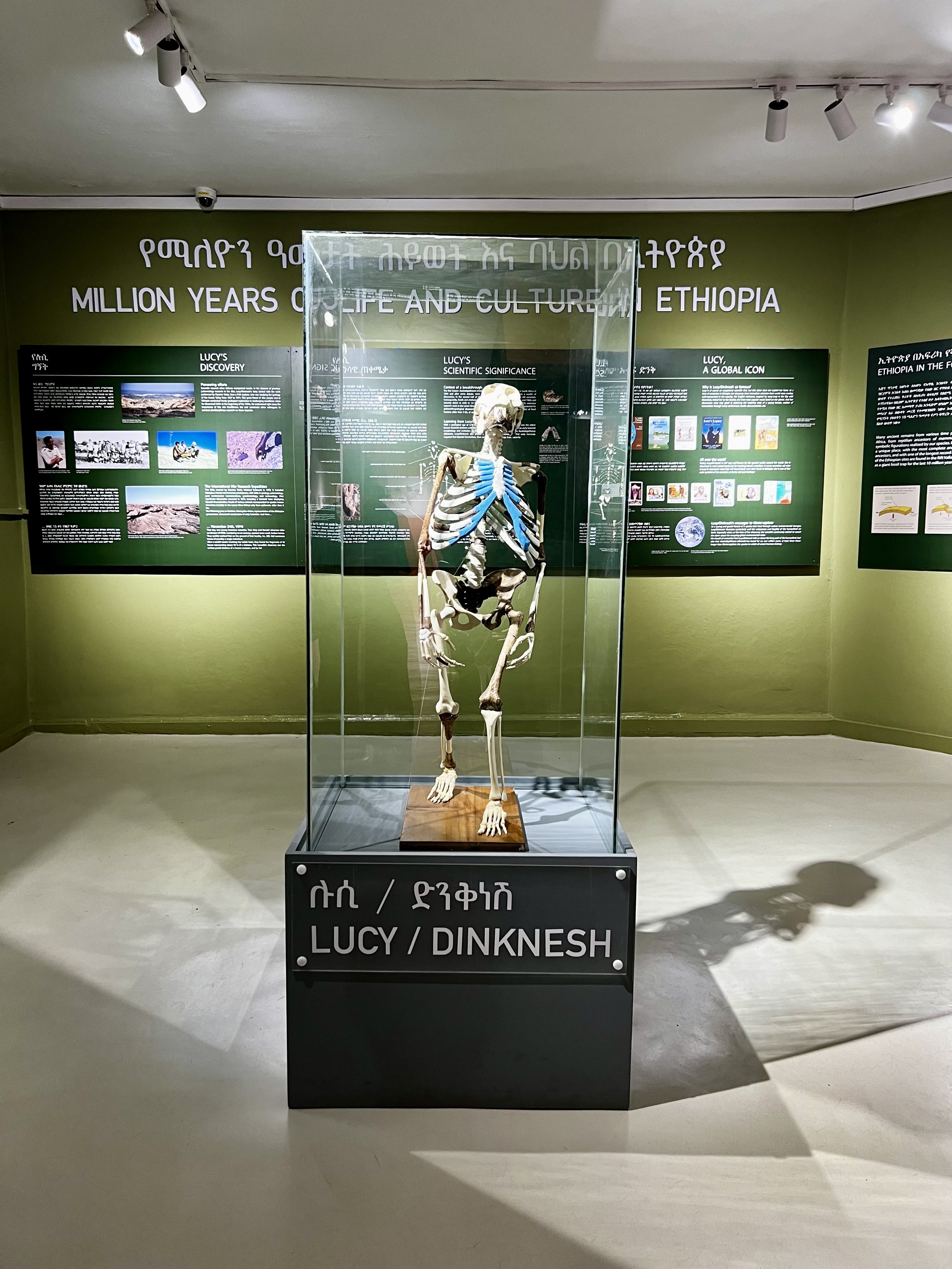
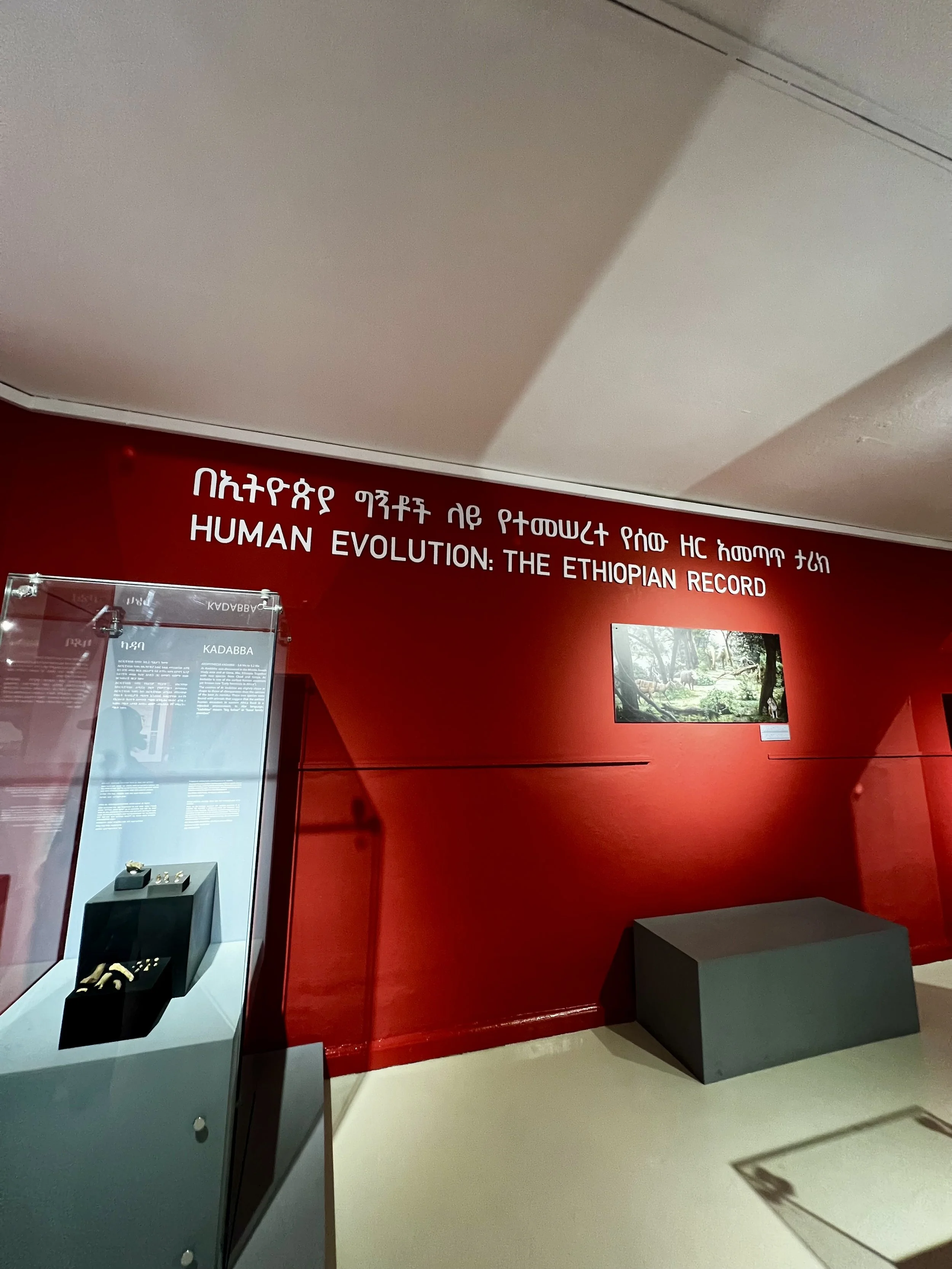
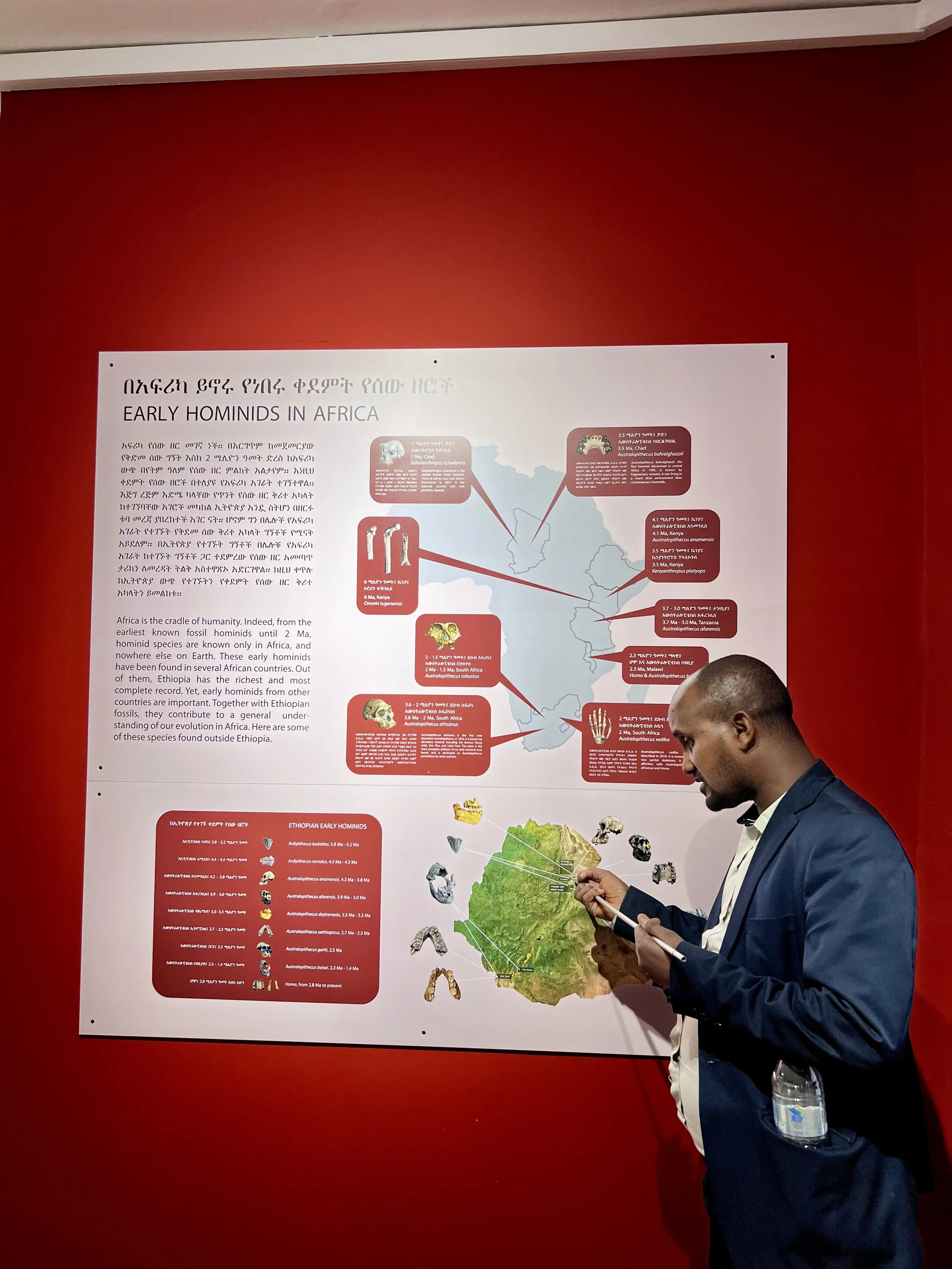
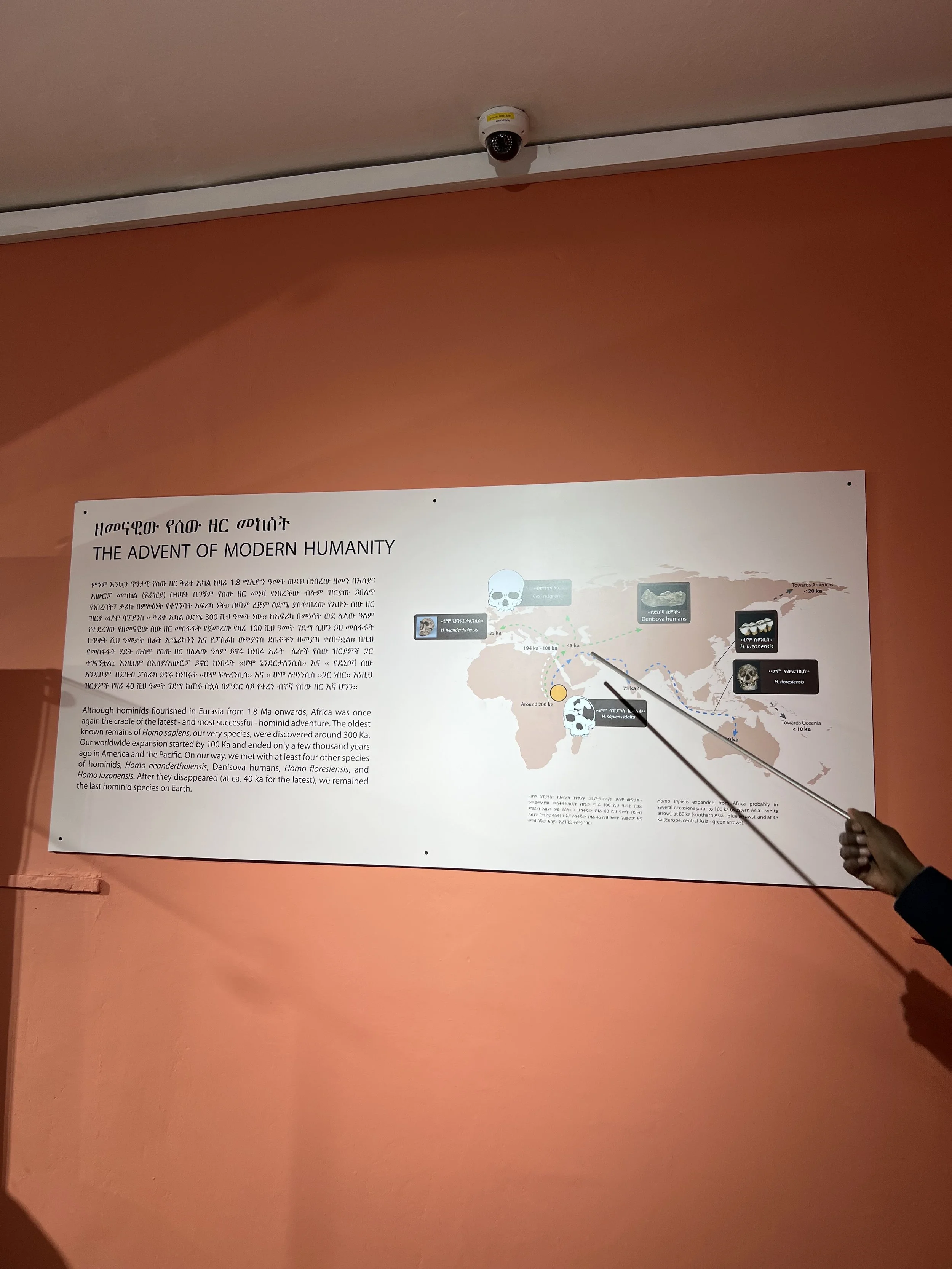
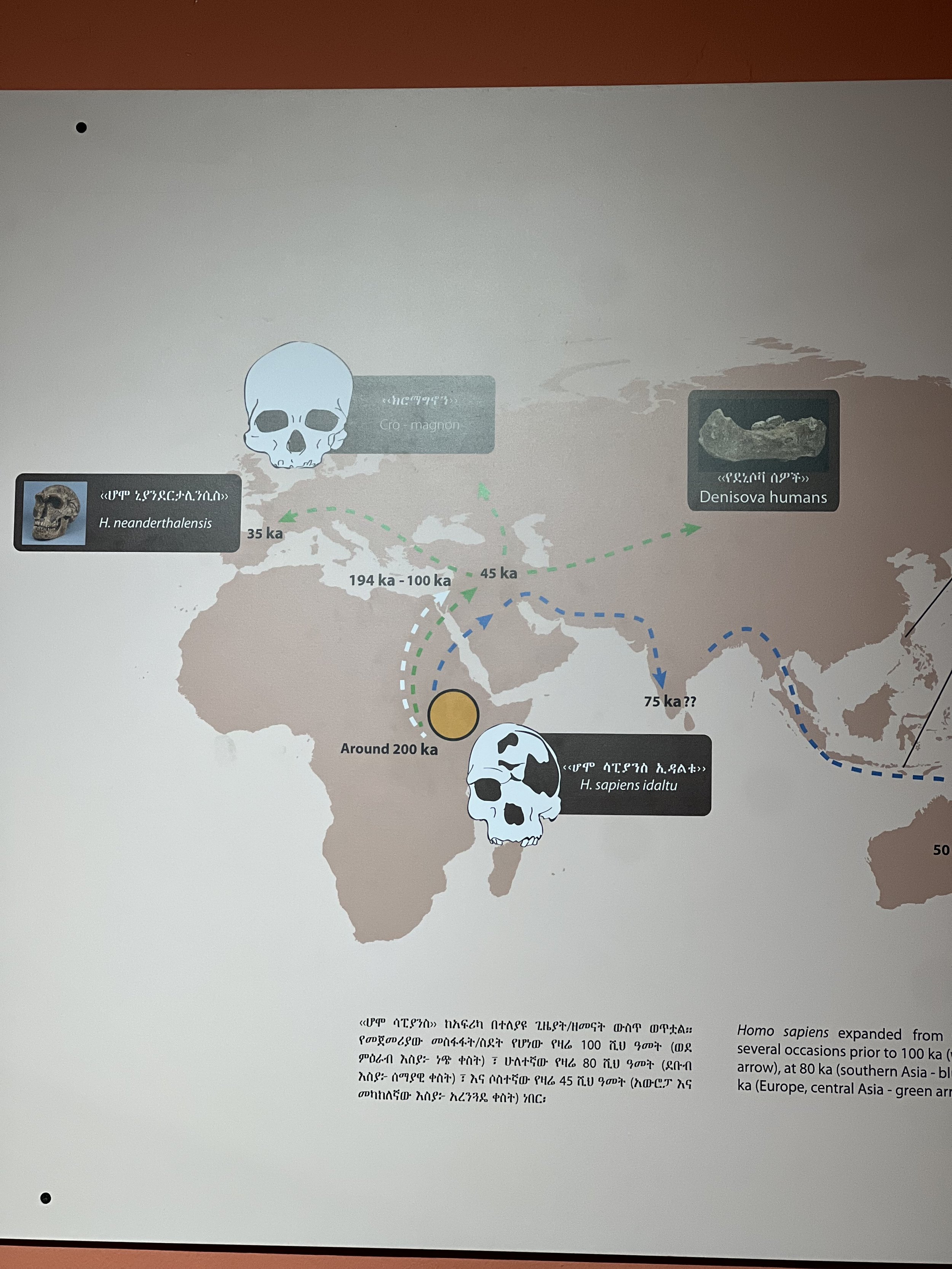
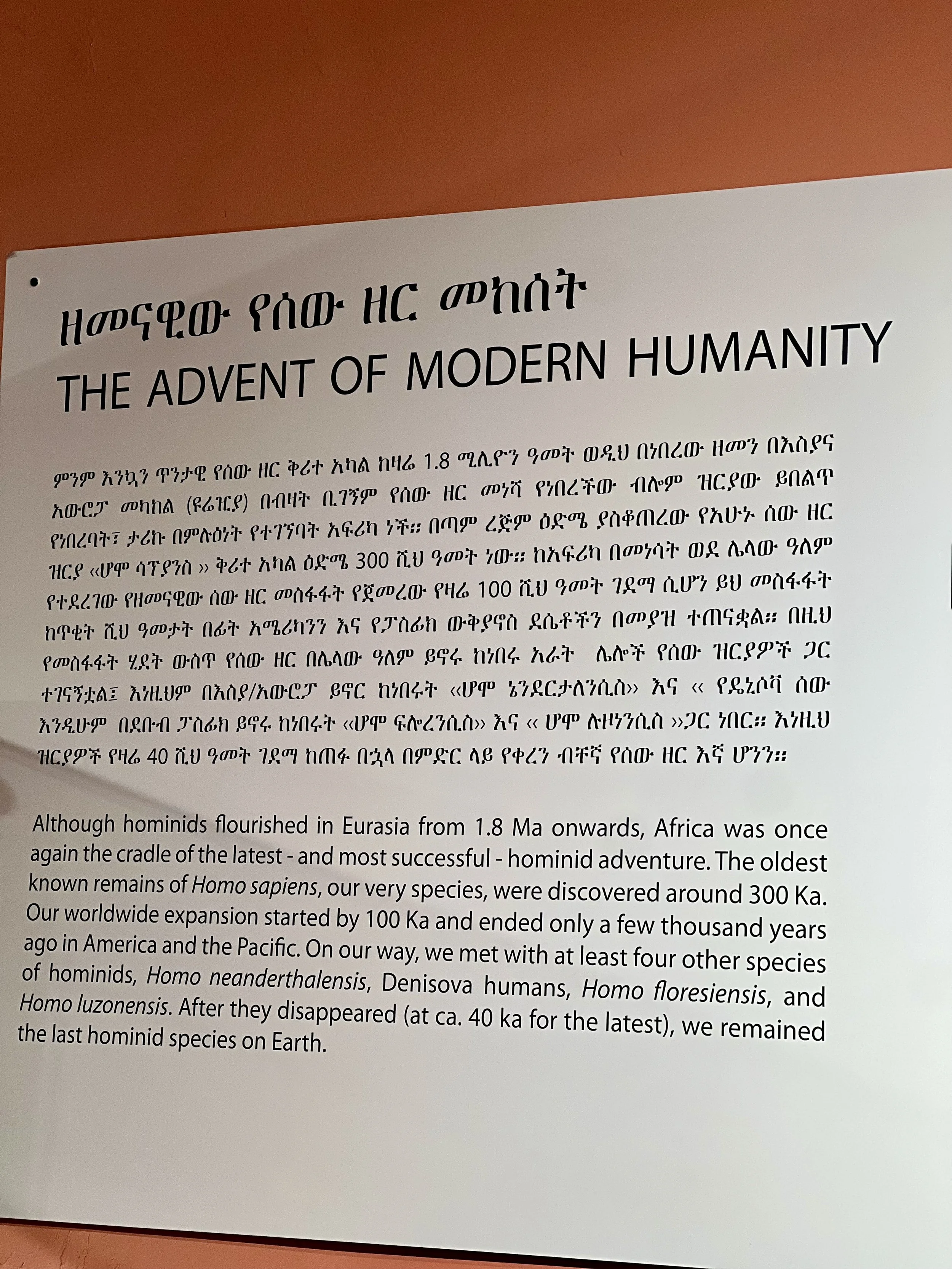
This museum is home to Lucy — known in Ethiopia as Dinknesh, meaning "you are wonderful." Her fossil, discovered in 1974, is 3.2 million years old, and roughly forty percent intact. At the time of her discovery, she was the most complete early-human ancestor skeleton ever found. She is compelling not merely as a relic, but as evidence. Her bones confirmed that bipedalism — walking upright on two legs — preceded the development of large brains. She rewrote the story of what it means to be human.
Standing in her presence, I felt the weight of proportion — the humbling, almost sacred recognition of how small we are against the arc of history, and how audacious it is, really, to be alive and moving through it.
Mountains, Prayer, and a Moment That Undid Me
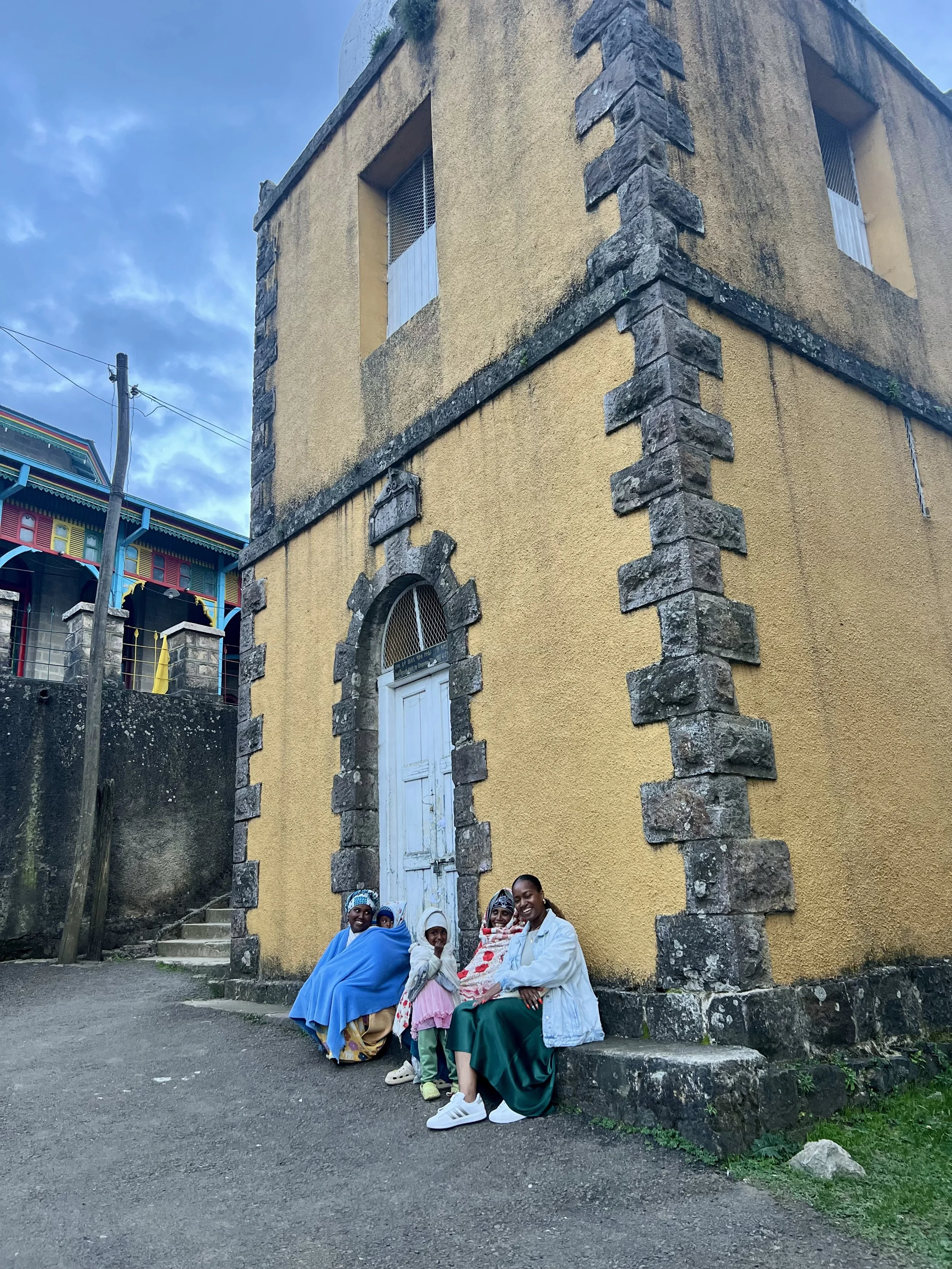
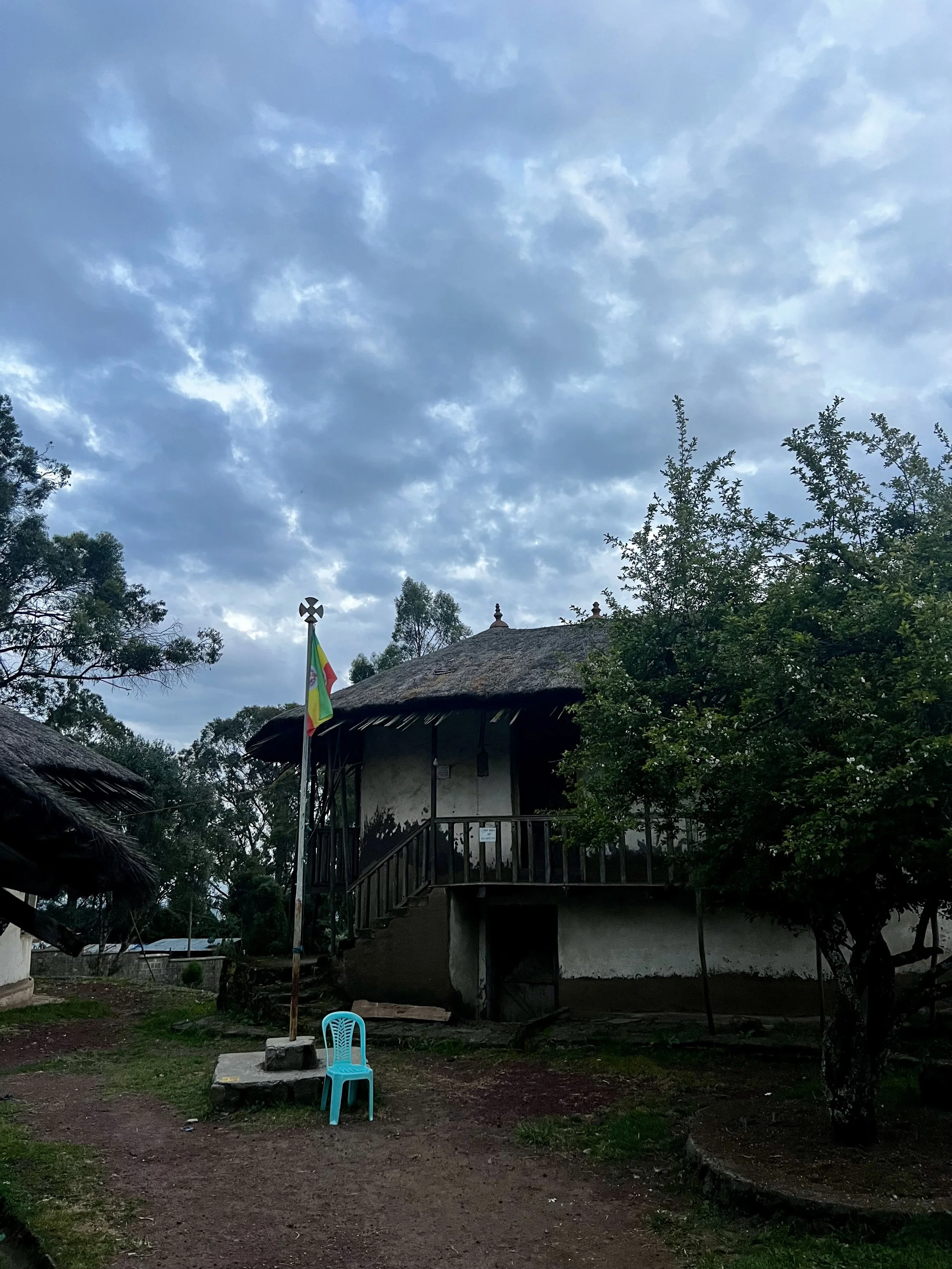
As sunset began to breathe color into the sky, we drove up into the Entoto Hills to visit Entoto Mariam Church — one of the oldest in Addis Ababa, and a place I was wholly unprepared for.
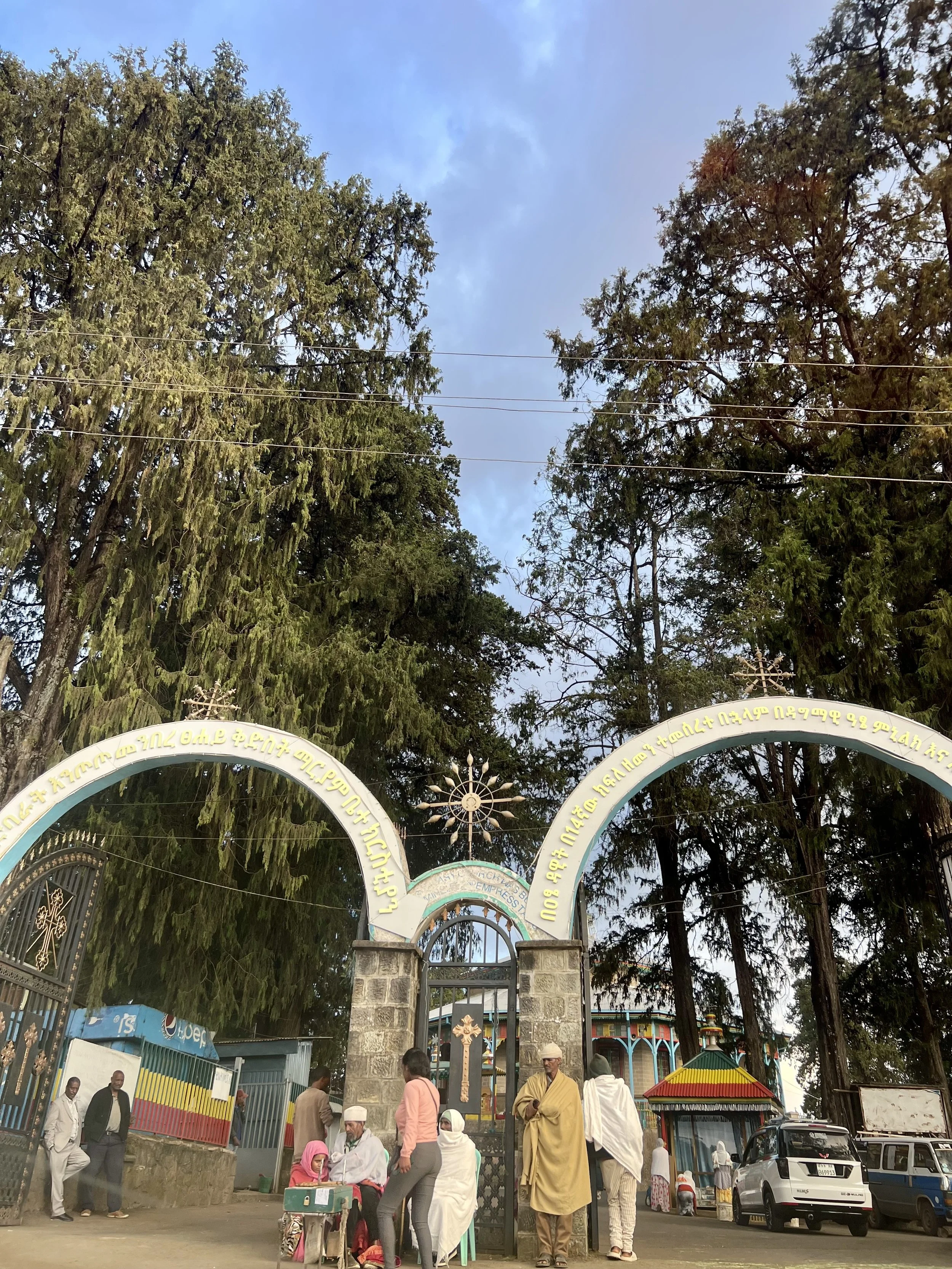
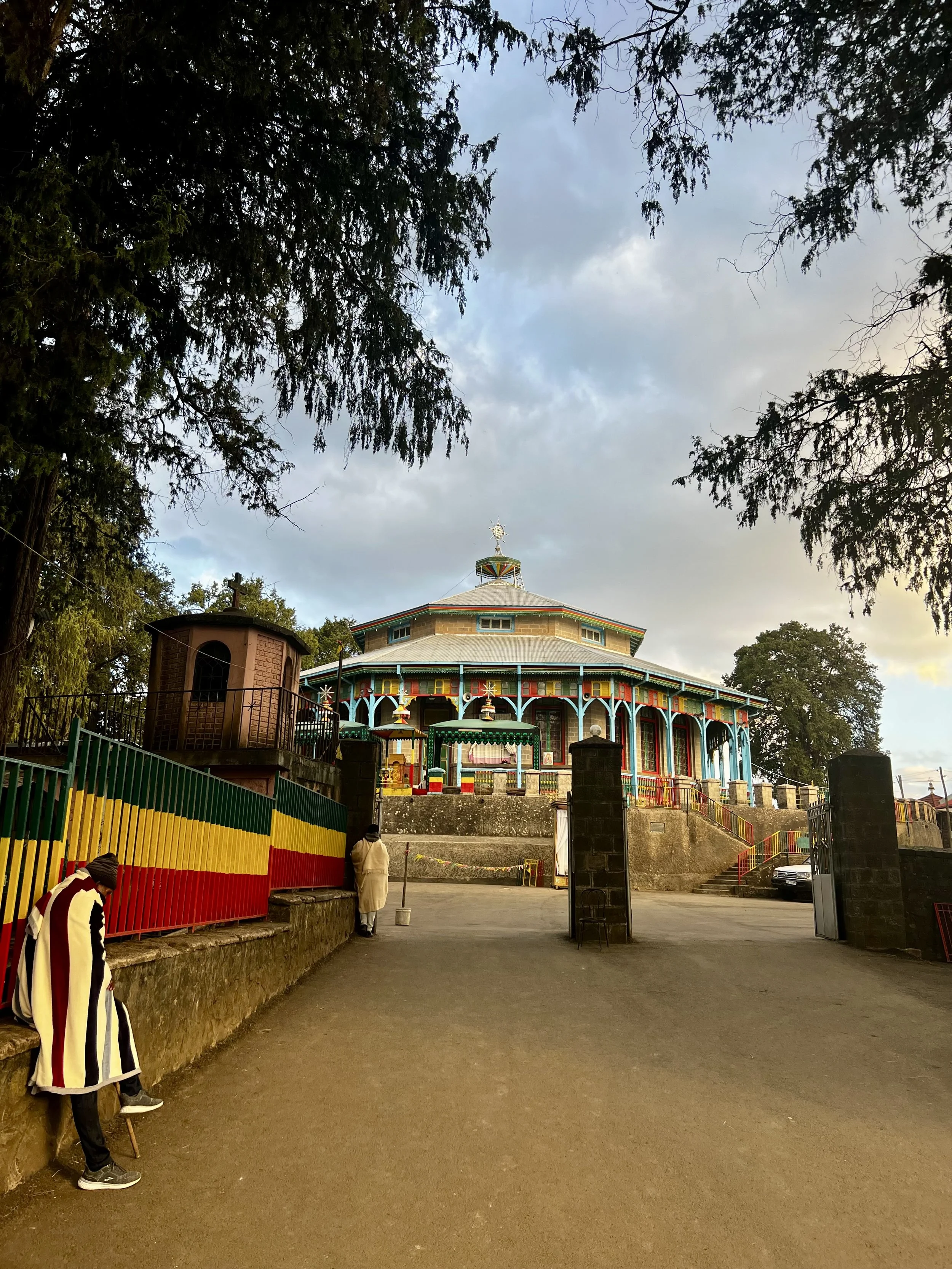
It was a Saturday. The people had gathered in white — luminous, resolute, gathered in fervor. The Orthodox Tewahedo liturgy rose in Amharic, Ethiopia's national tongue, and it moved through me like something I did not have language for. I found myself in tears.
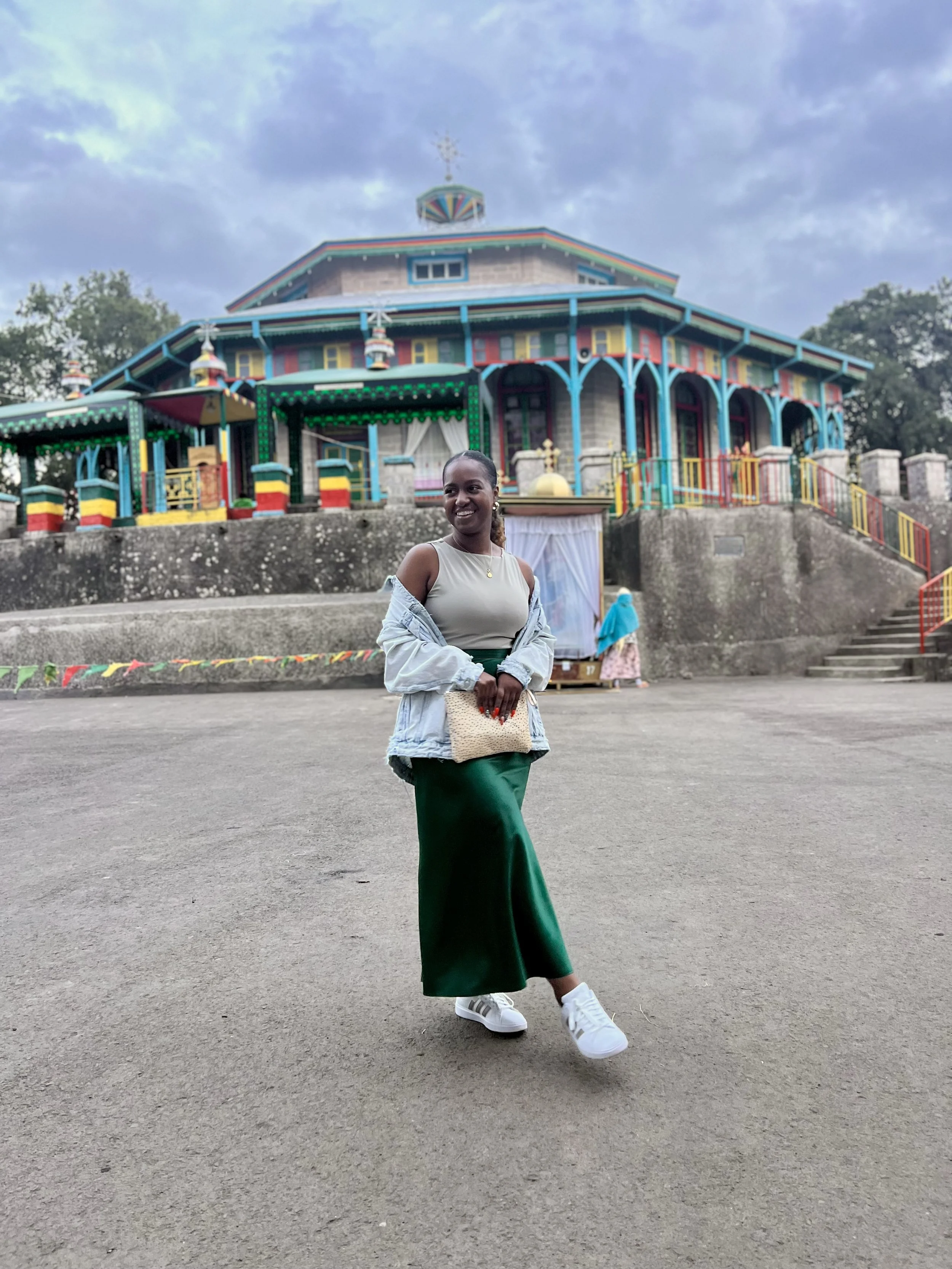
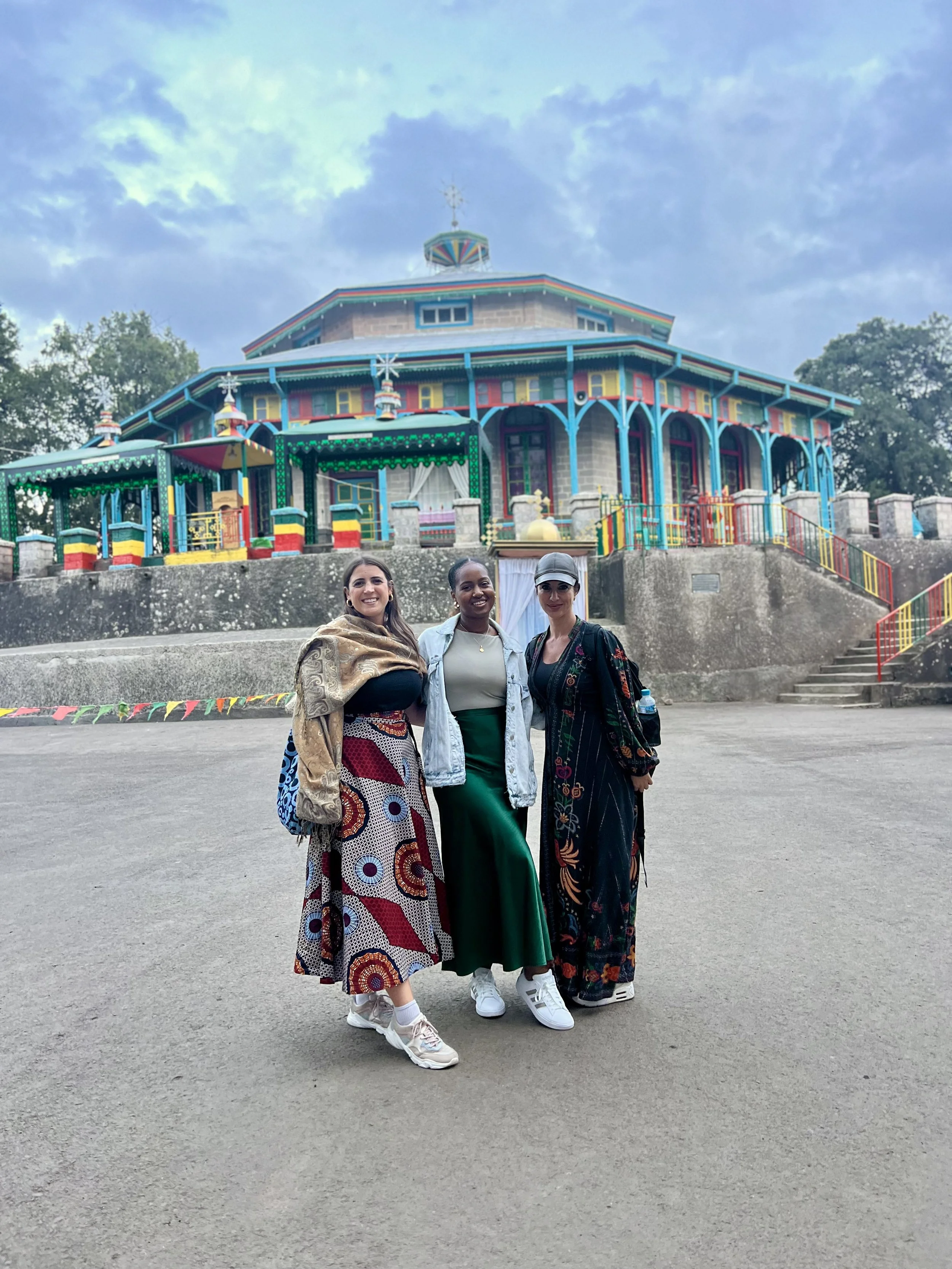
Shortly after, we visited the Museum of Emperor Menelik II and Empress Taytu. No photographs were permitted, and I honored that fully. What filled the space was regal — clothing, written documents, artifacts that carried the ferocity of a lineage unvanquished. It was a library of memory. I walked out different than I walked in.
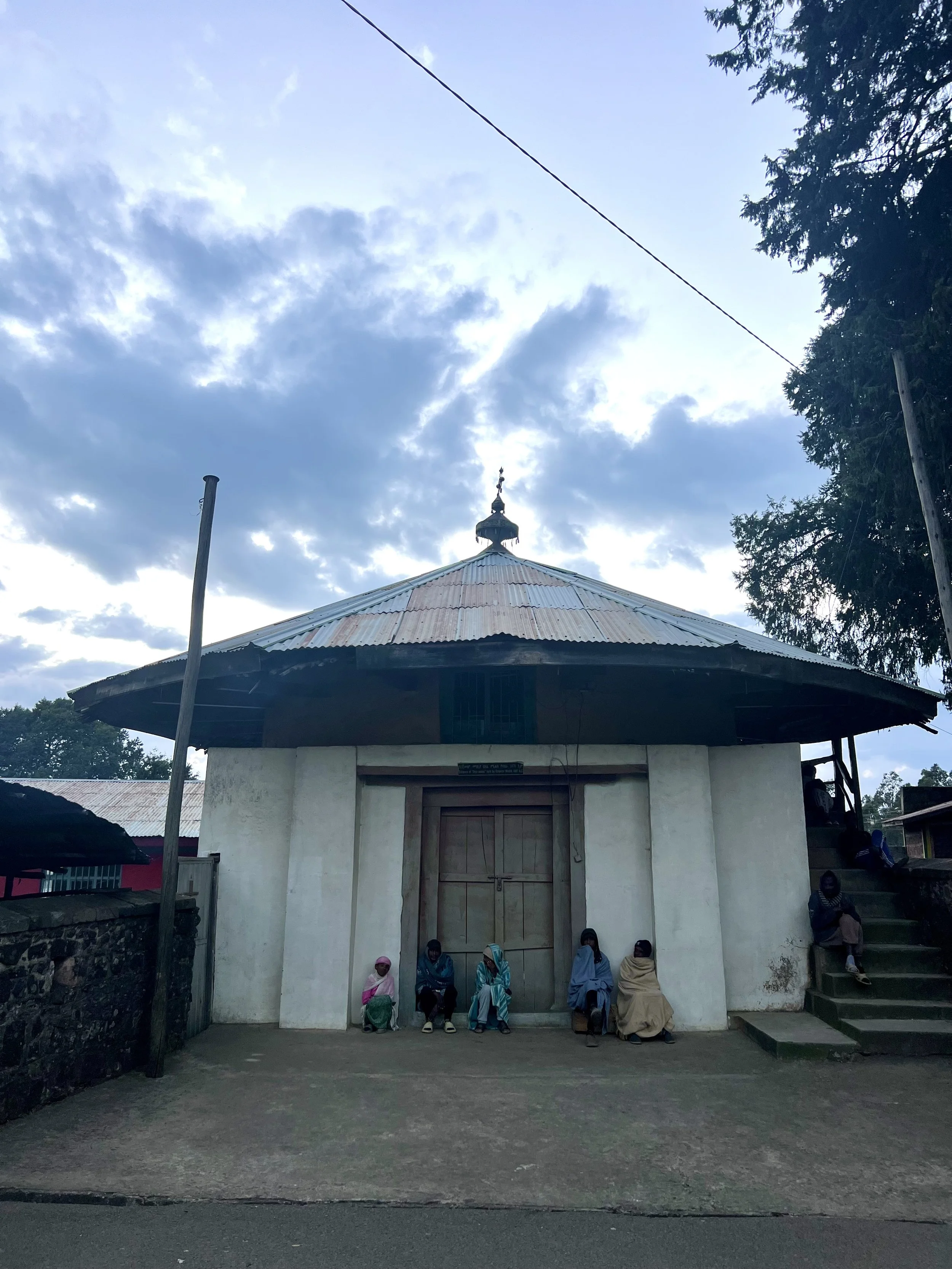
I wanted to join them. I wanted to stay.
There are moments in travel that edify you — that reach past the surface of sightseeing and touch something deeper. In my faith, in my awe, in my recognition of a devotion that has endured for centuries — this was one of those moments.
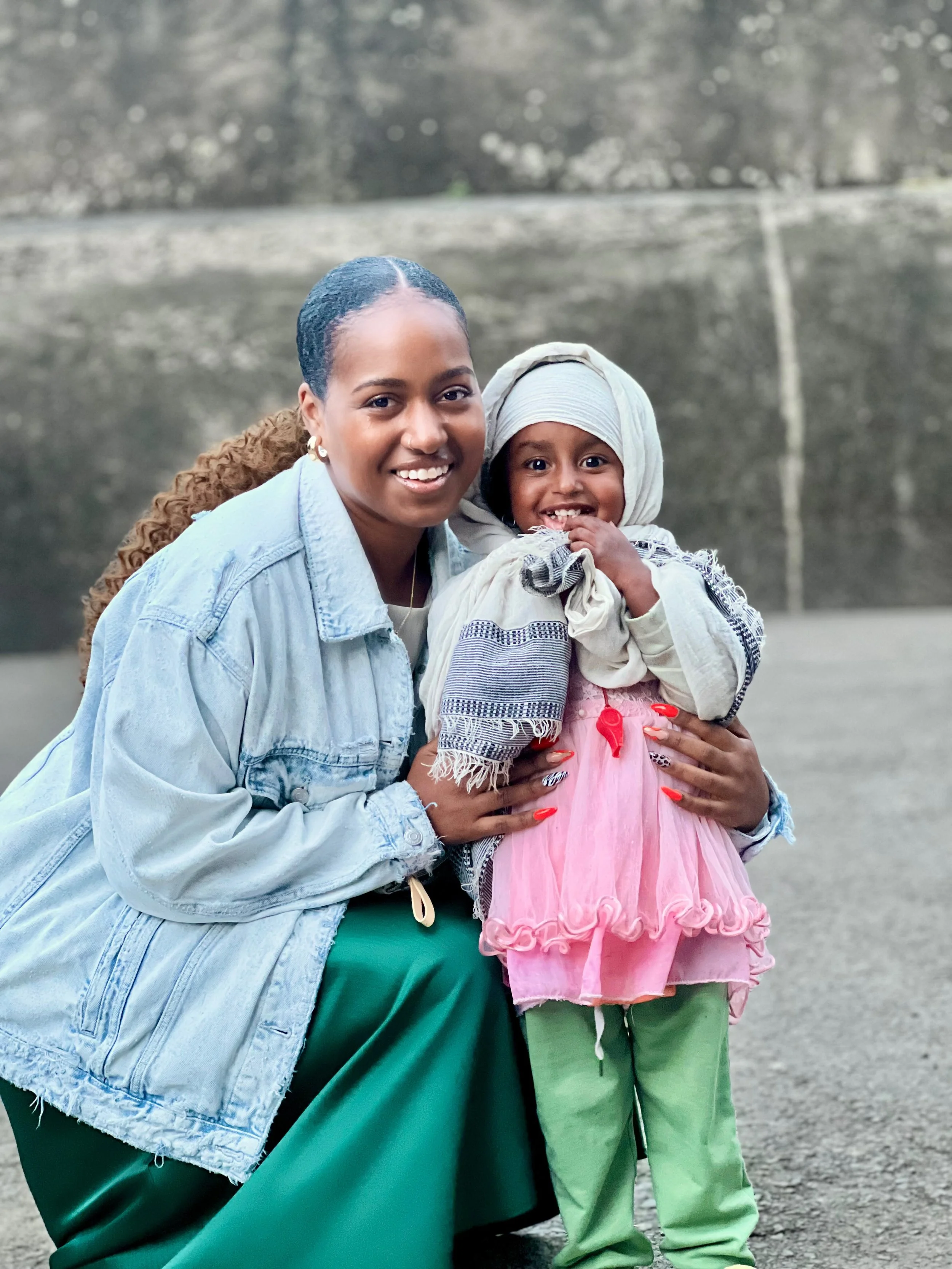
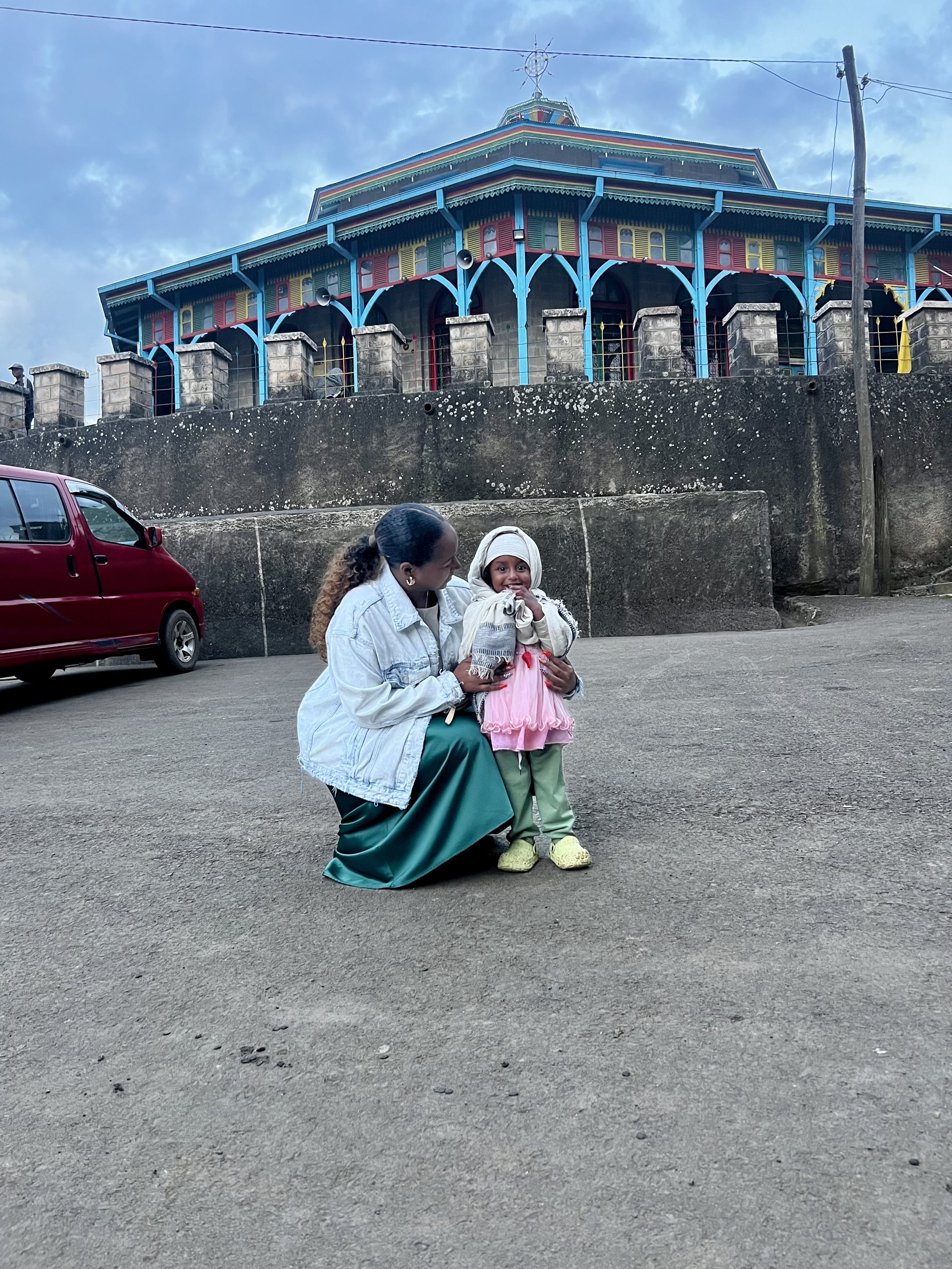
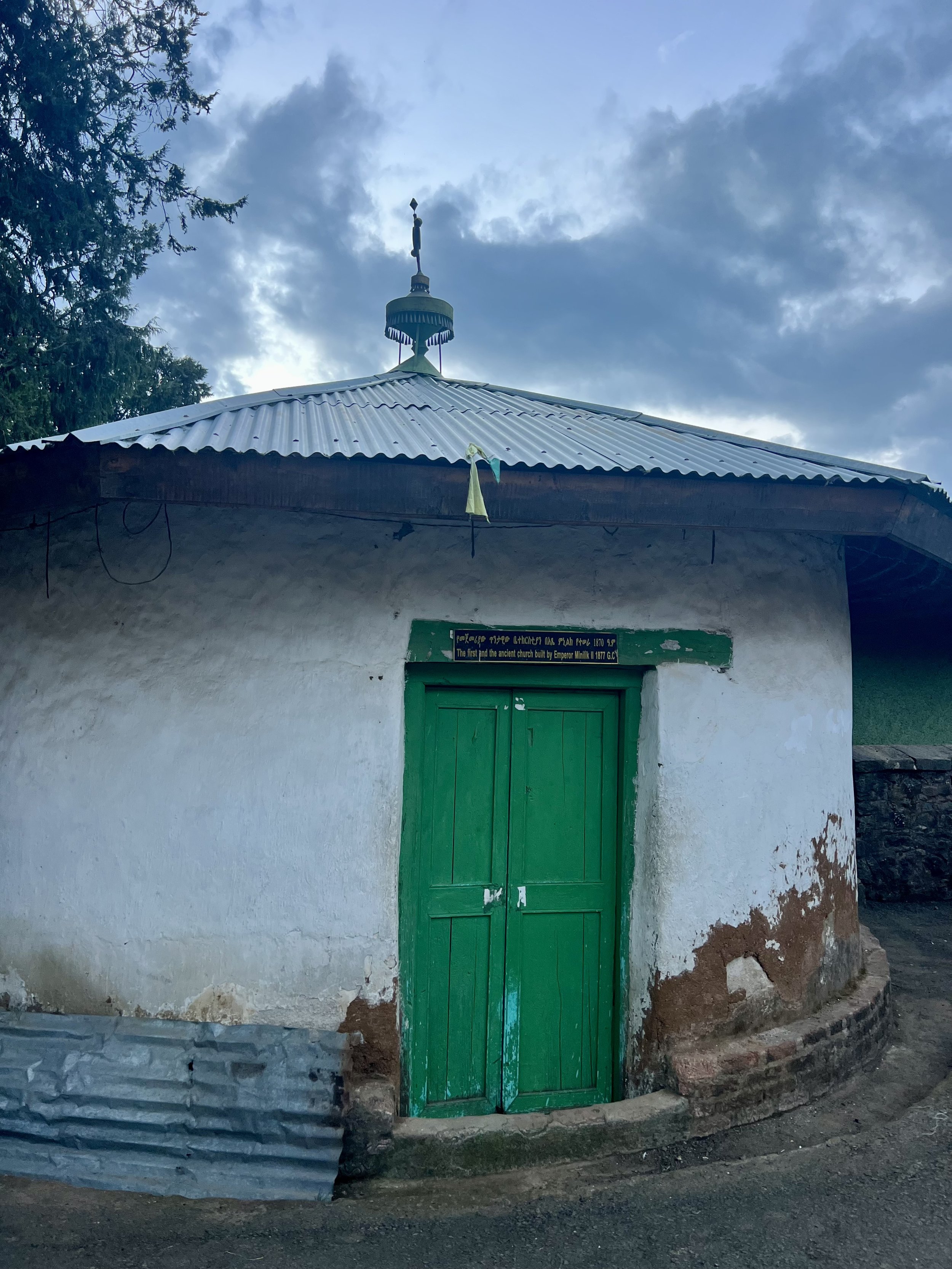
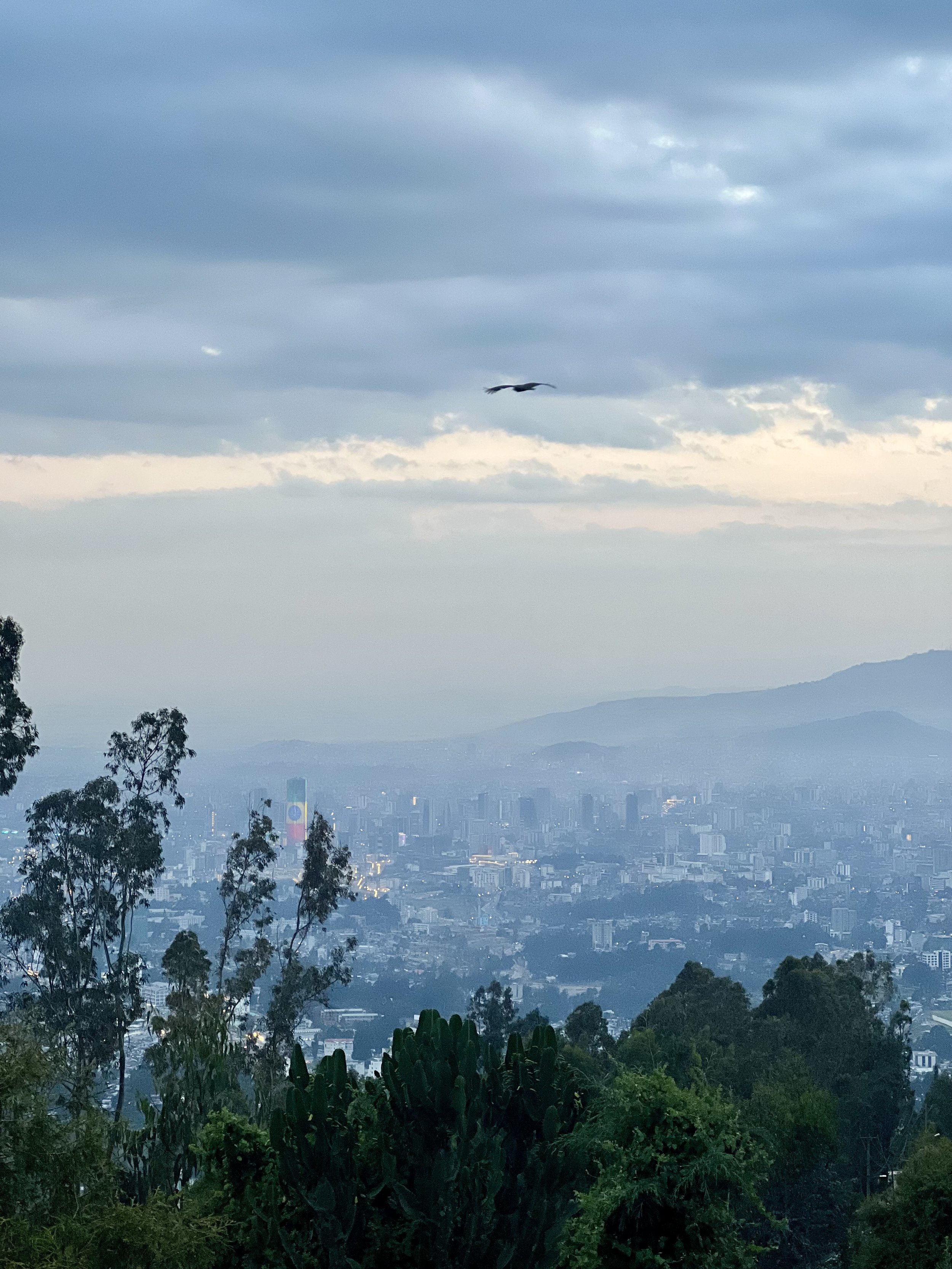
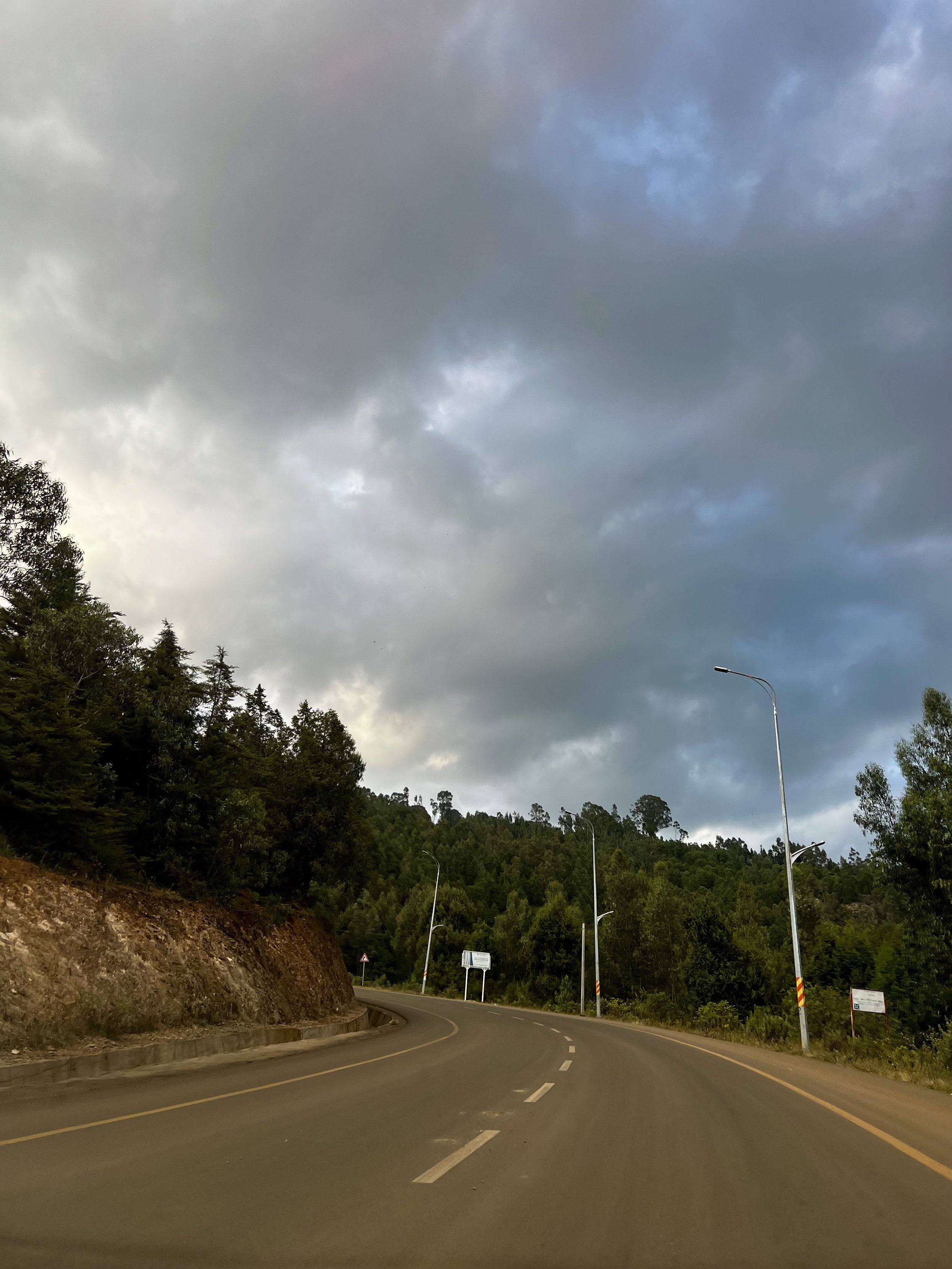
We caught the last of the sunset during our drive down from Entoto — eucalyptus forests pressing close on both sides, panoramic views of Addis Ababa opening below us, fresh mountain air filling the car. I could have stayed in that descent indefinitely. The city sprawled beneath us, lit and insatiable, perpetually in motion.
The Market, the Mountain Descent, and the City on Fire
Mercato Market arrived with the energy of something barely contained. City lights. Thick traffic. Throngs of people moving with purpose. Getting there was its own theater. Arriving was thrilling.
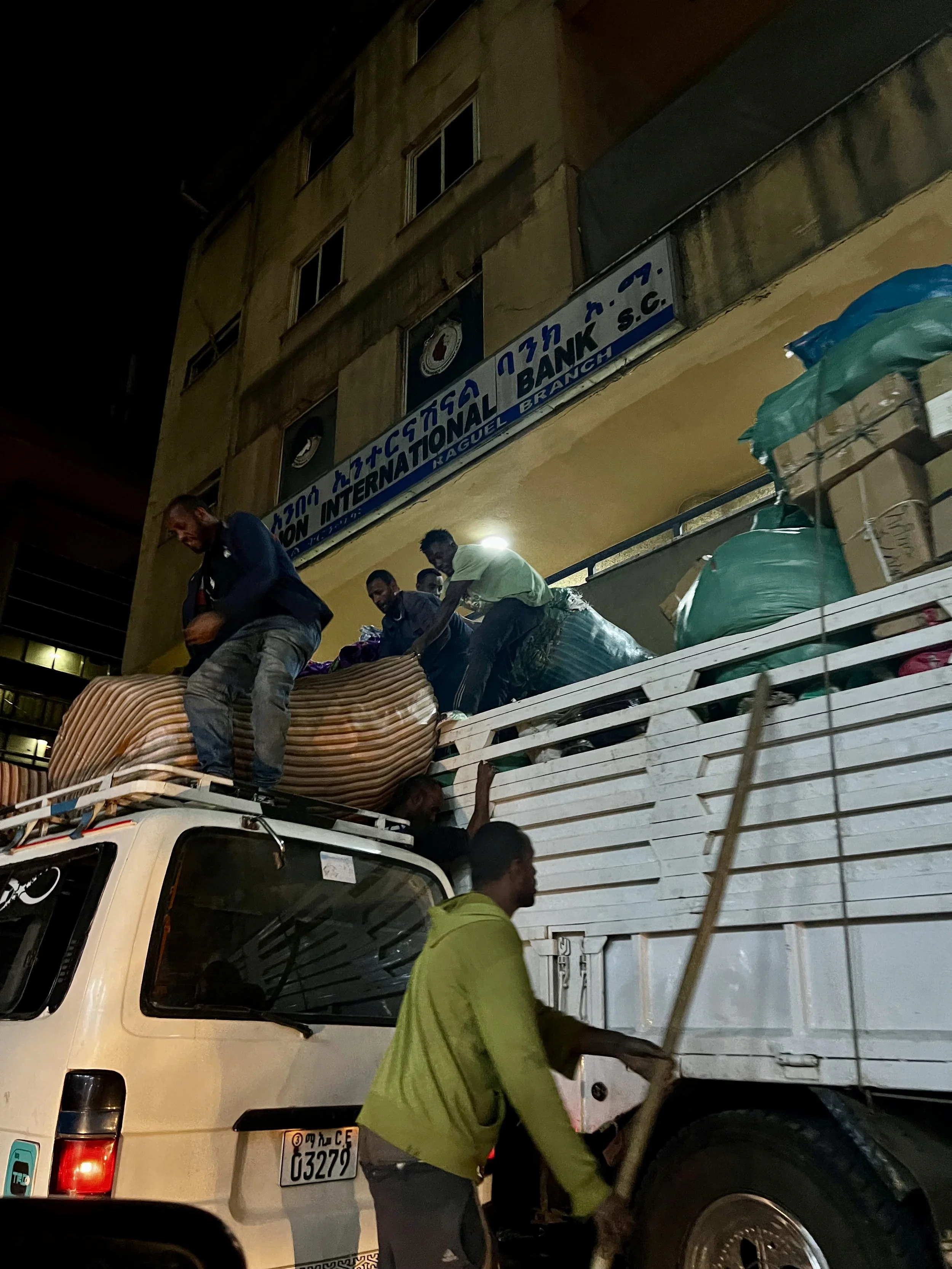
We had the privilege of watching the market close for the evening — a tedious, methodical, deeply human process. These men and women were tenacious in their craft. They moved with pride and ambition, breaking down stalls with the same care they had built them up with. It reminded me of Caribbean and African vendors in New York City — that particular ferocity of people who have cultivated something from nothing and will not let it diminish.
Yod Abyssinia: The Culmination of Everything
Joe told us he was taking us somewhere with live music and great food. He was not wrong. He was, in fact, guilty of understatement.
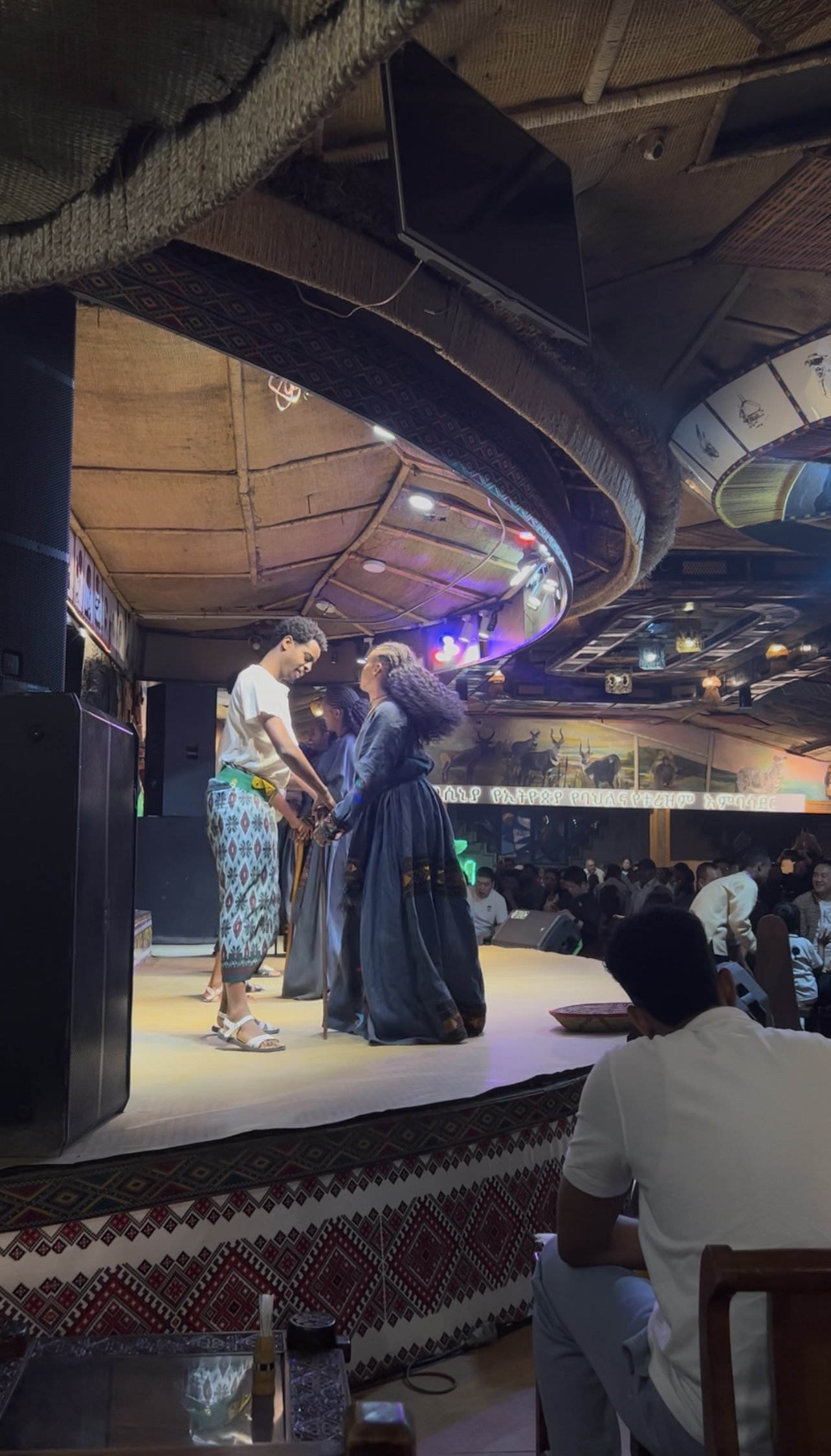
Yod Abyssinia is not a restaurant. It is an experience — and I say that without pretense, having dined at Ethiopian restaurants from coast to coast. Nothing prepared me for walking through those doors. The sound of singing reached us before we were fully inside. And then we were inside — surrounded by people, in every direction, singing together, dancing, laughing. It felt like arriving at a celebration that had been waiting for us. It was not a perfunctory welcome. It was a warm hug made of music.
We danced before we sat. We were in it before we chose to be. There was no serenity in holding back — there was only joy in being carried forward.
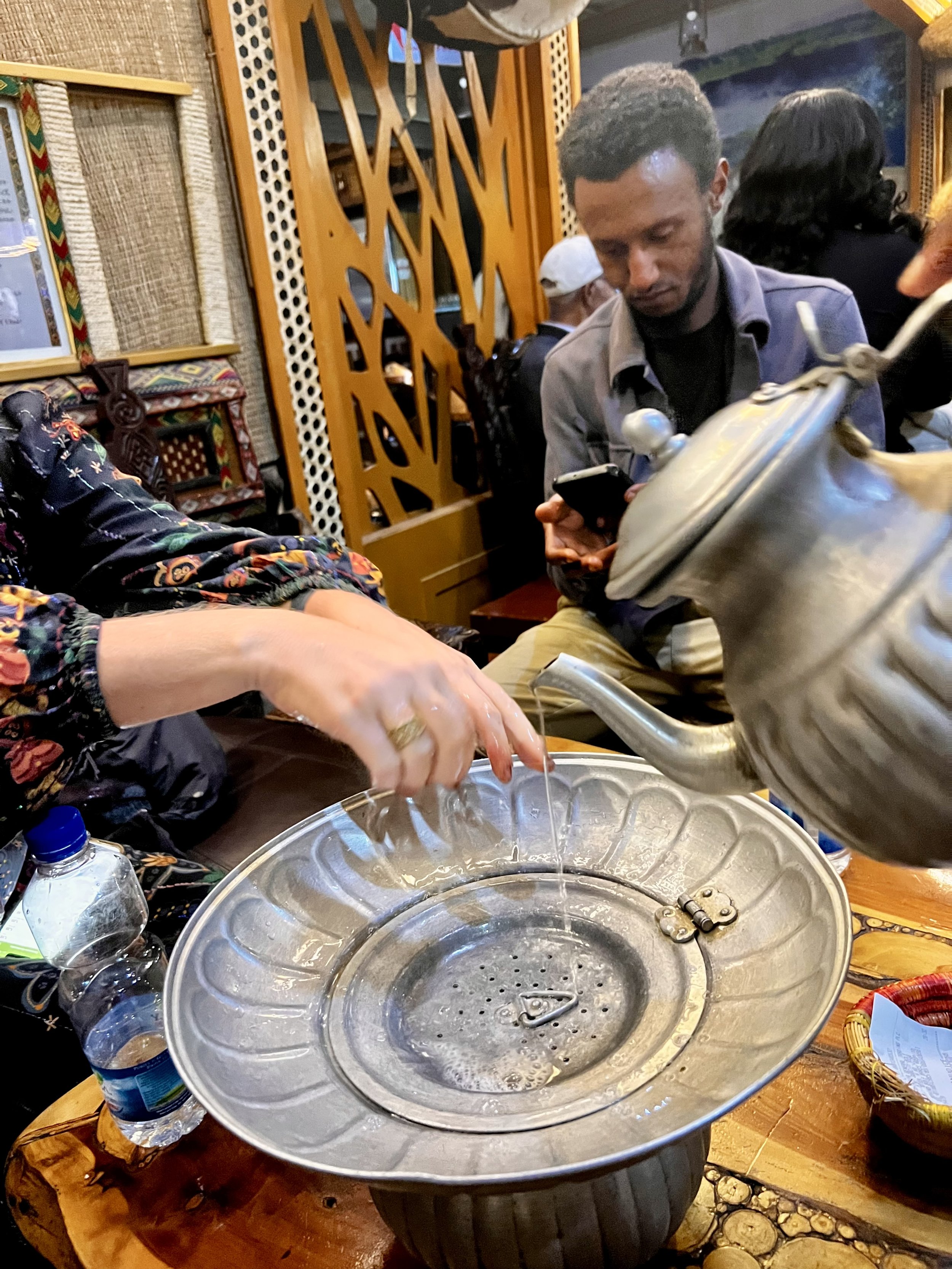
When we finally gathered at our table, a gentleman arrived with a pitcher of warm water and towels — a ritual cleansing before the meal. That gesture alone told me everything about the reverence this culture holds for the act of eating together.
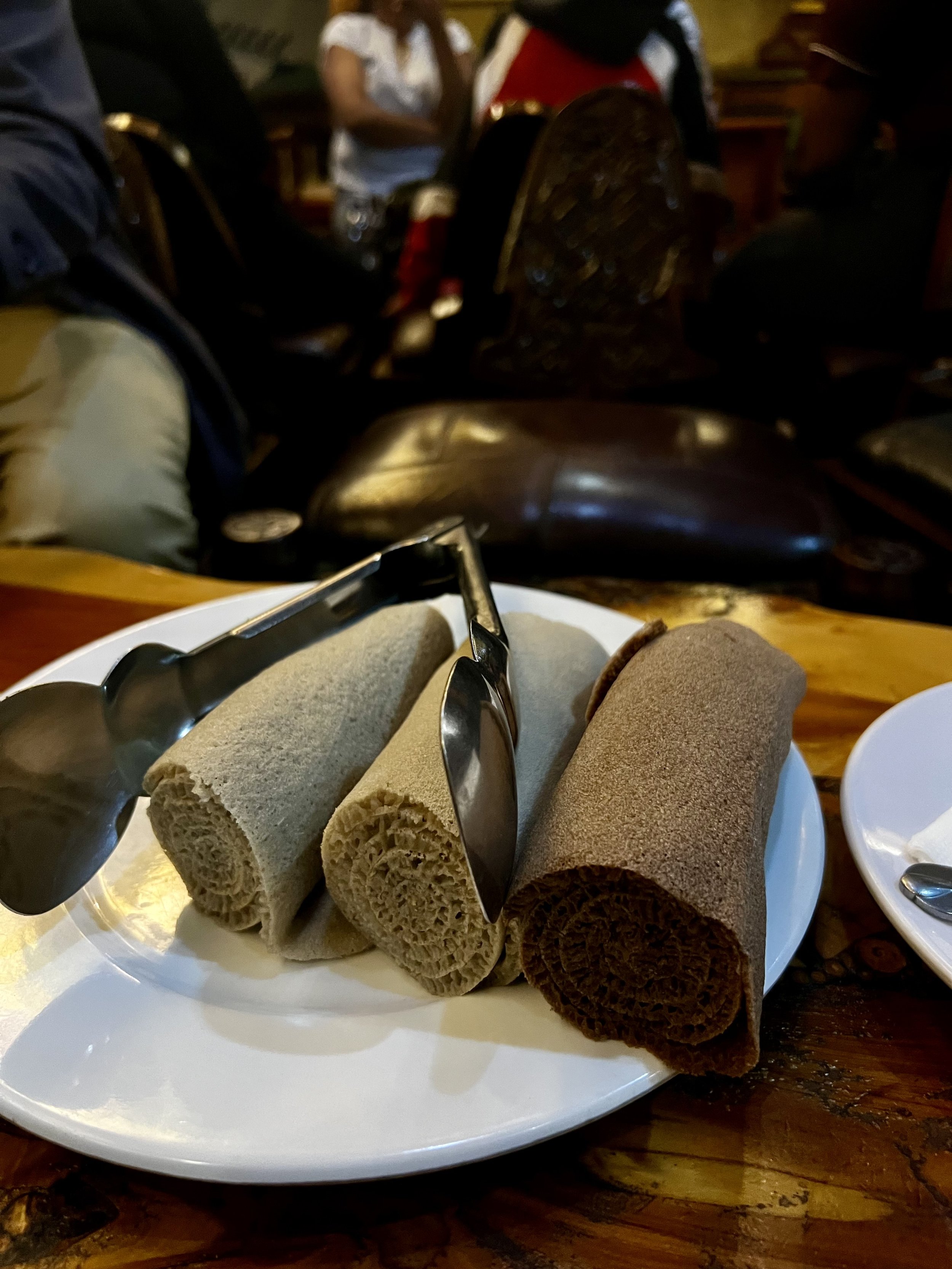
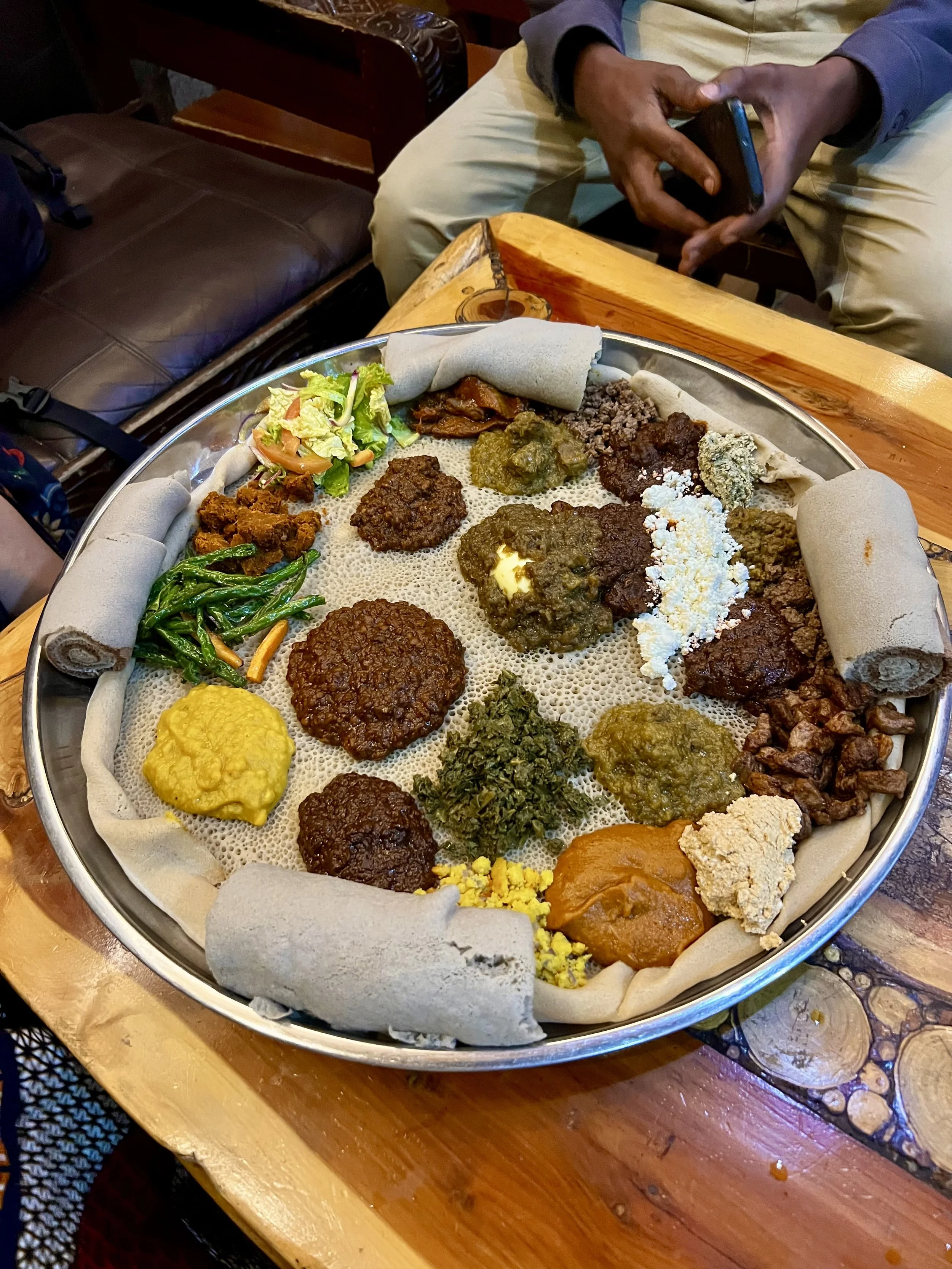
We broke bread — injera, specifically — over a wide, shared platter of seasoned meats and vibrant vegetables. I had an early flight to Cape Town in the morning. I told myself I would not overeat.
I lied to myself.
The food was fresh. The spices were sovereign. My tastebuds — and I say this with full candor — identified as privileged that night. It is not often I am able to enjoy an authentic Ethiopian meal in Ethiopia. I soaked in every last moment. Without apology. Without restraint.
The Close: On Not Wasting What the World Offers You
After dinner, we gathered ourselves. Joe, the other young women on the tour, and I said our goodnights with warmth. I was genuinely grateful for them — for the candor, the laughter, the shared wonder of a day well spent.
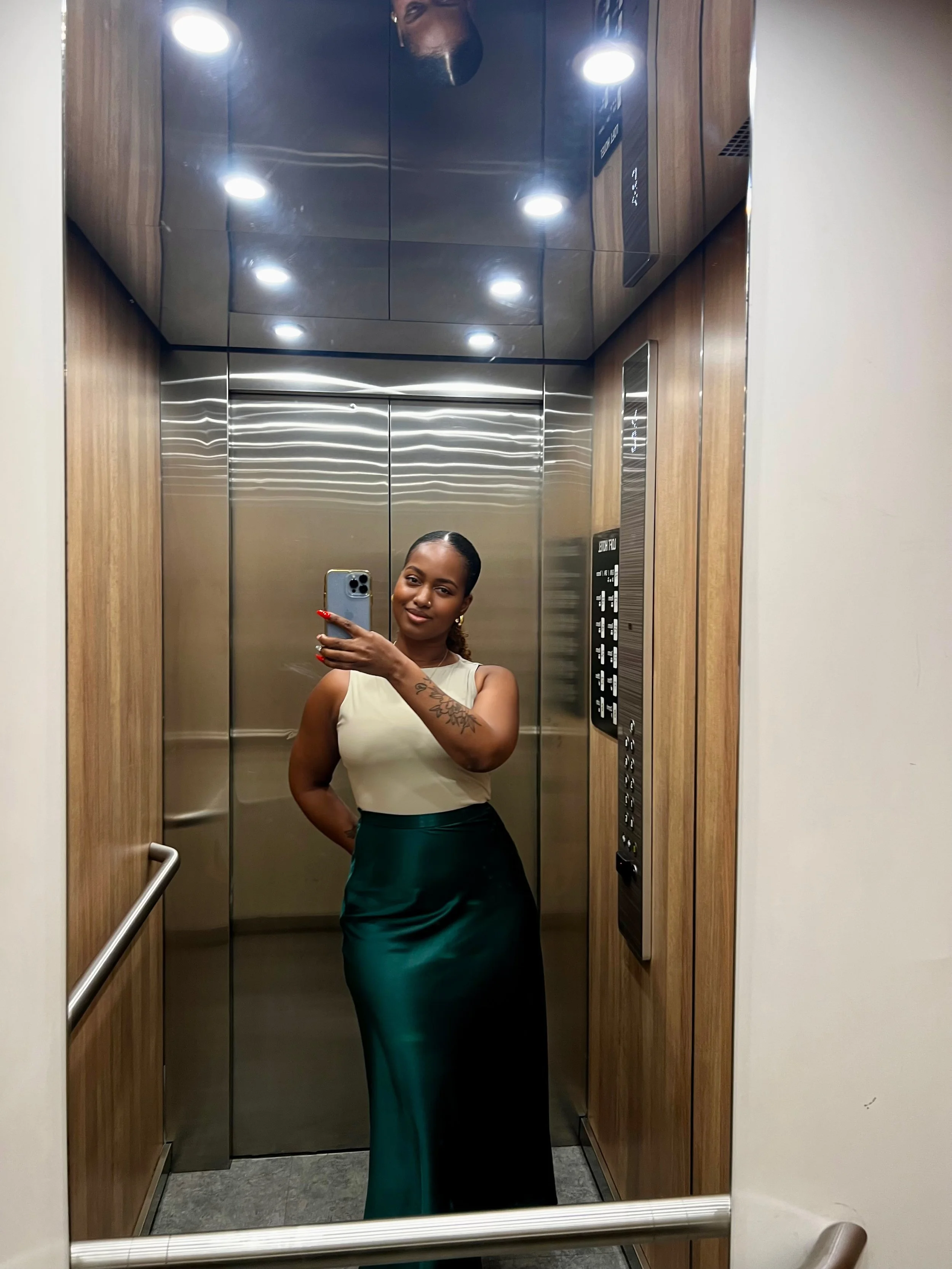
Back in my room, I sat with what the day had given me. In my faith, in my fascination, in my full-bodied presence — I had not squandered a single hour. Not one.
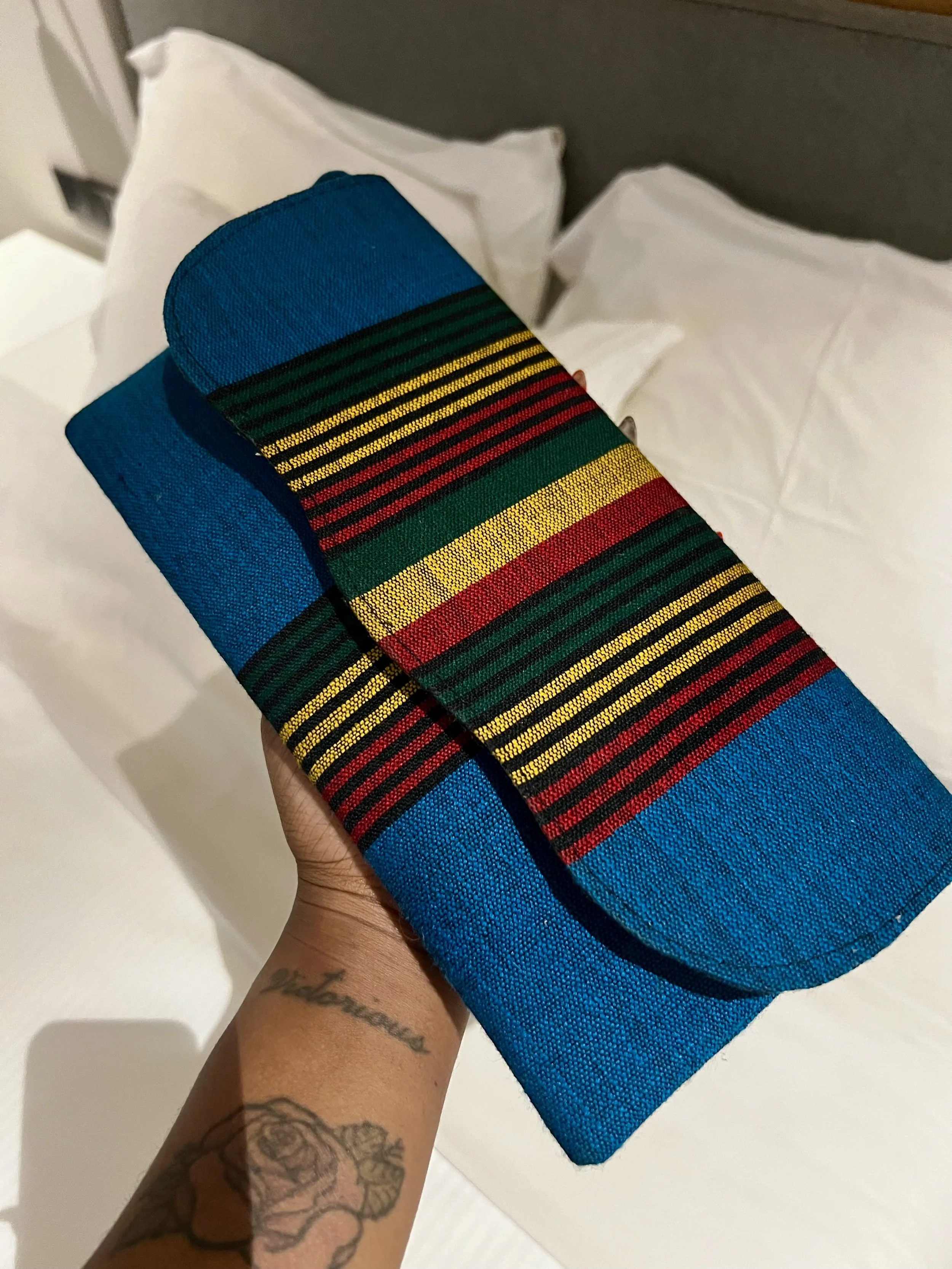
I snagged a beautiful handmade bag.
Twenty-four hours is not a limitation. It is an invitation. Ethiopia, in all her complexity and ferocity and grace, does not wait for you to be ready. She inevitably finds you exactly as you are — and she edifies you, regardless.
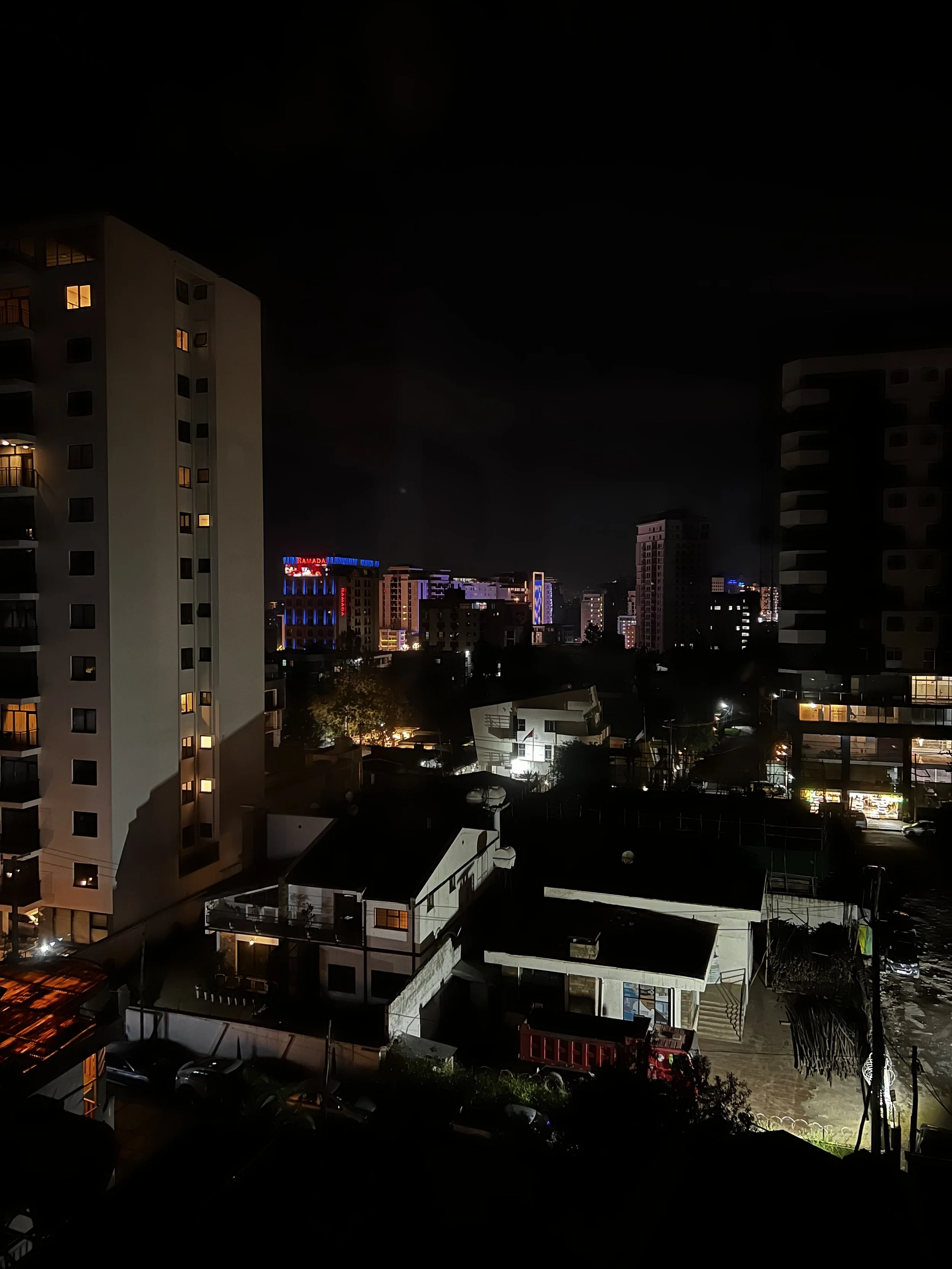
I do not simply pass through a city. I ascend.
Tour Details & Resources
Hotel: Loft Hotel Apartment, Bole
Tour: Layover in Addis Ababa (5 hours) — Habesha Wonder Tours via Viator | $80
Coffee: Mama's Kitchen | Bole Medhanialem
Museum: National Museum of Ethiopia (home of Lucy/Dinknesh)
Church: Entoto Mariam Church, Entoto Hills
Market: Mercato Market
Dinner: Yod Abyssinia Cultural Restaurant